
When Your AC Needs Professional Attention in San Diego
Knowing when your AC needs professional attention can be the difference between a quick, affordable fix and a full system breakdown — especially during San Diego’s peak cooling months in July, August, and September. Most homeowners don’t think about their air conditioner until something goes wrong, and by then, a small problem has often grown into a much bigger one.
Your AC gives you warning signs before it fails completely. The key is knowing which signs you can handle yourself and which ones require a licensed HVAC technician.
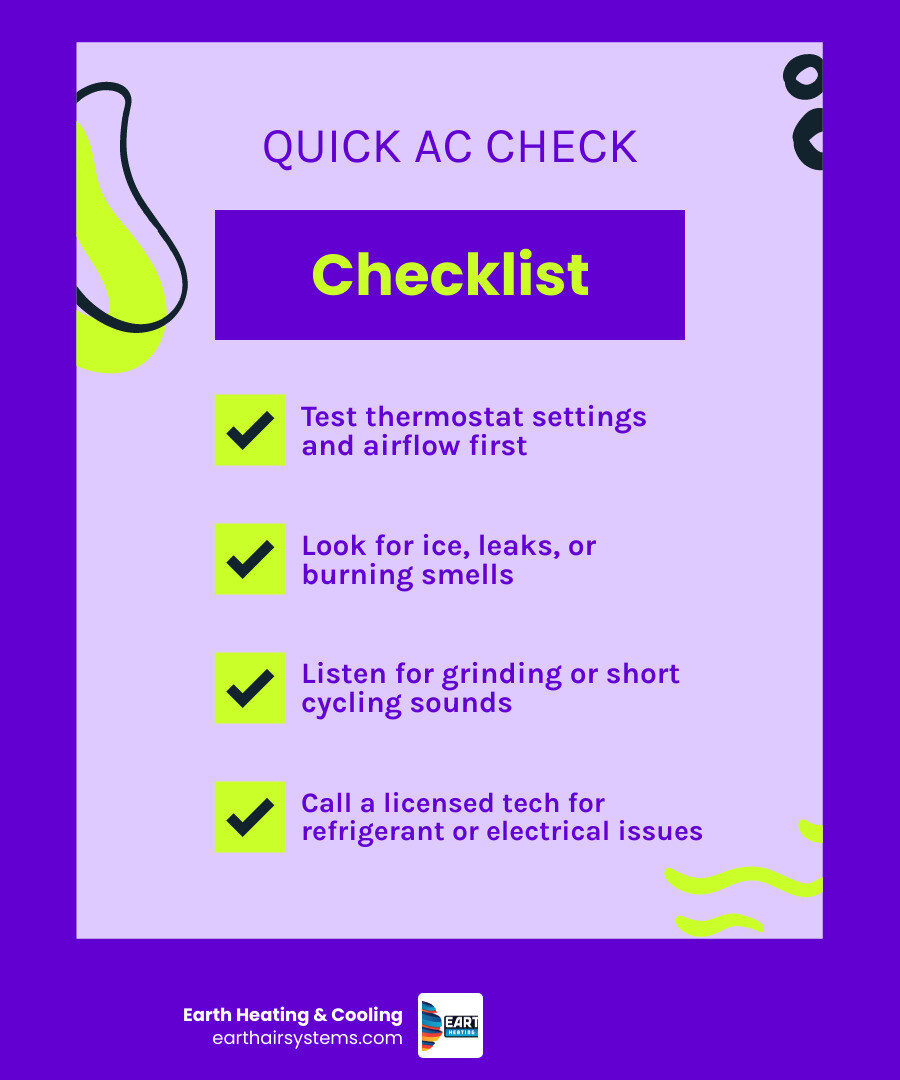
Your AC needs professional attention when you notice any of the following:
- Warm or weak air coming from your vents despite correct thermostat settings
- Unusual noises such as grinding, screeching, hissing, or banging
- Burning or musty odors when the system runs
- Water pooling around the indoor unit
- Ice forming on refrigerant lines or the evaporator coil
- Your system turns on and off repeatedly in short bursts (short cycling)
- Energy bills rising sharply with no change in usage
- The system runs constantly but never reaches your set temperature
If you’re seeing one or more of these signs, it’s time to stop waiting and call a professional. Attempting to fix refrigerant leaks, electrical faults, or frozen coil issues yourself carries real safety risks and can void your manufacturer warranty.
The sections below walk you through each warning sign in detail, what causes it, what you can safely do yourself, and when to pick up the phone.
When your ac needs professional attention terms explained:
- dirty condenser coil and performance connection
- low refrigerant signs in your ac system
- why is my ac running but not cooling
Red Flags: When Your AC Needs Professional Attention
When our homes in neighborhoods like Carlsbad, Chula Vista, or La Jolla start heating up, we rely entirely on our cooling systems to keep us comfortable. But when the system begins to struggle, it rarely suffers in silence. It communicates its distress through several clear performance changes.
One of the most common issues we encounter across San Diego County is a sudden drop in airflow. If you stand directly under your vents and feel only a faint whisper of air, your system is working overtime to distribute cooled air. This issue is frequently linked to ductwork problems. Research shows that up to 20% to 30% of conditioned air can escape through holes, gaps, or poorly connected ducts. This forces your unit to work twice as hard to cool your home, driving up wear and tear.
Another critical warning sign is short cycling. This occurs when your air conditioner turns on, runs for a few brief minutes, shuts off, and then repeats the process continuously. This startup phase is actually when the compressor experiences the highest amount of physical wear. Constant short cycling can cut your system’s overall lifespan in half. It also prevents the unit from running long enough to remove moisture from the air, leaving your home feeling humid and sticky.
To learn more about decoding these performance drops, you can read about What Your Air Conditioner Is Trying to Tell You.
Why Is My AC Blowing Warm Air?
Few things are more frustrating than turning on your air conditioner on a hot afternoon in El Cajon or Downtown San Diego only to feel warm air blowing out of the registers. Before you panic, check your thermostat. Ensure it is set to “COOL” rather than “HEAT” or “FAN ONLY.” If the fan is set to “ON,” the blower will run continuously even when the cooling components are resting, which can make the air feel warm.
If your settings are correct, the problem typically points to one of three issues:
- Dirty Evaporator Coils: Dust and grime buildup can insulate the coils, preventing them from absorbing heat from your indoor air.
- Refrigerant Leaks: Your system relies on a precise charge of refrigerant to transfer heat outside. If there is a leak, the system cannot cool the air.
- Failing Compressor: The compressor is the heart of the refrigeration cycle. If it fails, the cooling process stops entirely.
For a step-by-step diagnostic process, check out our guide on How to Fix Why Is My AC Blowing Warm Air.
Strange Noises and Odors: When Your AC Needs Professional Attention
Your air conditioner should run relatively quietly. While a gentle hum is perfectly normal, loud or unusual sounds are clear indicators of mechanical trouble:
- Squealing or Screeching: This often points to a worn-out blower motor belt or failing bearings in the fan motor.
- Grinding: Grinding noises usually mean the motor bearings are shot and require immediate replacement.
- Banging or Clanking: This suggests a loose or broken part inside the compressor or blower assembly.
- Hissing or Bubbling: This is a classic indicator of a refrigerant leak.
Odors are equally telling. A musty smell usually indicates mold or mildew growth inside your ductwork or on the evaporator coil, which stays damp during operation. A sharp, metallic, or plastic burning smell is an electrical emergency. It suggests overheated wiring, a failing motor, or a compromised circuit board.
According to the U.S. Fire Administration, thousands of home structure fires every year involve air conditioning equipment. If you smell burning, shut down your system at the thermostat and breaker immediately. For a deeper look at these critical warning signs, read Everything You Need to Know About When to Call a Professional for AC Problems.
DIY Troubleshooting vs. Calling a Licensed Technician
As a homeowner, it is helpful to know what you can safely handle on your own and when you must leave the work to a certified professional.
| Safe DIY Maintenance Tasks | Requires a Licensed Professional |
|---|---|
| Replacing air filters every 1 to 3 months | Handling, testing, or recharging refrigerant |
| Clearing leaves, dirt, and debris around the outdoor unit | Troubleshooting electrical faults or high-voltage wiring |
| Checking and replacing thermostat batteries | Replacing a failing compressor or fan motor |
| Clearing minor, visible debris from register vents | Repairing or sealing leaking ductwork |
Attempting complex repairs yourself carries significant risks. Modern air conditioning systems combine high-voltage electrical circuits, delicate mechanical parts, and chemical refrigerants. Working on electrical components without proper training can result in severe shocks or electrical fires.
Furthermore, refrigerant handling is strictly regulated by federal law. Under EPA Section 608 regulations, only certified technicians are permitted to buy, handle, or recharge refrigerants. If your system is running but not cooling, you can read our guide on How to Fix AC Running But Not Cooling to help isolate the problem before calling us out.
Frozen Evaporator Coils: When Your AC Needs Professional Attention
If you notice ice forming on your outdoor refrigerant lines or your indoor unit’s evaporator coil, your system has a serious airflow or refrigerant issue.
A clogged air filter is the number one cause of AC issues, including frozen coils. When a dirty filter restricts airflow, the cold refrigerant circulating through the evaporator coil cannot absorb enough heat from your home’s air. As a result, the temperature of the coil drops below freezing, causing the condensation on the coil to turn to ice.
If left unchecked, this ice buildup can block airflow entirely, put extreme strain on the blower motor, and cause liquid refrigerant to flood back into the compressor. This can destroy the compressor entirely. If you spot ice, turn off the system immediately to let it thaw, and consult our resource on AC Maintenance Tips Diagnosing Frozen Coil.
The Risks of Ignoring AC Warning Signs
It is tempting to ignore a minor squeak, a slight musty smell, or a small puddle of water near your indoor unit, especially when the system is still blowing cool air. However, a “wait and see” approach almost always leads to more expensive damage.
A small issue, like a failing capacitor, can quickly escalate. If the capacitor fails to kick-start the fan motor, the motor can overheat and burn out, or the compressor can lock up. A clogged condensate drain line is involved in almost 90% of central air service calls involving water leaks. If ignored, that water can back up, overflow the drain pan, and cause severe secondary water damage to your ceilings, walls, and flooring, while creating a perfect breeding ground for toxic mold.
Operating an inefficient or failing system also takes a heavy toll on your wallet. When components are dirty or worn, the system must run longer to cool your home, leading to skyrocketing utility bills. To understand how performance issues impact your monthly expenses, take a look at our article on Diagnosing AC Efficiency Loss Cooling Costs Spike.
Repair vs. Replacement: Deciding the Best Path Forward
When an older air conditioner starts acting up in Vista, San Marcos, or Oceanside, you have to decide whether to repair the existing unit or invest in a new, energy-efficient system.
Most traditional air conditioning systems last between 10 and 15 years with proper care. If your system is in that age bracket and requires frequent repairs, you are likely throwing good money after bad.
To help make this decision, we recommend using the 50% Rule. If the cost of a single repair exceeds 50% of the total value of a brand-new system, replacement is almost always the more financial and practical choice.
Another major factor is refrigerant type. If your system was manufactured before 2010, it likely runs on R-22 (Freon). The EPA completely phased out the production and import of R-22 on January 1, 2020. Because the supply is extremely limited, repairing an R-22 leak or recharging the system has become incredibly expensive.
Upgrading to a modern, high-efficiency system can reduce your cooling energy consumption by up to 30% to 50% compared to older models. For detailed guidance on this decision, check out:
- The Complete Guide to Deciding When to Repair vs Replace HVAC System
- Is Your AC a Senior Citizen and Ready to Retire
- San Diego Homeowner Alert Is Your AC Giving Up the Ghost
Frequently Asked Questions About AC Repair
How often should I schedule professional AC maintenance?
Industry standards and most manufacturer warranties call for professional AC maintenance once per year, ideally in the spring before the heavy cooling season begins. Regular preventative maintenance prevents up to 85% of sudden, emergency breakdowns, keeps your system running at peak efficiency, and protects your warranty coverage. To explore how regular maintenance protects your investment, read The Ultimate Guide to HVAC ROI and Home Value.
Can a dirty air filter cause my AC to stop cooling?
Yes, absolutely. A dirty, clogged air filter restricts airflow into the system. This forces the blower motor to work harder, which can cause the motor to overheat and fail. It also drops the temperature across the evaporator coil, leading to frozen coils and a complete system shutdown. Replacing a dirty, clogged air filter can reduce your air conditioner’s energy consumption by 5% to 15%.
What should I do immediately if my AC is leaking water?
If you notice water pooling around your indoor AC unit, shut the system off at the thermostat immediately. This stops the production of new condensation. Next, check your air filter; if it is extremely dirty, it may have caused the coils to freeze and melt, creating an overflow. If the filter is clean, the issue is likely a clogged condensate drain line. Keep the system off to prevent further water damage to your home and call a professional to clear the line safely.
Conclusion
Your air conditioning system is vital to your home’s comfort and indoor air quality. Recognizing when your AC needs professional attention is the best way to prevent minor issues from turning into major, costly emergencies. From weak airflow and frozen coils to strange noises and water leaks, taking prompt action keeps your home safe and cool.
At Earth Air Heating & Cooling, we have spent over 40 years helping homeowners across San Diego County, including Coronado, Encinitas, Escondido, National City, and Solana Beach, maintain perfect indoor comfort. Our team of certified, background-checked technicians is committed to delivering honest service and a 100% satisfaction guarantee.
Don’t wait for your system to break down on the hottest day of the year. If your air conditioner is showing any of these warning signs, please Schedule professional AC repair in San Diego today!
