
What AC Making Strange Noises Actually Means (And What to Do)
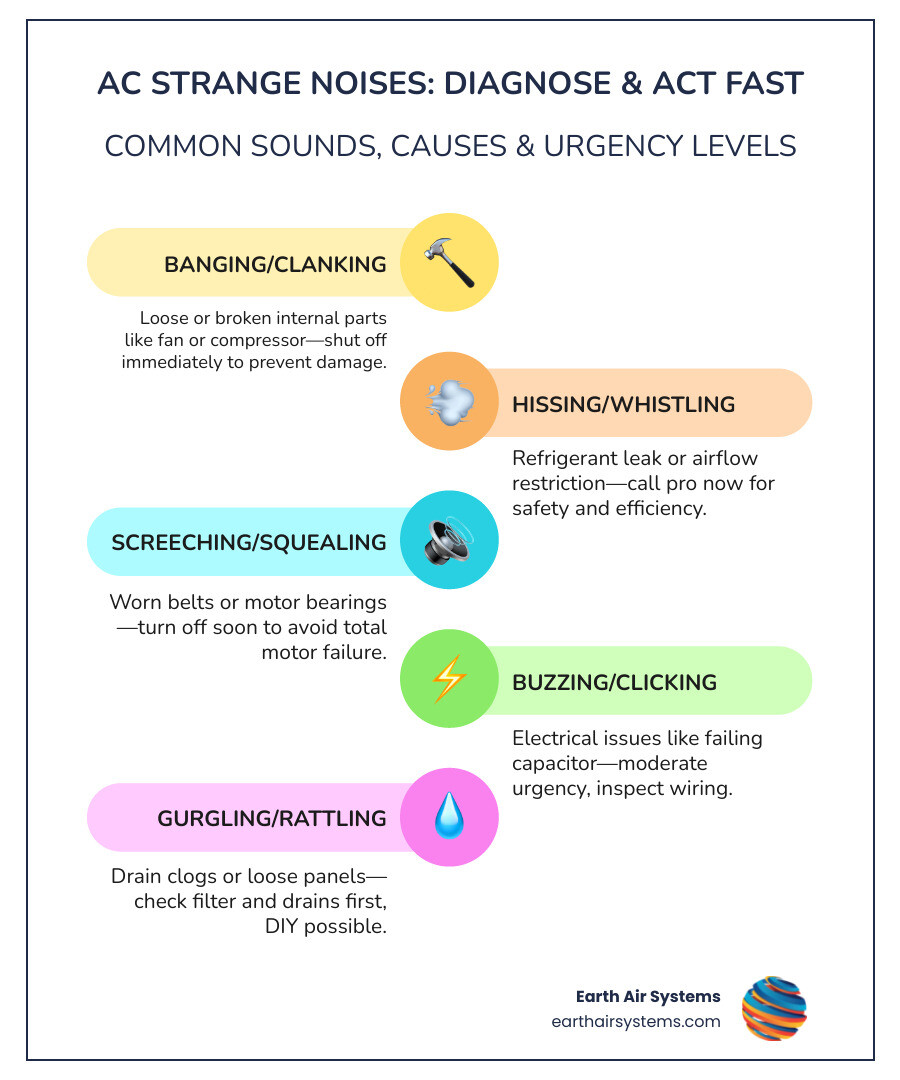
When you notice your AC making strange noises, here is what each sound typically means:
| Sound | Likely Cause | Urgency |
|---|---|---|
| Banging / Clanking | Loose or broken internal component | High – shut off immediately |
| Hissing | Refrigerant leak or high pressure | High – call a pro now |
| Screeching / Squealing | Worn motor bearings or slipping belt | High – turn off soon |
| Buzzing | Electrical issue or frozen coils | Moderate-High |
| Clicking (repeated) | Failing capacitor or contactor | Moderate |
| Rattling | Loose screws, debris, or panels | Low-Moderate – DIY check first |
| Whistling | Clogged filter or closed vents | Low-Moderate – check filter |
| Gurgling / Bubbling | Blocked drain line or refrigerant issue | Moderate |
| Grinding | Worn motor bearings | High – stop running it |
Your air conditioner is engineered to run quietly in the background – modern units typically operate somewhere between 25 and 55 decibels, roughly the level of a soft conversation. Some high-efficiency models run as quietly as 19 decibels, which is softer than a whisper. So when your system suddenly starts banging, hissing, screeching, or rattling, it is not just annoying – it is your equipment sending you an early warning signal.
Think of unusual AC sounds as audio clues. Every noise your system makes points to something specific happening inside the unit. The good news is that catching these sounds early is often the difference between a straightforward repair and a full system replacement. Ignoring them, even for a few weeks, can allow a small problem to snowball into a much bigger one.
In San Diego, where summer temperatures push into the 90s and your AC works hard for much of the year, knowing what those sounds mean can save you real stress and help you protect your comfort. This guide breaks down common AC noises, what may be causing them, and what to do next.
Understanding Normal vs. Abnormal AC Sounds
Before we dive into the “scary” noises, let’s talk about what’s actually normal. Every air conditioner has an “operational baseline” — the standard sounds it makes when it’s happy and healthy. If you’ve just moved into a new home in North Park CA or recently upgraded your unit, you might still be getting used to its rhythm.
Normal sounds include:
- A steady hum: This is the sound of the compressor and the fan motor doing their jobs.
- The “whoosh” of air: This is just air moving through your vents and ductwork.
- A soft click at startup and shutdown: This is usually the thermostat relay or the electrical contactor engaging.
- Mild rattling or popping: Often, this is just thermal expansion and contraction. As the metal ducts in your attic or crawlspace heat up or cool down, they might shift slightly.
A well-maintained AC system can have a lifespan of 15 to 20 years. However, in our coastal climate, salt air and humidity can accelerate wear and tear. If you start hearing anything that breaks that steady, rhythmic hum, it’s time to pay attention. If you’re ever unsure if a sound is normal, we recommend getting a professional AC Repair in San Diego to establish a clean bill of health for your system.
AC Making Strange Noises What They Mean: A Diagnostic Guide
When homeowners ask about ac making strange noises what they mean, they are usually looking for a clear translation. Your AC does not speak in words, but it does give mechanical warning signs. When parts wear down, loosen, or start creating excess friction, they produce distinct sounds that can help point to the problem.
If you hear a noise that sounds like metal-on-metal or like something is being thrown around inside the unit, the first step is to shut the system off at the thermostat. Running a failing unit can turn a smaller repair into a much larger mechanical failure. Whether you need AC Repair in Carlsbad or service in Escondido, early attention is always the best move.
Banging and Clanking: Loose Internal Components
Banging and clanking are some of the most urgent sounds your AC can make. These heavier noises usually mean that something inside the system has come loose or broken.
- The compressor: Inside your outdoor unit, the compressor is one of the most important components. If an internal part such as a connecting rod or piston pin fails, it can create a loud banging sound from inside the sealed housing.
- Unbalanced fans: If the outdoor fan blade or indoor blower wheel becomes bent or unbalanced, it may strike nearby components as it spins. This often creates a rhythmic clanking or thwapping sound.
- Compressor mounts: The compressor sits on rubber isolation feet. Over time, these can wear out or loosen, allowing the compressor to vibrate against the frame during startup.
If you are hearing these sounds in the South Bay, do not wait – schedule AC Repair in Chula Vista right away. You can also read Stay Frosty: The Best AC Repair Services in Chula Vista CA for more helpful guidance.
Hissing and Whistling: AC Making Strange Noises What They Mean for Airflow
Hissing and whistling are usually related to pressure – either refrigerant pressure or airflow pressure inside your home.
Hissing: A persistent hissing sound often points to a refrigerant leak. Refrigerant stays under pressure, so when it escapes through a crack or damaged connection, it can create a noticeable hissing noise. This is a serious issue that should be handled by a licensed HVAC professional. If the hissing becomes a sharp, high-pitched screaming sound, it may indicate dangerously high internal pressure.
Whistling: Whistling is usually an airflow problem. If the system cannot move enough air, it may whistle as air is forced through narrow openings.
- Dirty filters: A clogged air filter is one of the most common causes.
- Closed vents: A good rule is to keep most supply vents open. Closing too many vents can increase static pressure and strain the blower motor.
- Duct leaks: In older homes, duct sections can shift or separate over time, creating small gaps that whistle when air passes through.
If this is happening in La Jolla, you can also review The Ultimate La Jolla AC Repair Roadmap for more local insight.
Screeching and Squealing: Motor and Belt Warnings
Screeching is the type of sound that usually makes homeowners stop in their tracks. In most cases, it is caused by friction.
- Fan belts: Older AC systems may use belts to connect the motor to the fan. If the belt slips, frays, or loses tension, it can squeal.
- Motor bearings: Most modern systems are direct-drive and do not use belts. In those units, screeching or grinding often points to failing bearings in the condenser fan motor or indoor blower motor.
- Startup squeal: Some systems may make a brief high-pitched squeal during startup. If that sound lasts longer than about 10 to 15 seconds, it is worth having the system checked.
If the sound continues, schedule AC Repair in San Marcos CA to help prevent motor damage.
Identifying the Source: Indoor vs. Outdoor Unit Noises
One of the first questions we’ll ask when you call us is: “Where is the sound coming from?” Identifying whether the noise is originating from the indoor air handler or the outdoor condenser helps us narrow down the culprit before we even arrive.
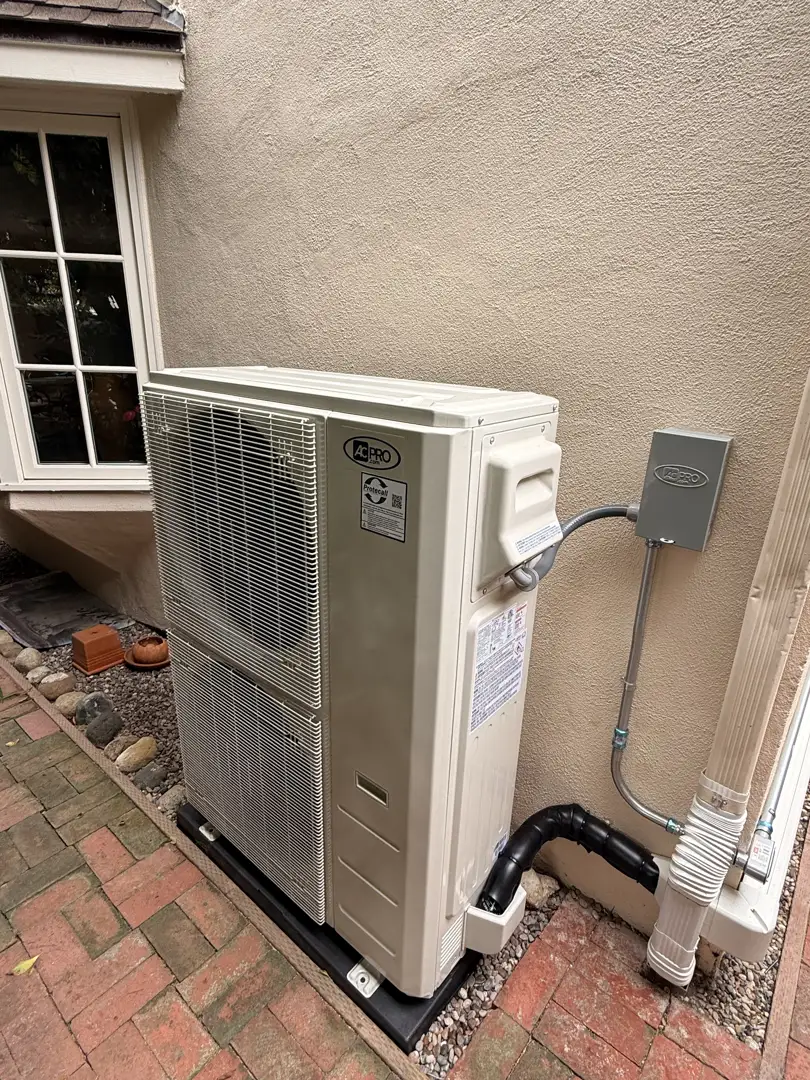
You can perform an “Isolation Test” yourself. Turn your thermostat to “Fan Only” mode (turn the cooling off). If the noise persists, the problem is likely in your indoor blower motor or ductwork. If the noise stops, the issue is likely in the outdoor compressor or condenser fan, which only runs during a cooling cycle.
Indoor vs. Outdoor Noise Comparison
| Noise Location | Common Causes |
|---|---|
| Indoor Unit | Clogged filter (whistling), loose blower wheel (clanking), failing bearings (screeching), frozen coils (buzzing), blocked drain (gurgling). |
| Outdoor Unit | Compressor failure (banging), debris in fan (rattling), failing contactor (buzzing), refrigerant leak (hissing), loose panels (vibrating). |
If you’re in Encinitas CA or Solana Beach CA, where units are often tucked into tight side-yards, the sound can sometimes bounce off the walls, making it tricky to locate. The fan-only test is the most reliable way to be sure.
Buzzing and Clicking: AC Making Strange Noises What They Mean for Electrical Parts
Electrical noises are often subtle, but they shouldn’t be ignored. They usually point to a component that is struggling to do its job.
Buzzing: A buzzing sound is often electrical arcing — electricity jumping where it shouldn’t.
- Contactor Relay: This is the switch that tells your outdoor unit to turn on. If the silver coating on the contactor wears down, it can “chatter” or buzz.
- Failing Capacitor: The capacitor is like a small battery that gives the motor the “kick” it needs to start. If it’s failing, the motor might buzz as it tries (and fails) to spin.
- Frozen Coils: Interestingly, if your indoor evaporator coils freeze over due to a dirty filter or low refrigerant, the unit may emit a low-frequency buzz as the ice restricts airflow.
Clicking: As we mentioned, a single click is normal. However, repeated, rapid clicking is a sign that the electrical communication between your thermostat and the unit is breaking down. This is a common call we get for AC Repair in Coronado. If your system is clicking but won’t start, the contactor or capacitor has likely reached the end of its life. For more on local service, check out Coronado’s Finest: A Guide to the Best Local AC Repair.
Gurgling and Bubbling: Drainage and Moisture Problems
If your AC sounds like someone finishing a soda through a straw, you’re likely dealing with a liquid-related issue.
- Condensate Drain Clogs: Your AC removes humidity from the air, and that moisture drains out through a PVC pipe. Over time, algae and “sludge” can build up in that pipe. If the line is partially blocked, air bubbles will gurgle through the standing water. This is a common issue in Vista CA.
- Refrigerant Bubbles: If there is air in your refrigerant lines (which should be a closed, air-free loop), you might hear a bubbling or “hissing-liquid” sound. This usually happens after a leak has occurred and the refrigerant level has dropped.
If you’re noticing water pooling around your indoor unit in National City, turn the system off immediately to prevent water damage to your floors or ceiling. You can find more advice in our article, Don’t Sweat It: Finding a Reliable AC Repair Company in National City.
DIY Troubleshooting for a Noisy AC in San Diego
Before you call for professional backup, there are a few simple things you can check yourself. In San Diego, our unique environment — specifically salt air corrosion and coastal dust — can cause minor issues that are easy to fix.
- Check the Filter: If you hear whistling or buzzing, hold your air filter up to the light. If you can’t see through it, it’s time for a new one. We recommend changing filters every 1 to 3 months.
- Tighten the Panels: Sometimes a “scary” rattling sound is just a loose screw on the exterior cabinet. Grab a screwdriver and ensure all the metal panels are snug. This is a frequent fix for homes in Hillcrest and Downtown San Diego where vibrations can loosen hardware over time.
- Clear the Debris: Our North County customers often deal with twigs, dry leaves, or pebbles falling into the outdoor fan cage. With the power OFF, you can often see and remove these “clackers” with a pair of long-nose pliers.
- Clear Vegetation: Ensure there is at least two feet of clear space around your outdoor unit. Plants or fences that are too close can restrict airflow and create a “whooshing” or “humming” sound as the unit struggles to breathe.
Frequently Asked Questions about AC Making Strange Noises What They Mean
Is it safe to continue running my AC if it’s making a loud noise?
Generally, no. While a light rattle might just be a loose screw, sounds like banging, screeching, or hissing indicate that components are under extreme stress or breaking. Running the system in this state can cause “collateral damage.” For example, a loose fan blade can snap off and slice through your expensive refrigerant coils. It is always safer and more cost-effective to shut the system down until it can be inspected.
Why does my air conditioner click repeatedly when it tries to turn on?
This is usually a sign of an electrical failure. The “click” you hear is the contactor attempting to close to send power to the compressor. If the capacitor is dead, the motor won’t have the energy to start, and the system may keep trying to engage, resulting in a series of clicks. It could also be a sign of a faulty thermostat or a loose wire.
When should I shut off the AC immediately and call for emergency repair?
You should perform an immediate shutdown if you hear:
- Loud Banging: Indicates broken internal mechanical parts.
- Screaming/High-Pitched Hissing: Indicates dangerously high compressor pressure.
- Electrical Buzzing with a Burning Smell: This is a fire hazard.
- Metal-on-Metal Grinding: This will seize the motor and potentially cause a burnout.
Conclusion
At Earth Air Systems, we have spent over 40 years helping San Diego homeowners understand what their HVAC systems are trying to say. When you are dealing with an ac making strange noises what they mean is more than a technical question – it is about protecting the comfort, safety, and quiet of your home.
Whether you are in the city or in North County, our team is here to diagnose the cause, explain the issue clearly, and recommend the right repair. We focus on dependable service, flat-rate pricing, and a 100% satisfaction guarantee so you can feel confident every step of the way.
Do not let a small rattle turn into a bigger problem. If your air conditioner is making unusual sounds, contact Earth Air Systems for expert AC Repair in San Diego and get your system back to running quietly.
