
Why Your AC Running But Not Cooling Your Home Is More Common Than You Think
If your ac is running but not cooling your home, you’re not alone — and in most cases, the fix is simpler than you’d expect. Before anything else, here are the most common reasons your AC runs without cooling:
Quick Answer: Why Is My AC Running But Not Cooling?
- Thermostat set incorrectly — Fan set to “On” instead of “Auto,” or mode set to “Fan” instead of “Cool”
- Dirty or clogged air filter — Restricts airflow and can freeze the evaporator coil
- Frozen evaporator coil — Caused by restricted airflow or low refrigerant
- Dirty outdoor condenser unit — Prevents heat from escaping outside
- Low refrigerant (leak) — Refrigerant doesn’t get “used up”; low levels always mean a leak
- Leaky ductwork — Up to 20–30% of cooled air can escape before reaching your rooms
- Failing capacitor or compressor — Common in systems over 10 years old, especially during peak heat
- Undersized system — Can’t keep up with your home’s actual cooling load
Picture this: it’s a warm afternoon in San Diego, your AC is humming away, but your house just won’t cool down. You check the thermostat, it reads 78°F, and it’s been running for over an hour. Something is clearly off.
Your AC system has two jobs — lower the indoor temperature and remove humidity from the air. When something breaks that chain, the blower keeps running and moving air, but the actual cooling process stalls. The result? Warm or barely cool air blowing from your vents while your energy bill keeps climbing.
The good news: about 30% of AC cooling problems are things you can check and resolve yourself in under 10 minutes. The rest require a professional — but knowing which is which saves you time, money, and a lot of frustration.
This guide walks you through exactly what to check, what the warning signs mean, and when it’s time to call in an expert.
Immediate Troubleshooting for an AC Running But Not Cooling Your Home
When you realize the temperature isn’t dropping, the first thing we recommend is a “sanity check.” It is easy to overlook the simple things when you are sweating and frustrated. Many homeowners call for service only to find out a family member accidentally bumped the thermostat or a circuit breaker tripped during a brief power surge.

Start with your thermostat. If you have a habit of cranking the temperature down to 60°F hoping it will cool faster, you might be falling victim to The Yo-Yo Effect: Why Your Thermostat Habits Might Be Costing You. This doesn’t actually make the air colder; it just makes the system run longer, which can lead to component fatigue.
Quick DIY Checklist:
- Check the Breaker: Go to your electrical panel. Sometimes the indoor blower has power but the outdoor condenser breaker has tripped. If the outdoor unit isn’t humming, you won’t get cold air.
- Inspect the Filter: If you can’t see light through your filter, it’s done. A clogged filter is the #1 cause of an ac running but not cooling your home.
- The “Hand Test”: Feel the air coming out of the vents. If it feels like room-temperature air rather than “refrigerator-cold” air, the refrigeration cycle has been interrupted.
Troubleshooting an AC Running But Not Cooling Your Home on Hot Days
In San Diego, May 2026 has already brought some unexpected heat spikes. When the mercury rises, your system has to work significantly harder.
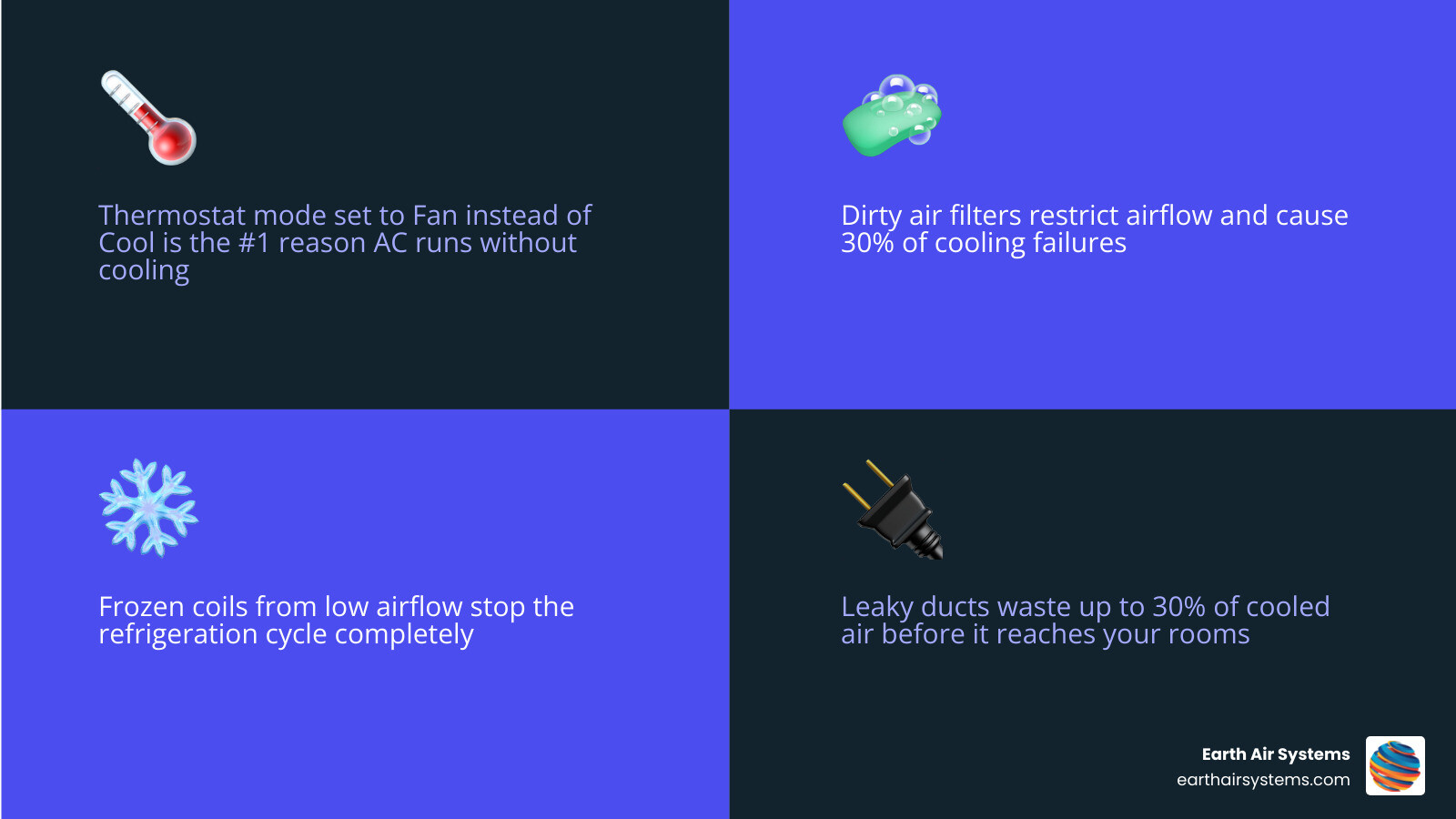
First, ensure your thermostat mode is actually set to “Cool.” It sounds silly, but if it’s accidentally set to “Heat” or just “Fan,” the system will run without engaging the compressor. Second, check your fan setting. If the fan is set to “On,” it blows air 24/7. This means even when the cooling cycle is resting, the fan is pushing unconditioned, humid air through your house, making it feel warmer. Always set the fan to “Auto.”
If your thermostat screen is blank or flickering, it might just need new batteries. A weak battery can cause the thermostat to lose its connection to the AC unit, preventing it from sending the signal to start the cooling process.
Inspecting Airflow and Register Obstructions
Airflow is the lifeblood of your HVAC system. If the air can’t move, the heat can’t be removed. We often see homes where furniture has been moved over return grilles or supply vents.
Check every room to ensure registers are open and unobstructed. Closing vents in unused rooms is a common mistake; it creates back-pressure that can actually damage your blower motor and reduce the system’s ability to dehumidify. If your return air grilles (the larger vents that “suck” air in) are covered in dust or blocked by a bookshelf, your AC is essentially trying to breathe through a straw.
Identifying Airflow Obstructions and Mechanical Failures
If the simple checks don’t work, we need to look deeper into the mechanical components. Your AC works by moving heat from inside to outside. If the coils are dirty or frozen, this heat transfer stops.
If you notice your system is struggling, it might be a sign that it’s reaching the end of its lifespan. For more on this, check out San Diego Homeowner Alert: Is Your AC Giving Up the Ghost? to see if a repair or replacement is your best path forward.
Why an AC Running But Not Cooling Your Home Might Have Frozen Coils
A frozen evaporator coil is a classic “running but not cooling” symptom. When airflow is restricted (usually by a dirty filter) or refrigerant levels are low, the coil temperature drops below freezing. Moisture from the air then hits that coil and turns into ice.
Once ice forms, it acts as an insulator. The air blowing over the ice doesn’t get cooled—it just stays warm. If you see ice on the copper lines leading to your outdoor unit, or if the indoor unit is dripping water excessively, you likely have a frozen coil.
The Thawing Process:
- Turn the AC OFF at the thermostat immediately.
- Turn the Fan to ON (this helps move warm air over the ice to melt it).
- Wait 1–3 hours for it to thaw completely.
- Replace the air filter.
- Try the system again. If it freezes back up, you have a refrigerant leak or a mechanical issue and need to call us.
For more tips on managing your system during heatwaves, see How to Keep Your Cool When San Diego Heats Up.
Clearing the Outdoor Condenser Unit
The outdoor unit (the condenser) is responsible for releasing the heat collected from inside your home. If the fins are clogged with dirt, grass clippings, or overgrown bushes, that heat stays trapped in the system.
We recommend maintaining at least two feet of clear space around the entire unit. In Southern California, the sun can be brutal on these units. Will Your AC Survive the SoCal Sun? explores how our local climate impacts outdoor equipment. You can gently rinse the condenser fins with a garden hose (don’t use a pressure washer!) to remove loose debris and improve efficiency.
When to Call for Professional AC Repair in San Diego
While DIY checks are great, some things are legally and technically off-limits for homeowners. Handling refrigerant, for example, requires EPA Section 608 certification. If your ac is running but not cooling your home and the basic fixes haven’t worked, it’s time to bring in the pros.
| Issue | DIY or Pro? | Why? |
|---|---|---|
| Thermostat Settings | DIY | Simple mode/fan adjustments. |
| Dirty Air Filter | DIY | Easy and affordable replacement. |
| Tripped Breaker | DIY (Once) | Resetting a switch is safe; if it trips again, call a pro. |
| Frozen Coil | DIY/Pro | Thaw it yourself; call a pro if it recurs. |
| Low Refrigerant | Professional | Requires leak detection and EPA certification. |
| Capacitor Failure | Professional | High-voltage electrical component. |
| Compressor Issues | Professional | Major mechanical heart of the system. |
If you’re worried about the cost of professional help, we offer The Best AC Repair in San Diego CA for Every Budget with transparent service to keep things clear.
Signs of Low Refrigerant and Component Wear
Refrigerant is the “blood” of your AC. It doesn’t get used up like gas in a car; it circulates in a closed loop. If it’s low, you have a leak.
Signs of a leak include:
- Hissing or bubbling noises near the refrigerant lines.
- Ice buildup on the indoor or outdoor coils.
- The air coming from vents is lukewarm, but the airflow is strong.
As systems age, they become more prone to these leaks. If your unit is over 10–12 years old, it might be time to ask: Is Your AC a Senior Citizen and Ready to Retire?
Electrical Failures and Hard Starting
Sometimes the fan on the outdoor unit spins, but the compressor (the pump) isn’t actually running. This is often due to a failed capacitor—a small cylindrical part that provides the “kick” needed to start the motor.
Capacitors degrade over time, especially during San Diego heatwaves when systems cycle on and off frequently. If you hear a humming or buzzing sound coming from the outdoor unit but don’t hear the deep “thrum” of the compressor, the capacitor has likely given out. This is a quick repair for a technician but dangerous for a DIYer due to the high electrical charge stored in the part.
How Humidity and Duct Leaks Sabotage Your Comfort
In coastal San Diego communities like Oceanside or La Jolla, humidity plays a massive role in how “cool” your home feels. If your AC is running but the house feels clammy, the system isn’t effectively removing moisture.
The Impact of San Diego Humidity on System Capacity
On a humid day in May 2026, your AC might spend 30–40% of its energy just pulling water out of the air. This is called “latent heat” removal. If the evaporator coil is dirty, it can’t grab that moisture efficiently. This leaves you with air that is slightly cooler but still heavy and humid, making it feel like the ac is running but not cooling your home effectively.
Conditioned Air Loss Through Leaky Ducts
Did you know that the typical duct system loses 20 to 30 percent of its conditioned air through leaks? If your ducts are located in a scorching hot attic, a small leak doesn’t just let cool air out—it can actually suck 130°F attic air into your system.
Signs your ducts are leaking:
- Some rooms are significantly warmer than others.
- You notice more dust than usual near your vents.
- Your energy bills have spiked without a change in usage.
- You hear whistling or rattling noises when the air is blowing.
Properly sealed ducts ensure the air you pay to cool actually reaches your living space, rather than cooling your attic or crawlspace.
Preventive Maintenance to Ensure Consistent Cooling
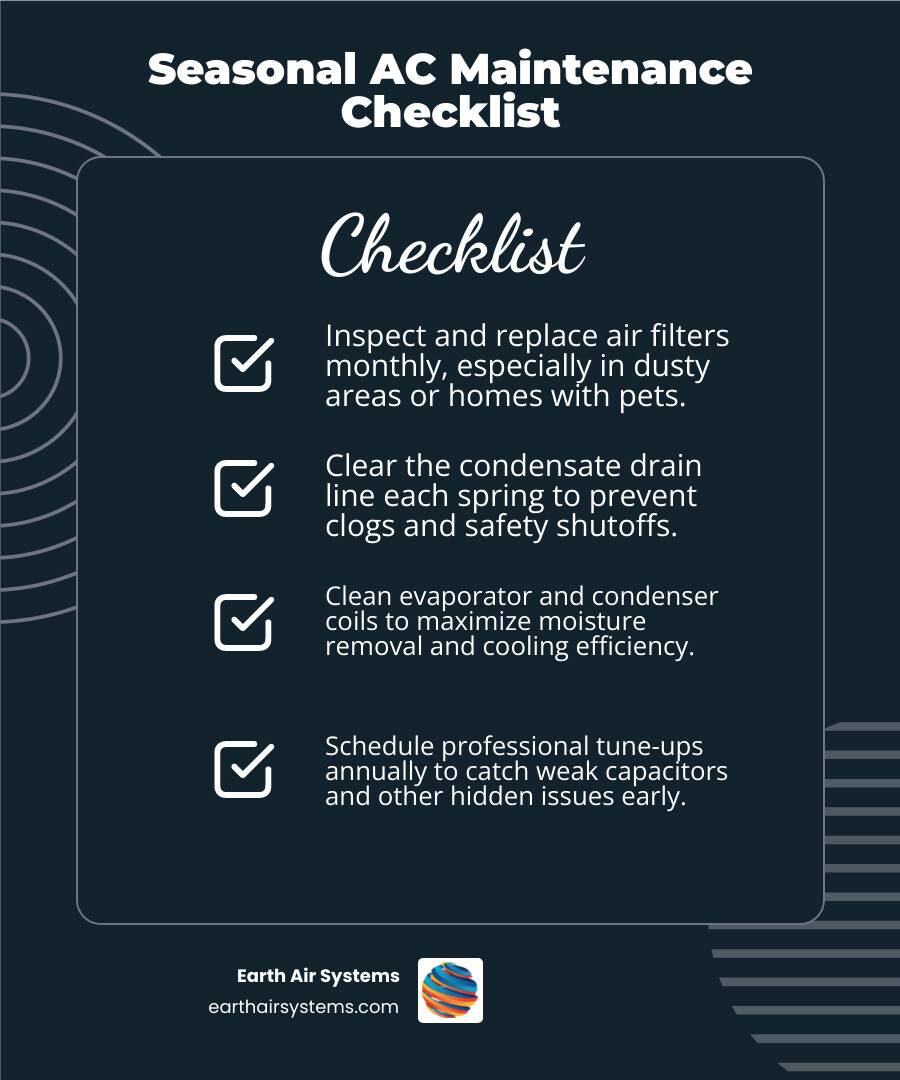
The best way to fix an AC that isn’t cooling is to prevent it from failing in the first place. Most of the issues mentioned—dirty coils, clogged drains, and weak capacitors—are caught during a standard seasonal tune-up.
Regular maintenance extends the life of your system and keeps it running at peak efficiency, which is vital given the rising energy costs in Southern California. For a deep dive into what a pro looks for, see The Ultimate Guide to AC Maintenance Services in San Diego.
Our Maintenance Pro-Tips:
- Monthly Filter Checks: In dusty areas or homes with pets, check your filter every 30 days.
- Clear the Drain Line: Every spring, ensure your condensate drain line is clear. A clog here can trigger a safety switch that shuts down your cooling.
- Annual Inspections: Have a technician check your refrigerant levels and electrical components before the first big heatwave of the year.
Frequently Asked Questions about AC Cooling Issues
Why is my AC running but the temperature isn’t dropping?
This is usually caused by a break in the heat transfer cycle. Common culprits include a dirty outdoor condenser, a clogged air filter, or low refrigerant levels. The blower is moving air, but the air isn’t being “stripped” of its heat.
Should I turn off my AC if it’s not blowing cold air?
Yes. If the system is running but not cooling, it can cause the compressor to overheat or lead to “slugging” (liquid refrigerant entering the compressor). Turning it off prevents a small repair from turning into a full system replacement.
How long does it take for an AC to cool a house down?
Under normal conditions, you should feel a noticeable difference at the vents within 5–15 minutes. To lower the temperature of the entire home by 1 degree, it typically takes 30–60 minutes depending on your home’s insulation and the outdoor temperature.
Conclusion
Dealing with an ac running but not cooling your home is frustrating, but it doesn’t always mean a catastrophe. By checking your thermostat, replacing your filters, and keeping your outdoor unit clear, you can solve many problems yourself.
However, when the issue involves electrical components, refrigerant, or complex ductwork, it’s time to call the experts. At Earth Air Heating & Cooling, we bring over 40 years of experience to every home in San Diego, Carlsbad, and Chula Vista. We pride ourselves on transparent service and a 100% satisfaction guarantee.
Don’t spend another night sweating in a warm house. Whether you need a quick diagnostic or a full system upgrade, we are here to help.
Need fast help? Explore our Air Conditioning Services in San Diego: AC Repair in San Diego to get your comfort back on track!
