
How a New HVAC System Increases Home Value
How a new HVAC system increases home value is one of the most practical questions a San Diego homeowner can ask before listing a property — and the answer has real dollars attached to it.
Here is a quick breakdown of the key ways a new HVAC system adds value:
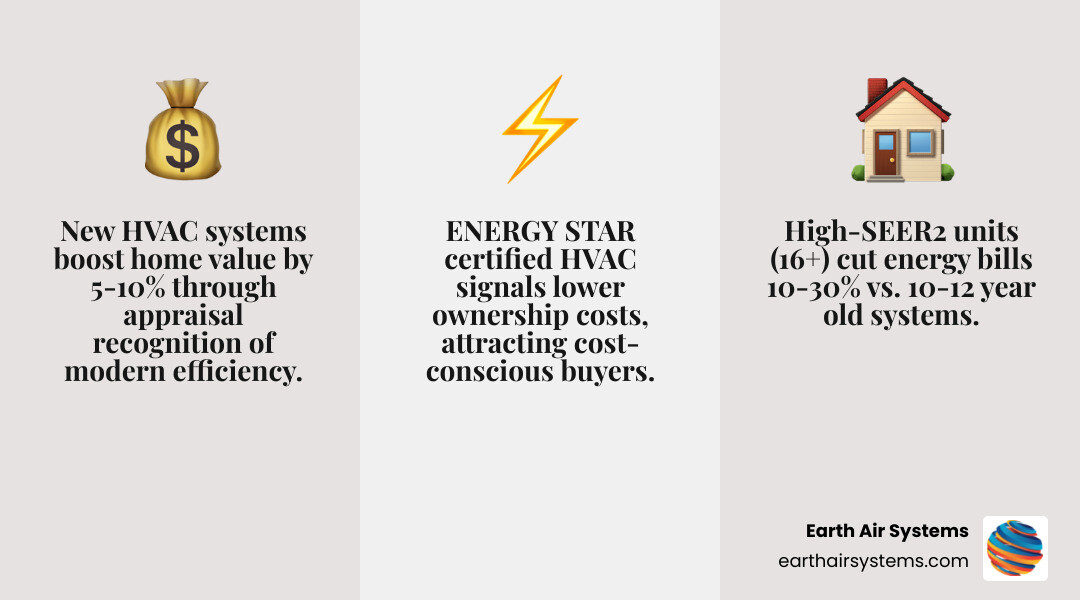
- Appraised value boost: A new system typically adds 5% to 7% of your home’s value, and up to 10% in climates where reliable heating and cooling is essential
- Buyer confidence: A new system signals the home is well-maintained, reducing the chance of repair credits or lost offers after inspection
- Faster sale: Homes with upgraded HVAC tend to sell faster, giving sellers stronger negotiating leverage
- Energy savings: Modern high-efficiency systems can cut annual energy bills by 10% to 30%, a major draw for today’s cost-conscious buyers
- Appraisal recognition: Appraisers factor in HVAC age and condition when comparing your home to nearby comps
If you are considering a replacement before selling, AC Replacement in San Diego is a good place to start.
Most homeowners think of kitchen remodels or fresh paint when they want to boost resale value. But one of the most impactful upgrades often sits outside on a concrete pad or in a utility closet. Your HVAC system is one of the first things buyers, inspectors, and appraisers evaluate — and an old or failing system can quietly drain thousands from your asking price before negotiations even begin.
In San Diego’s competitive real estate market, buyers are paying close attention to monthly operating costs and long-term reliability. A modern, efficient HVAC system speaks directly to both concerns. It is not just a mechanical upgrade. It is a signal that the home has been cared for and is ready to move into without surprises.
This guide walks through exactly how a new HVAC system affects your home’s value, what kind of return you can realistically expect, and when it makes strategic sense to replace before you sell.
How a new hvac system increases home value through energy savings
In April 2026, energy costs are a top-of-mind concern for every Californian. When we talk about how a new hvac system increases home value, we have to start with the utility bill. Modern buyers aren’t just looking at the mortgage; they are looking at the “cost of ownership.”
Older systems, especially those over 10 to 12 years old, operate on outdated SEER (Seasonal Energy Efficiency Ratio) standards. Today’s high-efficiency units, often boasting SEER2 ratings of 16, 18, or even higher, use significantly less electricity to move the same amount of air. For a buyer, seeing an ENERGY STAR certified sticker on the indoor air handler is like seeing a “discount” sign on their future monthly expenses.
Research shows that high-efficiency HVAC upgrades can reduce energy consumption by up to 40% compared to units from a decade ago. In a market like San Diego or Chula Vista, where summer temperatures can spike, that efficiency translates into hundreds of dollars saved per year. When you can show a prospective buyer a 12-month history of lower-than-average utility bills, you are providing tangible proof of value. This is why AC Installation in San Diego remains one of the smartest investments for those looking to maximize their property’s equity.
Buyer perception and peace of mind
There is a psychological component to selling a home that is just as important as the technical specs. A new HVAC system provides “peace of mind,” which is a powerful (though invisible) currency in real estate.
When a buyer walks through a home in North County or La Jolla and sees a brand-new furnace and AC unit, they see one less “big-ticket” item they have to worry about. They know they won’t be hit with a massive repair bill three months after moving in. This confidence often leads to cleaner offers with fewer contingencies.
To maximize this effect, we always recommend keeping meticulous maintenance records. If you can hand over a folder containing the original installation contract, warranty transfer documents, and a history of annual tune-ups, you prove the home has been cared for at a foundational level. A transferable manufacturer’s warranty—often lasting 10 to 12 years—is a massive selling point that can act as a “tie-breaker” if the buyer is choosing between your home and a similar one down the street.
Maximizing ROI with Energy Efficiency and Modern Technology
When we look at the Return on Investment (ROI), not all HVAC systems are created equal. The technology you choose dictates how much value you actually recoup. As of April 2026, the industry has shifted toward eco-friendly refrigerants like R-454B, mandated by the EPA’s AIM Act. Installing a system that complies with these latest environmental standards ensures the home won’t be “obsolete” in a few years, which is a major win for long-term valuation.
Modern features like variable-speed motors also play a huge role. Unlike older “on/off” systems, variable-speed technology allows the unit to run at lower speeds for longer periods, maintaining a perfectly consistent temperature and better managing humidity. In coastal areas like Carlsbad or Solana Beach, humidity control is essential for preventing mold and protecting the home’s structural integrity. If your system also includes high-end air filtration (like HEPA or UV light purifiers), you are appealing to the 72% of buyers who now prioritize indoor air quality. For those looking to move away from traditional gas, Heat Pump Replacement in San Diego offers a dual heating and cooling solution that is increasingly popular with eco-conscious buyers.
How a new hvac system increases home value by accelerating the sale
Time is money in real estate. One of the primary ways how a new hvac system increases home value is by shortening the “days on market.” Data suggests that homes with new or recently upgraded HVAC systems sell up to 11 to 15 days faster than those with aging units.
When a home sits on the market, it loses its “freshness,” and sellers often feel pressured to drop the price. A new HVAC system prevents this by removing a major hurdle during the inspection phase. Most home inspectors will flag a system that is over 15 years old, even if it’s currently running. This lead to “repair credits” where the buyer asks for thousands of dollars off the price to cover the eventual replacement. By replacing it yourself before listing, you keep control of the narrative and the budget.
Smart home integration
In 2026, a “dumb” thermostat is a deal-breaker for many tech-savvy buyers in Downtown San Diego or Hillcrest. Smart home integration has moved from a luxury to a baseline expectation.
Systems that feature zoning—allowing different temperatures in different rooms—are highly coveted, especially in multi-story homes. When paired with a smart, Wi-Fi-enabled thermostat that offers remote monitoring and programmable scheduling, the HVAC system becomes part of a modern lifestyle package. This automation appeal can boost a home’s perceived value by 3% to 5%, making the property feel “future-proofed.”
Strategic Timing: When to Replace Before Selling
Timing is everything. If your system is less than 10 years old and has been regularly serviced, a full replacement might not offer the best ROI. In that case, we usually suggest a professional tune-up and a detailed inspection report to show buyers the system is in top shape.
However, if your system is in the 12-to-15-year range, or if it uses the now-phased-out R-22 refrigerant, replacing it before you list is almost always the better move. If you wait for the buyer’s inspector to find a cracked heat exchanger or a leaking coil, you lose your negotiating power. For homeowners in colder pockets of the county, ensuring Furnace Replacement in San Diego is handled before the winter listing season can prevent a “no-heat” emergency during a showing.
Avoiding inspection red flags
A “red flag” on a home inspection report is a buyer’s best friend and a seller’s worst nightmare. Deferred maintenance on an HVAC system is a classic red flag. Even if the system provides heat and air, an inspector may note rust, corrosion, or frayed wiring.
Lenders also have a say in this. For certain types of financing (like FHA or VA loans), a functional and safe heating system is often a requirement for loan approval. If the system is deemed a safety hazard—perhaps due to high carbon monoxide levels or electrical issues—the deal could fall through entirely. Proactively addressing these issues ensures a smooth path to closing.
Seasonal considerations for listing
In San Diego, we are lucky to have a relatively mild climate, but we still have distinct needs. If you are listing your home in May or June, “summer readiness” is your biggest selling point. A buyer walking into a crisp, cool 72-degree home while it’s 85 degrees outside will immediately feel the value of a new AC.
Conversely, if you are selling in the winter, Heating Installation in San Diego ensures that the home feels cozy and reliable. Buyers in North Park or Old Town often look at older homes where heating can be uneven; showing them a modern, balanced system can alleviate those concerns.
The Impact of HVAC Type on Property Valuation
The type of system you install can change the “comparable” math for your home. Here is how different setups generally impact valuation:
| System Type | Typical Value Impact | Best For |
|---|---|---|
| Central Air & Heat | 5% – 10% | Standard residential homes; baseline expectation. |
| Air Source Heat Pumps | 6% – 8% | Eco-conscious buyers; homes without gas lines. |
| Ductless Mini-Splits | $600 – $4,000 per zone | Older homes; room additions; ADUs. |
| Geothermal Systems | High ROI ($1,300+) | Luxury properties with large lots. |
| Dual-Fuel (Hybrid) | High Appeal | Maximizing efficiency in variable climates. |
For a deep dive into specific regional needs, check out Everything You Need to Know About AC Replacement Services in Chula Vista.
Central air vs. window units
If your home currently relies on window units or portable ACs, installing central air is one of the single biggest value-adds you can perform. Window units are noisy, inefficient, and—frankly—unattractive. They block natural light and can pose security risks.
Moving to a central system improves the home’s “structural integrity” in the eyes of an appraiser. It also drastically reduces indoor noise levels, creating a more serene environment. In hot or humid climates, the jump from window units to central air can increase a home’s value by up to 10%, as it moves the property into a different “class” of listings.
The rise of heat pump technology
We are seeing a massive surge in interest in heat pumps. Because they provide both heating and cooling using electricity, they appeal to the growing demographic of “electrification” enthusiasts.
In San Diego’s climate, heat pumps are incredibly efficient. They don’t burn fossil fuels, which improves indoor air quality and aligns with California’s sustainability goals. Buyers are often willing to pay a premium for a home that is “future-proofed” against rising natural gas prices.
Frequently Asked Questions about HVAC and Home Value
Does a new HVAC system actually increase a home’s appraisal?
Yes. Appraisers use a “Uniform Residential Appraisal Report,” which specifically includes a section for “Heating/Cooling.” An appraiser will compare your system’s age, type, and condition against “comparables” (comps) in your neighborhood. If your neighbors have 20-year-old units and yours is brand new, the appraiser will likely make a positive adjustment to your home’s value, typically in the range of $2,000 to $5,000 or more, depending on the system’s efficiency.
What is the expected return on investment for a new system?
While it’s rare to get a 100% “dollar-for-dollar” return on the day of sale, the ROI for HVAC is high—usually between 30% and 70% when considering the increased sale price. However, when you factor in the money you don’t lose to repair credits, price drops, and extended time on the market, the “real-world” ROI is often much higher. In many cases, it is the most practical investment you can make compared to cosmetic remodels.
Should I replace a functional but old HVAC before listing my home?
If the system is over 15 years old, yes. Even if it works today, it will be a major point of contention during the inspection. Buyers will view it as a looming $10,000+ expense and will likely bid lower to compensate for that risk. Replacing it beforehand allows you to market the home as “turn-key,” which attracts a much larger pool of buyers.
Conclusion
At Earth Air Systems, we have spent over 40 years helping San Diego homeowners find the perfect balance between comfort and property value. We know that how a new hvac system increases home value isn’t just about the hardware—it’s about the quality of the installation and the long-term reliability of the system.
Whether you are in Escondido, Encinitas, or Coronado, a new HVAC system is a foundational investment in your home’s equity. It protects your property from the elements, slashes utility bills, and gives you a significant edge in a competitive real estate market.
If you’re ready to boost your home’s marketability and enjoy exceptional comfort in the process, our team is here to help with flat-rate pricing and a 100% satisfaction guarantee. From Chula Vista to Oceanside, we ensure your investment pays off for years to come.
Ready to explore your options? Contact us today for Air Conditioning Services in San Diego and let’s get your home ready for its best possible appraisal.
