
Why Coastal Climate Affects HVAC Lifespan Differently in San Diego
How coastal climate affects HVAC lifespan is one of the most important things San Diego homeowners need to understand — because the same ocean breeze that makes La Jolla and Coronado so desirable is quietly working against your heating and cooling equipment every single day.
Here is a quick breakdown of what coastal conditions do to HVAC systems:
| Factor | What It Does | Impact on Lifespan |
|---|---|---|
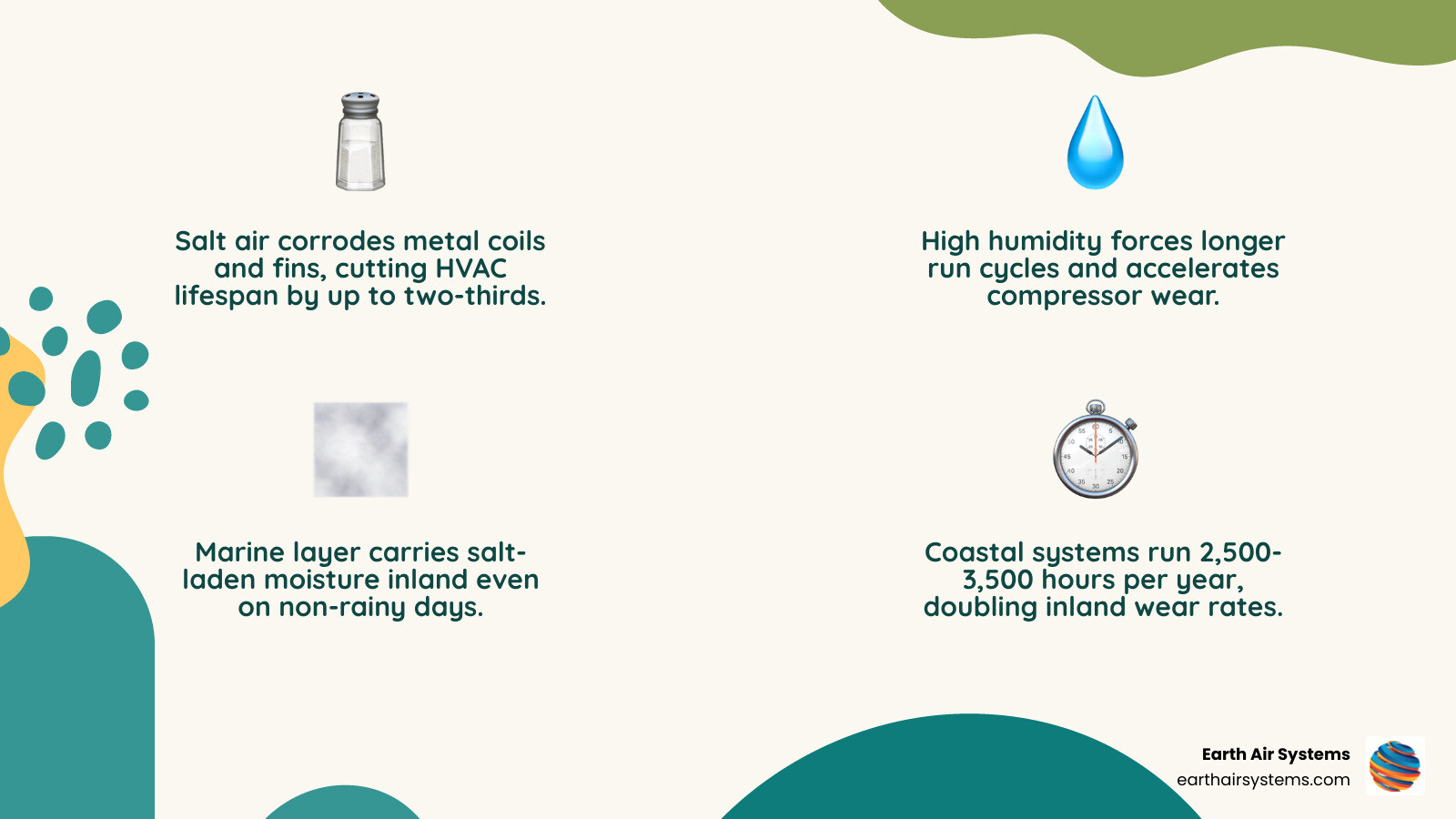
| Salt air | Corrodes metal coils, fins, and electrical components | Reduces lifespan by up to two-thirds without protection |
| High humidity | Forces longer run cycles and promotes mold growth in ducts | Accelerates compressor and motor wear |
| Marine layer | Pushes salt-laden moisture indoors and onto outdoor units | Speeds up corrosion even on non-rainy days |
| Coastal storms | Drives debris, sand, and power surges into the system | Causes physical and electrical damage |
| Proximity to shore | Units within 2 blocks of the ocean face the highest salt concentration | Typical lifespan drops to just 8-12 years |
Without the right protections in place, a coastal HVAC system in San Diego can fail in as little as 7 to 12 years — less than half the 15 to 20 year lifespan that homeowners in inland areas typically expect. Salt particles don’t just sit on the surface; they create a constant chemical reaction with moisture that eats through aluminum fins, copper coils, and electrical terminals over time. And because San Diego systems often run 2,500 to 3,500 hours per year compared to just 1,000 to 1,500 hours in northern states, the wear compounds fast.
The good news is that with the right equipment, smart placement, and consistent maintenance, coastal HVAC systems can reach that full 15 to 20 year mark. The sections below break down exactly how the damage happens — and what you can do to stop it.
Understanding How Coastal Climate Affects HVAC Lifespan in San Diego
San Diego County is full of microclimates. A system in La Jolla, Coronado, Oceanside, Encinitas, or Solana Beach deals with a very different environment than one farther inland in Escondido or San Marcos. That matters because HVAC lifespan is not just about age. Near the coast, condition often tells us more than the date on the nameplate.
Salt intrusion is the big headline, but it is not the only problem. Coastal systems also face:
- Persistent humidity from the marine layer
- Longer cooling seasons and more annual run time
- Wind-driven sand and debris
- Storm exposure and occasional power surges
- Daily temperature swings that can increase cycling
Inland equipment often lasts around 15 to 20 years under normal conditions. In coastal zones, a standard unit without extra protection more commonly lands in the 7 to 12 year range. Homes very close to the shoreline can see outdoor units deteriorate even faster, especially when maintenance is irregular.
Here is a simple San Diego-focused comparison:
| Location Type | Typical Exposure | Common Lifespan Range |
|---|---|---|
| Within 2 blocks of the ocean | Direct salt spray, strong marine air, heavy moisture | 8-12 years |
| Coastal neighborhoods within about 1 mile | Frequent salt intrusion, humidity, marine layer | 10-15 years |
| Inland San Diego areas | Lower salt exposure, less marine moisture | 15-20 years |
| Coastal home with strong protection and maintenance | Coated coils, smart placement, routine service | 15-20 years |
This is one reason HVAC planning affects more than comfort. It also affects long-term home value and replacement timing. If you want the bigger picture on efficiency, lifespan, and return on investment, our guide to HVAC ROI and home value is a helpful next read.
The Science of Salt Air: Why Beach House ACs Age Faster
Salt air is sneaky. It does not need a dramatic storm to do damage. Even on calm, pleasant San Diego mornings, microscopic salt particles can settle onto your outdoor condenser. Add moisture from the air, and that salt starts acting like a corrosion accelerator.
The result is an electrolytic reaction that attacks exposed metal parts, especially:
- Aluminum coil fins
- Copper tubing
- Steel cabinet hardware
- Electrical terminals and connections
- Fan motor housings and bearings
This is why a beachside AC can look older than it really is. What should be a clean metal surface starts to pit, oxidize, and break down. Homeowners may notice white powder on aluminum fins, rust stains on the cabinet, or flaking around screws and brackets. That is not cosmetic wear. It is a warning sign that heat transfer and electrical reliability are being compromised.
If you live near the coast and want a deeper look at the salt problem specifically, see Why Your Beach House AC Is Feeling Salty.
How Coastal Climate Affects HVAC Lifespan Through Chemical Corrosion
The outdoor condensing unit takes the biggest hit. Salt settles on the coil and cabinet, then moisture keeps the reaction active. Over time, that can lead to:
- Pitting on aluminum fins, which reduces heat transfer
- Coil deterioration that can contribute to refrigerant leaks
- Corroded electrical terminals that increase resistance
- Capacitor and contactor failure
- Fan motor bearing wear and seizing
- Rusted fasteners, panels, and base components
In simple terms, the system has to work harder while its parts get weaker. That is a bad combo.
A lightly corroded coil may still cool your home, but not as efficiently. A badly corroded electrical connection may seem fine one day and fail the next. That is why coastal damage can feel random to homeowners. It often builds quietly before turning into a sudden no-cool call on the hottest week of the year. HVAC has a sense of humor, and unfortunately it is usually expensive humor.
Why High Humidity and Heat Accelerate System Wear
Salt gets most of the attention, but humidity is the sidekick causing plenty of trouble too.
When humidity is high, your AC is not just cooling the air. It is also removing moisture. That means longer run cycles, heavier compressor demand, more condensate production, and more wear on motors and controls. In humid coastal climates, systems often operate far more hours per year than they do in cooler or drier regions.
That extra runtime matters because every hour adds wear to:
- Compressors
- Blower motors
- Outdoor fan motors
- Capacitors
- Contactors
- Drain components
It also increases the chance of moisture-related issues inside the system, including microbial growth around coils, drain pans, and ductwork. San Diego is milder than hotter parts of the country, but beach and marine-layer neighborhoods still deal with moisture-heavy air that can push systems to run inefficiently if they are dirty, oversized, or poorly maintained.
For more on how sun and heat add to the strain, visit Will Your AC Survive the SoCal Sun.
Signs Your System is Struggling with the Marine Layer
Coastal HVAC damage is often gradual. Your system usually does not wave a little white flag and announce, “I have been corroding for years.” Instead, it drops hints.
Watch for these signs of premature aging in coastal conditions:
- Higher energy bills without a clear reason
- Longer cooling cycles or reduced cooling power
- Loud fan noises, buzzing, or rattling from the outdoor unit
- Visible rust, white residue, or pitting on fins and cabinet panels
- Repeated capacitor, contactor, or motor repairs
- Weak airflow
- Musty odors indoors
- Water leaks or drain line clogs
- Uneven temperatures from room to room
Musty smells deserve special attention. In coastal homes, excess humidity can contribute to mold and mildew around ducts, vents, and evaporator components. If your system smells damp or the home feels sticky even when the AC is running, humidity control may be slipping.
For a closer look at the indoor side of the problem, read How Coastal Humidity Creates Mold Risk and How to Stop It.
How to Extend Your HVAC Longevity Near the Shore
The good news is that coastal wear is manageable. You cannot change the ocean, but you can absolutely make your system less vulnerable to it.
Here are the most effective ways to extend HVAC life near the coast:
- Rinse the outdoor unit with fresh water
- Keep up with professional maintenance
- Choose corrosion-resistant equipment
- Improve unit placement and shielding
- Replace filters on schedule
- Address small issues early
A gentle fresh-water rinse helps remove salt film before it bonds to metal surfaces. This is especially helpful for homes in La Jolla, Coronado, Encinitas, Solana Beach, and other neighborhoods close to the shore. Always turn off power before rinsing, and never use a pressure washer. Condenser fins bend easily, and they do not enjoy being blasted into retirement.
Strategic placement helps too. If possible, the outdoor unit should not sit where direct ocean winds constantly hit it. A well-planned location with airflow and partial shelter can reduce exposure. Wind barriers can help, but they must not block ventilation. The goal is protection, not turning the condenser into a sauna.
Debris control matters as well. Salt, dust, and plant material can stick to damp coastal coils and reduce airflow fast. Our article Don’t Let the Sea Breeze Clog Your HVAC covers that side of the problem in more detail.
Proactive Maintenance to Improve How Coastal Climate Affects HVAC Lifespan
If you live near the ocean, annual maintenance is usually not enough. In many San Diego coastal neighborhoods, bi-annual service is the smarter standard.
A solid coastal maintenance plan should include:
- Coil inspection and cleaning
- Checking for salt buildup and early corrosion
- Testing capacitors, contactors, and electrical connections
- Inspecting fan motor condition and amperage draw
- Clearing and treating condensate drains
- Verifying refrigerant performance
- Replacing or checking filters
- Reviewing cabinet integrity and fasteners
- Confirming safe clearances around the unit
For homes closest to the shoreline, we may also recommend protective upgrades such as anti-corrosion coil coatings or sacrificial anodes where appropriate. These measures help redirect or slow corrosion before it reaches critical components.
Professional maintenance matters because coastal damage is not always obvious from the outside. A unit may look decent but have failing terminals, weakening coil surfaces, or performance loss already underway. A contractor with coastal experience can catch those issues early and help you avoid preventable breakdowns.
At Earth Air Systems, we help homeowners across San Diego, Carlsbad, Coronado, La Jolla, Oceanside, Encinitas, Vista, and surrounding communities stay ahead of those salt-related problems with maintenance, repair, and replacement guidance tailored to local conditions.
Choosing the Right Equipment for San Diego’s Coastal Zones
If you are replacing a system near the coast, equipment choice matters a lot. A basic unit may work, but it may not age well in marine air.
Features worth looking for in coastal installations include:
- Coastal-rated or marine-environment compatible outdoor units
- E-coated coils
- Phenolic-coated coils
- Copper fin or enhanced corrosion-resistant coil options
- Stainless steel hardware and fasteners
- Sealed or better-protected electrical compartments
- Durable cabinet finishes designed for salt exposure
The right system type can matter too.
Heat pumps
Heat pumps are often a strong fit for San Diego’s mild climate. They provide efficient heating and cooling, and many modern models are available with better coastal protection packages.
Mini-splits
Mini-splits can be a smart option for additions, targeted zones, or homes without ideal duct layouts. In some cases, they may reduce certain airflow and duct-related moisture issues, though outdoor components still need coastal protection and maintenance.
Variable-speed systems
Variable-speed systems can help with humidity management because they run longer at lower output instead of blasting on and off. That can improve comfort and reduce short cycling, which is especially helpful in marine-layer conditions.
Just as important as the equipment itself is proper sizing. Oversized systems short cycle, remove less humidity, and can wear out faster. In coastal San Diego, that means professional load calculations matter. The best coastal unit in the world still struggles if it is the wrong size or installed in the wrong location.
Frequently Asked Questions about Coastal HVAC Care
How often should I rinse my outdoor AC unit if I live in Del Mar or Coronado?
For homes very close to the water, a gentle fresh-water rinse about once a month is a good rule of thumb, and also after especially windy coastal days. Always shut off power first and avoid spraying directly into electrical compartments. If you are farther inland but still in the marine zone, less frequent rinsing may be enough. We can help you match the schedule to your exact location and exposure.
Can a coastal HVAC system really last 15 years?
Yes, it can. But usually not by accident.
A coastal system is far more likely to reach 15 years or more when it has:
- Corrosion-resistant materials or coatings
- Proper placement away from direct salt-heavy wind
- Consistent rinsing and cleaning
- Bi-annual professional maintenance
- Early repairs before corrosion spreads
Without those protections, many coastal systems fall into the 7 to 12 year range. With them, reaching the inland-style 15 to 20 year range is realistic.
Does the marine layer affect my indoor furnace components?
Yes, indirectly. The outdoor unit takes the brunt of salt exposure, but the marine layer also raises indoor moisture levels. Over time, that can contribute to moisture buildup around indoor coils, ductwork, drain systems, and in some cases metal furnace components. High humidity can also worsen mold risk and indoor air quality issues if filtration and drainage are not kept in good shape.
Conclusion
Salt air is great for sunsets, less great for condenser coils.
If you have been wondering how coastal climate affects HVAC lifespan, the short answer is this: salt, humidity, marine moisture, wind, and extra runtime can age a San Diego HVAC system much faster than most homeowners expect. But faster wear does not have to mean early failure.
With the right equipment, smart placement, regular rinsing, and professional maintenance, coastal systems can last much longer and perform more reliably. That is especially true in beach-adjacent communities like La Jolla, Coronado, Encinitas, Solana Beach, Oceanside, and other coastal parts of San Diego County.
At Earth Air Systems, we bring 40+ years of experience, flat-rate pricing, and a 100% satisfaction guarantee to HVAC care across San Diego County. Whether you need an inspection, maintenance tune-up, repair, or a coastal-ready replacement, we are here to help protect your comfort and your equipment.
Schedule your coastal maintenance tune-up with Earth Air Systems today
