
How Coastal Air Affects Your HVAC Equipment — and Why It Matters in San Diego
How coastal air affects your HVAC equipment comes down to one relentless process: salt-accelerated corrosion combined with high humidity that forces your system to work harder, wear out faster, and fail sooner than it would just a few miles inland.
Here is a quick breakdown of what is happening to your system right now if you live near the San Diego coast:
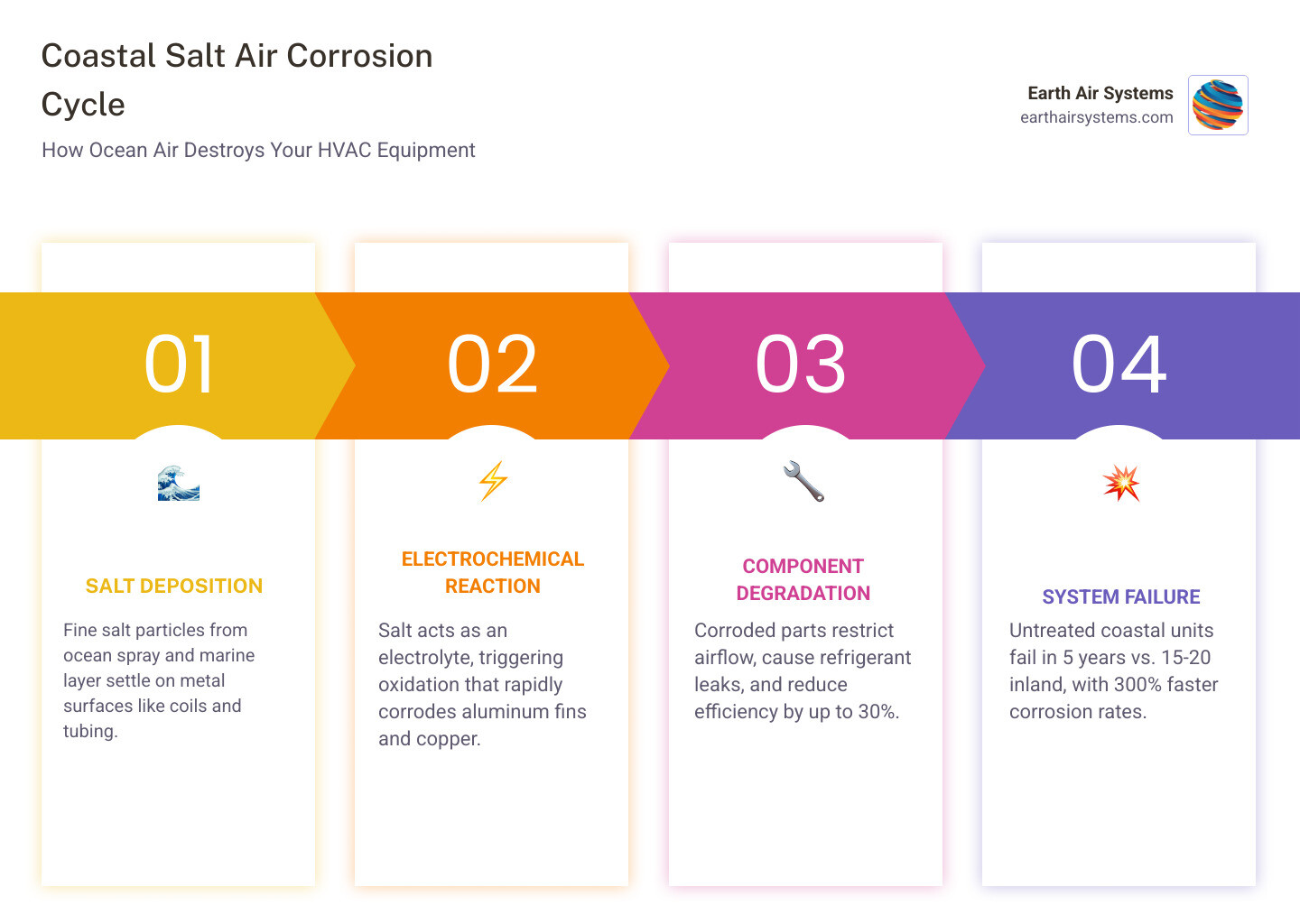
- Salt particles from ocean spray and the marine layer settle on metal components, triggering electrochemical reactions that eat through aluminum fins, copper tubing, and electrical terminals
- Corrosion rates in coastal zones can be up to 300% faster than those experienced just 10 miles inland
- Humidity levels of 65-80% force your air conditioner to work 15-25% harder than it would in a drier climate
- Standard HVAC units exposed to salt air can fail in as little as 5 years, compared to 15-20 years for well-protected or coastal-rated systems
- Energy efficiency drops by up to 30% over time as corroded components restrict airflow and reduce system performance
- Replacement parts are needed up to 40% more frequently on coastal systems versus protected inland units
The problem is not just being on the beach. Salt particles travel miles inland on San Diego’s ocean breezes, meaning even homeowners in neighborhoods well away from the shoreline can experience accelerated HVAC wear without realizing the cause.
The good news is that understanding what is happening is the first step to stopping it. The sections below break down exactly which components are at risk, what warning signs to watch for, and what you can do to extend your system’s life significantly.
The Science of Salt: How Coastal Air Affects Your HVAC Equipment
Living in San Diego means enjoying some of the best weather in the world, but for your air conditioner, the “marine layer” is more of a menace than a luxury. When we talk about how coastal air affects your HVAC equipment, we are primarily looking at the destructive power of sodium chloride—salt.
Salt is hygroscopic, meaning it naturally attracts and holds moisture. When salt particles from the Pacific breeze settle on your outdoor unit, they create a thin, conductive film. This triggers an electrochemical oxidation process. In simple terms, your HVAC unit’s metal surfaces essentially become a “slow-motion battery,” where the salt and moisture facilitate a flow of electricity that eats away at the metal.
Research shows that metals in coastal environments can corrode up to ten times faster than usual. In fact, outdoor units in coastal zones experience corrosion rates up to 300% faster than those located just 10 miles inland. This is why a system in a place like El Cajon might cruise along for 20 years, while a unit in Coronado or La Jolla might struggle to hit the 10-year mark without specialized care.
| Feature | Coastal San Diego (0-5 miles inland) | Inland San Diego (10+ miles inland) |
|---|---|---|
| Average Lifespan | 5–10 Years | 15–20 Years |
| Corrosion Rate | 300% Faster | Standard |
| Energy Consumption | 15–25% Higher | Baseline |
| Maintenance Need | Quarterly/Monthly | Bi-Annual |
If you’ve noticed your unit looking a bit “crusty” or your energy bills creeping up, it’s likely the salt air at work. Our team at Earth Air Systems provides comprehensive Air Conditioning Services in San Diego to help identify these issues before they lead to a total system breakdown.
Vulnerable Components: Where Salt Air Strikes First
The outdoor condenser unit is the “front line” in the battle against coastal air. Because it is constantly pulling in large volumes of air to disperse heat, it acts like a giant magnet for salt and sand.
The most vulnerable parts of your system include:
- Condenser Coils and Aluminum Fins: These are the thin, “leaf-like” metal pieces on your outdoor unit. They are designed to maximize surface area for heat exchange. Unfortunately, salt settles in the tiny gaps between them, causing the aluminum to turn into a white, powdery ash (aluminum oxide).
- Copper Tubing: While copper is more resilient than aluminum, salt air can eventually cause “pinhole leaks.” Once the refrigerant leaks out, your system can no longer cool your home.
- Fasteners and Bolts: Often made of standard steel, these are usually the first things to rust. A rusted bolt can make a simple repair nearly impossible, forcing a full component replacement instead.
- Fan Motor Bearings: Salt and sand can work their way into the motor, causing friction that leads to “frozen” bearings and motor burnout.
How Coastal Air Affects Your HVAC Equipment Efficiency
Efficiency is the first casualty of coastal living. As those aluminum fins corrode and flatten, airflow becomes restricted. Your system has to run longer and work harder to move the same amount of heat. This isn’t just a theory; salt corrosion can reduce HVAC system efficiency by up to 30% over time.
When your system is struggling with restricted airflow and failing coils, it also puts immense pressure on the compressor. If you find your home isn’t staying as cool as it used to, or your heater feels weak during those chilly San Diego nights, you may need to look into Heating Services in San Diego to ensure your heat pump or furnace is still operating safely.
Electrical Failures and How Coastal Air Affects Your HVAC Equipment
Salt isn’t just corrosive; it’s conductive. When salt residue builds up on electrical terminals, contactors, and capacitors, it can create “conductive paths” where electricity isn’t supposed to go. This leads to intermittent shorts, blown fuses, or even the premature burnout of the control board. Coastal systems often require replacement parts 40% more frequently than those in protected inland areas because of these electrical gremlins. If you’re wondering why your system is acting “glitchy,” check out our HVAC FAQs for more common symptoms of coastal wear.
Humidity and the “Dirty Sock” Dilemma
San Diego’s coastal humidity (often averaging 65-80% relative humidity) presents its own set of challenges. High humidity makes salt “stickier,” helping it adhere to your equipment. But more importantly, it forces your AC to spend more energy on dehumidification than on actually lowering the temperature.
When humidity is high, the evaporator coil inside your home stays damp for longer periods. This moisture, combined with dust and salt particles that have infiltrated your home, creates a breeding ground for mold and mildew. This often results in “Dirty Sock Syndrome”—a musty, locker-room smell that wafts through your vents when the AC kicks on.
Beyond the smell, this biological buildup further restricts airflow and can significantly degrade your indoor air quality. Managing this requires specialized Air Quality Services in San Diego to ensure your family isn’t breathing in mold spores or excess salt particulates.
Proactive Protection: Maintenance Strategies for 2026
You don’t have to move inland to save your AC. With a proactive strategy, you can combat how coastal air affects your HVAC equipment and potentially double the lifespan of your unit.
Here is what we recommend for coastal homeowners in 2026:
- The Monthly Rinse: On a warm, dry day, turn off your AC and gently rinse the outdoor unit with a garden hose. Use low pressure (never a power washer!) to wash away salt deposits from the fins and casing. Monthly cleanings can extend coil life by as much as 30%.
- Maintain Clearance: Ensure there is at least a 2-foot clearance around your outdoor unit. While shrubs can act as a windbreak, they also trap moisture and debris. Keep the area clear to allow for maximum airflow.
- Protective Coatings: Professional-grade “marine coatings” or e-coatings can be applied to coils. these specialized coatings act as a barrier between the metal and the salt air, significantly slowing the oxidation process.
- Sacrificial Anodes: Just like on a boat, a sacrificial anode can be installed. This piece of metal is designed to corrode instead of your expensive HVAC components, “sacrificing” itself to save the system.
- Quarterly Professional Inspections: In coastal San Diego, the standard “once a year” tune-up isn’t enough. We recommend quarterly or at least bi-annual inspections to catch “pinhole” leaks and electrical corrosion before they become catastrophic.
Our technicians cover a wide range of Service Areas, from the beachfront homes of Oceanside to the hilltop properties in Escondido, providing tailored maintenance for every microclimate.
Specialized Solutions for Coastal Environments
If you are looking to replace your system in 2026, don’t just buy a standard unit off the shelf. Investing in coastal-specific HVAC solutions can reduce repair frequency by up to 60% and maintain 15-20% better energy efficiency over the life of the system.
Look for these features:
- Stainless Steel Cabinets: These resist rust much better than painted galvanized steel.
- E-Coated Coils: Factory-applied epoxy coatings provide the best protection against salt air.
- Variable-Speed Compressors: These systems are excellent at managing the high humidity found in San Diego’s coastal regions, as they can run at lower speeds for longer periods to pull moisture out of the air.
- Coastal-Rated Equipment: Many manufacturers now offer “Coastal” or “Seacoast” models specifically designed with reinforced components and corrosion-resistant materials.
When you’re ready to upgrade, our Air Conditioning Services in San Diego can help you select a system that is sized correctly for our unique climate and built to withstand the salt.
Frequently Asked Questions about Coastal HVAC Care
How often should I rinse my outdoor unit if I live near the beach?
If you are within a mile of the ocean, we recommend a gentle fresh-water rinse once a month. If you are 2-5 miles inland, once every three months is usually sufficient. Always ensure the power is off before rinsing.
What are the first signs that salt air is damaging my AC?
Look for “pitting” or white, ashy buildup on the aluminum fins. Other signs include rust on the outer cabinet, rising energy bills, or a “hissing” sound which could indicate a refrigerant leak caused by a pinhole in the copper tubing.
Can a standard HVAC unit last 15 years in a coastal zone?
It is very rare. Without specialized maintenance and coatings, a standard unit in a high-salt environment like Coronado or La Jolla typically lasts only 5 to 7 years before major components fail. With professional coastal maintenance, you can push that closer to 12-15 years.
Conclusion
Living by the coast is a dream, but the salt air can quickly turn your HVAC situation into a nightmare if you aren’t prepared. Understanding how coastal air affects your HVAC equipment is the key to protecting your investment. By implementing regular rinsing, choosing corrosion-resistant equipment, and scheduling specialized professional maintenance, you can enjoy the ocean breeze without the “salty” repair bills.
At Earth Air Systems, we have over 40 years of experience navigating the unique microclimates of San Diego. Whether you need a routine tune-up or an emergency AC Repair in Coronado, our team is here to ensure your home stays comfortable and your equipment stays protected. Don’t let the salt win—give us a call today to schedule your coastal system assessment!
