
Why Understanding What an HVAC Maintenance Visit Includes Could Save You Money
What does an HVAC maintenance visit include is one of the most practical questions a San Diego homeowner can ask — and knowing the answer helps you make sure you’re actually getting what you pay for.
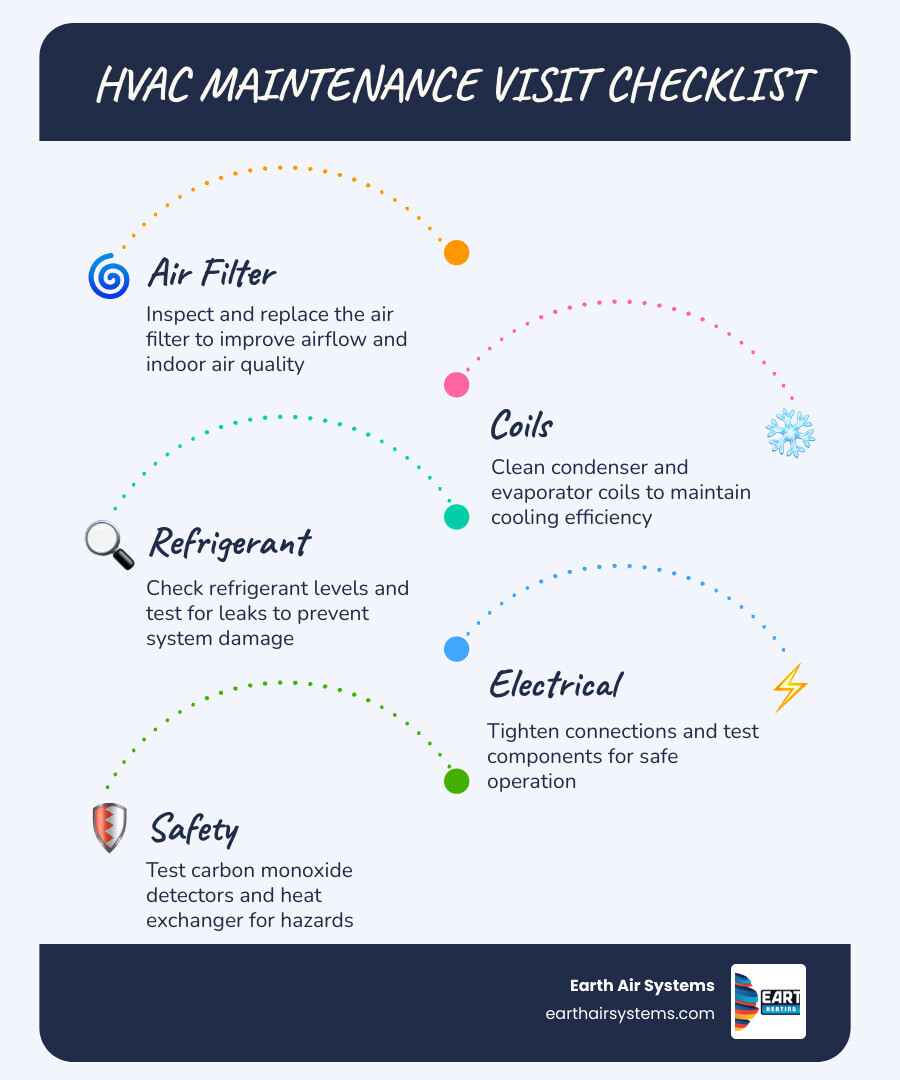
Here’s a quick overview of what a thorough visit covers:
- Air filter inspection and replacement
- Thermostat calibration and testing
- Electrical connection inspection and tightening
- Lubrication of moving parts (motors, bearings)
- Condenser and evaporator coil cleaning
- Refrigerant level check and leak detection
- Condensate drain line flushing
- Blower motor assessment
- Heat exchanger inspection (for heating systems)
- Carbon monoxide and safety controls testing
- Ductwork visual inspection
- Overall system performance testing
Most of us don’t think about the HVAC system until something goes wrong — and by then, a small problem has often turned into an expensive repair. Just like skipping oil changes leads to engine damage, skipping HVAC maintenance puts your system on a path toward early failure. A well-maintained system can last 15 to 20 years. A neglected one may give out in 10 or less.
Regular maintenance also keeps efficiency from quietly eroding. Without it, your system can lose up to 15% of its efficiency every single year — meaning higher energy bills for the same level of comfort. For San Diego homeowners running air conditioning for much of the year, that adds up fast.
A thorough maintenance visit should take between one and one and a half hours per system. If a technician is done in 20 minutes, you likely received a visual once-over — not a real tune-up.
For a deeper look at keeping your system in top shape year-round, check out The No-Stress Guide to Maintaining Your Heating and Cooling.
Explore more about what does an hvac maintenance visit include:
What Does an HVAC Maintenance Visit Include?
When we pull up to your home in San Diego, Carlsbad, or Chula Vista, we don’t just walk in with a clipboard and a smile. A professional heating, ventilation, and air conditioning (HVAC) tune-up is a highly technical, multi-step process designed to optimize performance, prevent emergency breakdowns, and keep your family safe.
A comprehensive inspection covers the entire ecosystem of your home’s climate control. This includes testing system performance under live operating conditions, running complete safety checks, performing electrical testing, and conducting an in-depth mechanical evaluation.
To help you visualize the scope of this work, we’ve broken down exactly what a qualified technician should do. If you want to dive deeper into the technicalities of these visits, you can read Everything Your HVAC Tech Should Be Doing During a Tune-Up.
What Does an HVAC Maintenance Visit Include for Cooling Systems?
Our cooling systems in Southern California work hard to combat the coastal humidity and inland heat. During a cooling-specific tune-up, the focus shifts heavily to heat transfer and airflow.
- Coil Inspection and Cleaning: Your system relies on two main coils: the outdoor condenser coil and the indoor evaporator coil. If either is caked in dust or ocean salt, it cannot release or absorb heat efficiently. The technician will inspect and clean these coils to prevent your system from running longer, hotter cycles.
- Refrigerant Charge Verification: We measure refrigerant levels to ensure they match the manufacturer’s exact specifications. Low refrigerant usually points to a leak, which can freeze the evaporator coil or burn out the compressor.
- Subcooling and Superheat Calculations: Rather than relying on simple pressure readings, we calculate superheat (for piston-style systems) and subcooling (for thermostatic expansion valve systems). These calculations tell us exactly how efficiently the refrigerant is changing states from liquid to gas and back again.
If you suspect your outdoor unit is struggling due to dirt and salt buildup, learn How to Fix Dirty Condenser Coil the Right Way.
What Does an HVAC Maintenance Visit Include for Heating Systems?
Even in mild climates like Oceanside and Coronado, winter nights require a reliable, safe heating system. Heating maintenance prioritizes combustion safety and mechanical integrity.
- Heat Exchanger Inspection: This is the most critical safety check of the entire visit. The technician will inspect the heat exchanger for hairline cracks or corrosion. A cracked heat exchanger can leak deadly carbon monoxide into your home’s breathing air.
- Burner Assembly and Ignition System Cleaning: Over time, soot and debris can clog burner ports, leading to delayed ignition or uneven heating. We clean the burner assembly and flame sensor to ensure smooth, immediate ignition.
- Gas Pressure and Combustion Analysis: We verify that the gas pressure entering and leaving the gas valve is correct. We also run a combustion analysis to measure the ratio of oxygen to fuel, ensuring clean combustion and verifying that carbon monoxide levels are safely within limits.
Indoor vs. Outdoor Unit Maintenance Tasks
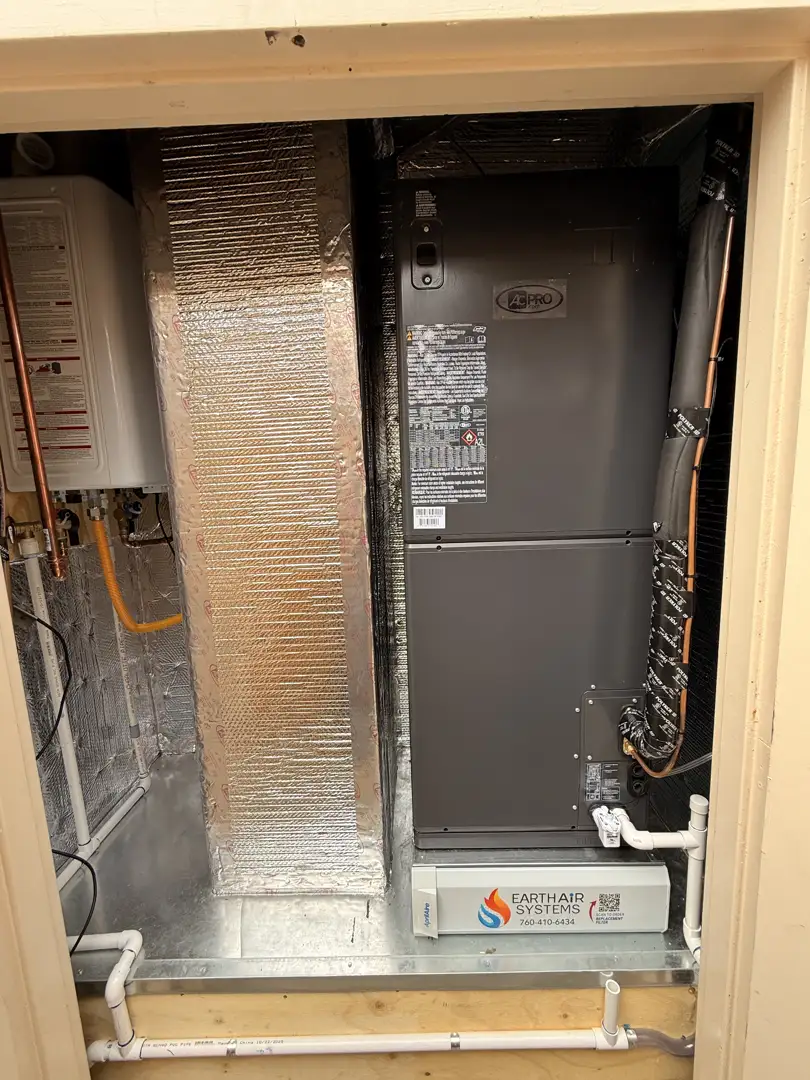
Most modern residential HVAC systems in San Diego County are split systems. This means they have an outdoor unit (the condenser or heat pump) and an indoor unit (the air handler or furnace). Because these units perform entirely different tasks, they require separate checklists during our visit.
If you use a heat pump system, which provides both heating and cooling, the maintenance is even more specialized. Technicians must test the reversing valve (which switches the system between heating and cooling modes) and verify that the defrost board functions correctly to prevent ice buildup during cooler winter nights.
For a comprehensive breakdown of how these components work together in our local area, check out The Ultimate Guide to AC Maintenance Services in San Diego.
Outdoor Condenser Unit Checklist
The outdoor unit is exposed to the elements daily—from salt air in La Jolla and Encinitas to dust in Escondido. Our checklist for this hard-working unit includes:
- Debris and Vegetation Removal: We clear out leaves, twigs, and dirt that accumulate inside the bottom of the condenser cabinet.
- Fan Motor and Blade Inspection: We inspect the condenser fan motor, check the fan blades for balance or damage, and lubricate the motor bearings if they aren’t permanently sealed.
- Coil Cleaning: We gently wash the condenser fins to remove dirt and salt crust without bending the delicate aluminum fins.
- Clearance Requirements: We ensure there is at least two feet of clear space around the entire unit. Shrubbery, outdoor furniture, or fences should never crowd the condenser, as this restricts the airflow needed to dump heat outside.
- Capacitor and Electrical Testing: We test the run and start capacitors using a multimeter to measure their microfarad output. Weak capacitors are the leading cause of system failures on hot summer afternoons.
Indoor Air Handler and Furnace Checklist
The indoor unit lives in your closet, attic, or garage, driving the airflow through your ductwork. Our indoor maintenance tasks include:
- Blower Motor Calibration: We clean the blower wheel and measure the motor’s amperage draw. If the motor pulls too much current, it may be nearing the end of its lifespan.
- Condensate Drain Line Flushing: As your air conditioner cools, it extracts gallons of water from the air. This water drains out through a plastic condensate line. We flush this line and clear any algae or slime buildup to prevent water from backing up and damaging your ceilings or drywall.
- Electrical Connection Tightening: We inspect all wiring, tighten terminal screws, and look for signs of overheating, such as melted wire insulation.
- Static Pressure Measurements: We measure the resistance to airflow within your ductwork. High static pressure means your system is working too hard to push air, which is often caused by crushed ducts or restrictive filters.
To understand how a neglected indoor unit can choke your entire system, read Stop Suffocating Your AC with Old Filters.
Why Regular Maintenance is Essential in June 2026
As we enjoy the beautiful weather of June 2026, keeping your home comfort system running efficiently is more important than ever. Routine maintenance is not an optional luxury; it is the single best way to protect one of your home’s most expensive appliances.
By prioritizing preventative care, you enjoy a longer system lifespan, lower monthly energy bills, and total peace of mind during extreme weather. Furthermore, failing to schedule professional maintenance can void your manufacturer’s warranty, leaving you fully responsible for the cost of major replacement parts.
Here is a side-by-side comparison of how a maintained system performs compared to one that is ignored:
| System Metric | Professionally Maintained System | Neglected HVAC System |
|---|---|---|
| Average Lifespan | 15 to 20 years | 8 to 10 years |
| Annual Efficiency Loss | Minimal (stays close to original SEER2 rating) | Up to 15% loss in efficiency per year |
| Emergency Breakdowns | Extremely rare (issues caught early) | Common during peak summer or winter |
| Indoor Air Quality | High (clean coils, optimized filtration) | Poor (dust, mold, and allergen buildup) |
| Warranty Status | Fully compliant and active | Voided due to lack of professional documentation |
To read more about how consistent care pays off for California homeowners, check out To Tune or Not to Tune: The Benefits of Regular HVAC Maintenance in California.
How Often to Schedule and What to Expect During a Visit
For standard central split systems, we recommend professional maintenance twice a year: once in the spring to prepare your air conditioner for the summer heat, and once in the fall to ensure your heating system runs safely through the winter.
If you have a heat pump that handles both heating and cooling, it still needs bi-annual attention because it runs year-round. While our coastal San Diego climate is relatively mild, our systems still face unique challenges like salt-air corrosion and humidity spikes.
Learn more about timing your service visits by reading Mild Climates and Maintenance: How Often Should You Service Your System?.
Homeowner Preparation and DIY Tasks
While mechanical, gas, and electrical work must be left to licensed professionals, there are several simple tasks you can perform to keep your system happy between our visits:
- Filter Replacement: Check your air filters monthly. Replace standard 1-inch pleated filters every 60 to 90 days. If you have pets, allergies, or live in a dusty area like Escondido or San Marcos, you may need to change them every 30 days.
- Clear Outdoor Debris: Periodically check your outdoor condenser. Gently sweep away leaves, cut back weeds, and ensure there is a two-foot clear zone around the metal cabinet.
- Keep Vents Unobstructed: Make sure furniture, rugs, and drapes are not blocking your supply registers or return air grilles. Choking your vents forces the system to work harder.
- Thermostat Settings: Program your thermostat to avoid dramatic temperature swings. Setting your cooling system to a steady, comfortable temperature when you are home prevents unnecessary wear and tear.
Red Flags of Incomplete Maintenance Service
Unfortunately, not all maintenance visits are created equal. Homeowners should watch out for these common red flags that indicate a technician is cutting corners:
- The “Clipboard-Only” Visit: If a technician walks in, changes your filter, glances at your thermostat, and leaves in 15 minutes, you did not get a real tune-up. A thorough maintenance visit takes an hour or more.
- No Physical Cleaning: If the technician doesn’t open the outdoor cabinet to wash the coils or flush out the condensate drain line, they skipped the most critical physical maintenance steps.
- Lack of Measurements: A real technician uses specialized digital tools to measure static pressure, electrical draw, and refrigerant levels. If they don’t take these measurements, they cannot truly verify your system’s health.
- High-Pressure Sales Pitches: Beware of companies that use low-priced tune-up specials simply to get a foot in your door and aggressively pressure you to buy a brand-new system when your current one only needs a simple cleaning.
Frequently Asked Questions about HVAC Maintenance
How long does a standard HVAC maintenance visit take?
A high-quality, professional HVAC maintenance visit typically takes between one and one and a half hours per system. If you have a larger home with multiple systems (such as zoned heating and cooling or separate upstairs and downstairs units), the visit can take up to three hours. This time is necessary because the technician must physically open the cabinets, clean the components, run electrical tests, and let the system run to measure live performance.
Will skipping professional maintenance void my manufacturer warranty?
Yes, in almost all cases, it will. Major HVAC manufacturers (such as Trane, Carrier, and Lennox) require proof of annual professional maintenance to keep their parts warranties active. If a critical component like your compressor or heat exchanger fails, the manufacturer will often ask for documented service receipts from a licensed contractor before approving the replacement part. Keeping your seasonal maintenance records is your insurance policy.
Does professional maintenance improve indoor air quality?
Absolutely. Your HVAC system acts as the lungs of your home. If your evaporator coil is damp and dirty, or if your blower compartment is filled with dust, those particles are continuously recirculated into your indoor air. During a maintenance visit, we clean these hidden areas, clear out mold-harboring moisture from the drain lines, and ensure your filtration system is functioning perfectly.
To explore our specialized air purification options, visit our Air Quality Services in San Diego page.
Conclusion
Understanding what does an hvac maintenance visit include empowers you to make smart decisions for your home’s comfort, safety, and monthly budget. By investing in regular preventative care, you protect your system from early failure, keep your energy bills low, and ensure your family stays comfortable through every San Diego season.
At Earth Air Heating & Cooling, we are proud to serve communities across San Diego County, including Carlsbad, Oceanside, Chula Vista, Encinitas, Vista, and downtown neighborhoods like Hillcrest and North Park. With over 40 years of hands-on experience, our licensed, background-checked technicians deliver thorough, transparent maintenance services.
We stand behind our work with straightforward service, written proposals, and a 100% satisfaction guarantee.
Ready to get your heating and cooling system in peak condition? Contact Earth Air Heating & Cooling today or browse our HVAC FAQs to learn more about how we keep San Diego homes comfortable year-round.
