
Why Knowing What an HVAC Maintenance Plan Includes Can Save You Money
What does an HVAC maintenance plan include is one of the most practical questions a homeowner can ask before the summer heat or winter chill hits San Diego. And the short answer is: a lot more than most people expect.
At its core, a professional HVAC maintenance plan typically covers:
- Filter inspection and replacement
- Thermostat calibration and testing
- Electrical connection inspection and tightening
- Refrigerant level check and leak inspection
- Evaporator and condenser coil cleaning
- Condensate drain line flushing
- Blower motor and fan blade inspection
- Safety control testing (including carbon monoxide checks on gas systems)
- Heat exchanger inspection (for furnaces)
- Overall system performance evaluation
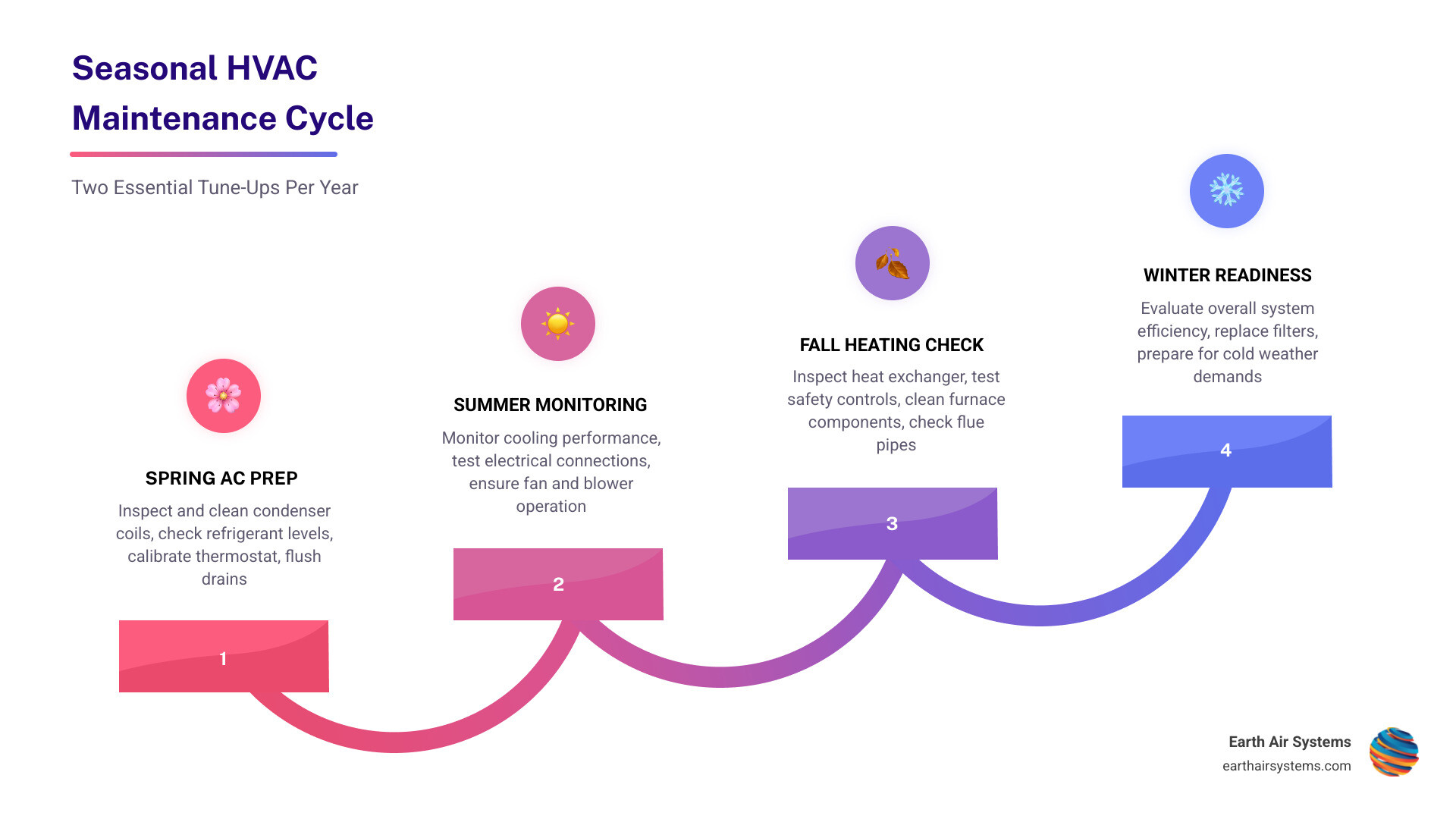
Most plans include two visits per year — one in spring for your cooling system, and one in fall for your heating system.
Here’s why that matters: heating and cooling account for roughly half of a typical home’s total energy use. A system that hasn’t been serviced can quietly lose efficiency year after year, driving up your utility bills without any obvious warning signs. One clogged drain line, a worn capacitor, or a dirty coil can snowball from a minor fix into a costly breakdown — usually on the hottest day of the year.
Think of it the way you think about oil changes for your car. You don’t wait until the engine seizes. You stay ahead of the problem.
This guide breaks down every task your HVAC tech should be completing during a tune-up — so you know exactly what you’re paying for and what to expect.
What Does an HVAC Maintenance Plan Include for San Diego Homeowners?
In our corner of Southern California, we often hear homeowners say, “But the weather is so nice in Vista and Oceanside, do I really need a plan?” It’s a fair question. However, even in our paradise-like environment, the mechanical components of your air conditioner and heater are under constant stress.
Proactive service is the difference between a system that lasts 20 years and one that gives up the ghost at age eight. Research shows that neglected HVAC systems lose about 5% of their efficiency every single year. When you live in a place like Downtown San Diego or North Park, where dust and coastal salt air can accumulate, that efficiency drop can be even steeper.
A comprehensive maintenance plan ensures that your system reliability remains high. By catching a failing capacitor or a small refrigerant leak in May 2026, we prevent the “no-cool” emergency call in July. Furthermore, regular maintenance can reduce breakdowns by up to 95%.
One of the biggest questions we get is: “What should I do versus what should you do?” To clarify, we’ve put together this comparison:
Homeowner vs. Professional Responsibilities
| Task | Homeowner (DIY) | Professional Technician |
|---|---|---|
| Filter Replacement | Yes (Every 1-3 months) | Yes (During tune-up) |
| Clearing Debris around Outdoor Unit | Yes (Maintain 2ft clearance) | Yes (Deep cleaning of coils) |
| Thermostat Battery Replacement | Yes | Yes (Plus calibration) |
| Refrigerant Handling | No (Illegal/Dangerous) | Yes (EPA-certified check) |
| Electrical Component Testing | No | Yes (Amperage/Voltage checks) |
| Heat Exchanger Safety Inspection | No | Yes (Crucial for safety) |
| Condensate Drain Flushing | Limited | Yes (Using specialized tools) |
Understanding Mild Climates and Maintenance: How Often Should You Service Your System? is key to maximizing your investment. In San Diego, we recommend a bi-annual approach. Even if you don’t use your heater as much as someone in the Midwest, the blower motor and filtration system run year-round, making that fall checkup just as vital for indoor air quality.
Cooling System Checklist: Preparing for the Summer Heat
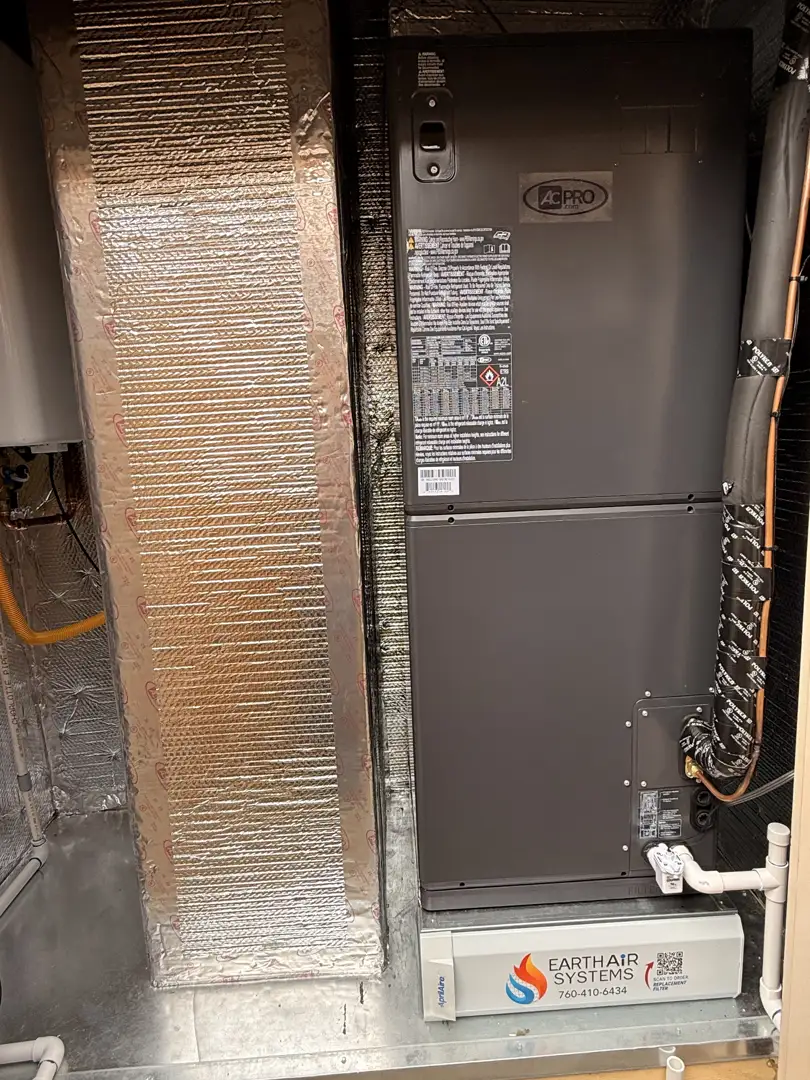
When our technicians arrive at your home in Carlsbad or San Marcos for a spring tune-up, they aren’t just glancing at the box outside. A professional AC maintenance visit is a deep dive into the “health” of your cooling system.
The centerpiece of this visit is the inspection of the condenser coils. Over time, these coils get coated in dust, pollen, and San Diego “marine layer” residue. When they are dirty, your AC has to work much harder to release heat, which can increase energy use by 15% or more. We don’t just spray them with water; we use specialized cleaners to ensure the metal can “breathe” again.
Next, we look at refrigerant levels. Your AC is a closed system; it doesn’t “use up” refrigerant like a car uses gas. If the levels are low, it means there is a leak. Identifying a tiny leak now saves you from a burnt-out compressor later—a repair that is significantly more expensive than a simple patch.
For a deeper dive into these technical steps, check out The Ultimate Guide to AC Maintenance Services in San Diego.
Our checklist also includes:
- Compressor Health Assessment: We measure the “start-up” amperage to ensure the heart of your system isn’t straining.
- Fan Motor Lubrication: Reducing friction extends the life of the motor.
- Thermostat Calibration: We ensure the brain of your system actually knows what temperature it is in the room. If it’s off by just a few degrees, your system cycles more often than necessary.
What does an HVAC maintenance plan include for cooling systems?
Beyond the big components, the “devil is in the details.” A high-quality plan includes checks that the average homeowner might never think of. For instance, we pay close attention to electrical connections. Heat causes wires to expand and contract, which can lead to loose connections and electrical shorts. We tighten every terminal to ensure safety.
Another critical task is flushing the condensate drain line. In humid coastal areas or even during a humid San Diego summer, your AC pulls gallons of water out of the air. This water exits through a small pipe. Algae and “gunk” can grow in that pipe, leading to a clog. A clogged drain can cause water damage to your ceiling or floor, sometimes costing thousands of dollars to repair.
If you are looking for localized expertise, we provide specialized care across the region. Whether you need Don’t Sweat It: Finding the Top AC Maintenance Company in Chula Vista or are searching for Don’t Sweat It: Finding the Best AC Maintenance in La Jolla, CA, our team ensures your evaporator coils and blower components are spotless and functional.
Heating and Furnace Maintenance: Safety and Reliability
Even though San Diego isn’t known for blizzards, we still get those chilly nights in Escondido and El Cajon where you want your furnace to work perfectly. Heating maintenance is less about “cooling power” and more about safety and reliability.
The most critical part of a furnace tune-up is the heat exchanger inspection. This is the component that keeps toxic combustion gases (like carbon monoxide) separate from the air you breathe. Our technicians use specialized tools to look for microscopic cracks. According to industry safety standards, even a tiny crack means the unit must be addressed immediately to prevent CO poisoning.
During your Heating Maintenance in San Diego, we also focus on:
- Burner Assembly: We clean the burners to ensure a clean, blue flame. If the flame is yellow or flickering, it’s a sign of incomplete combustion.
- Ignition System: Whether you have a pilot light or an electronic igniter, we test it to ensure you aren’t left in the cold when you click the thermostat.
- Flue Pipes: We check the exhaust system for blockages or rust to ensure gases are venting out of your home properly.
- Safety Controls: We test the limit switches that turn the system off if it starts to overheat.
Specialized Care for Heat Pumps and Indoor Air Quality
Many modern homes in areas like Solana Beach and Encinitas are switching to heat pumps. Because a heat pump works year-round to both heat and cool your home, it requires a slightly different maintenance approach.
The reversing valve is the “magic” part that tells the heat pump whether to send heat inside or outside. If this valve sticks, you might find yourself with AC in the winter! We also test the defrost cycle. Even in San Diego, outdoor units can frost over on a cold, damp night. If the defrost board isn’t working, ice will build up and eventually crush the internal coils.
Maintenance isn’t just about the machinery; it’s about the air you breathe. A major part of AC Maintenance in San Diego involves indoor air quality (IAQ).
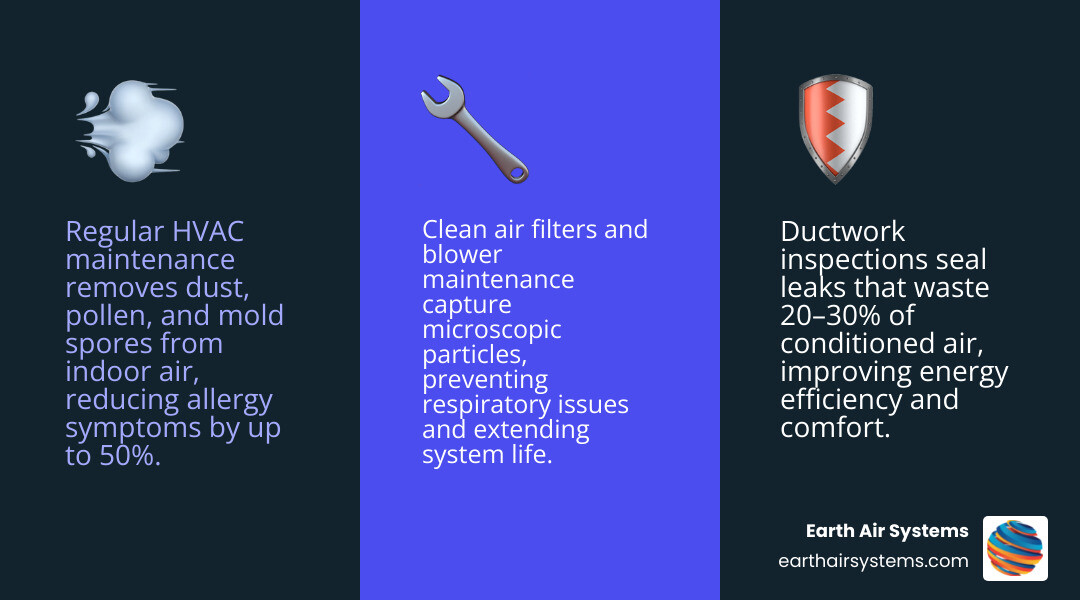
We perform a ductwork inspection to look for leaks. Did you know that the average home loses 20–30% of its conditioned air through holes in the ducts? That is literally like venting your cash into the attic. We also evaluate your air filtration system. If you have pets or allergies, we can recommend high-MERV filters that catch more microscopic particles without straining your blower motor.
What does an HVAC maintenance plan include for heating and heat pumps?
For heat pumps and furnaces alike, the blower motor is the unsung hero. It’s the fan that pushes the air through your vents. We check the belt (if applicable) for cracks and measure the capacitor. Most emergency calls are caused by a $150 capacitor failing, which then causes the expensive motor to overheat and burn out. Catching that capacitor during a tune-up is the ultimate “money-saving” move.
We also inspect auxiliary heat or electrical heat strips. In heat pump systems, these kick in when the temperature drops too low for the pump to keep up. If these aren’t tested in the fall, you won’t know they’re broken until you’re shivering in bed.
For residents in coastal communities, checking for corrosion is paramount. Whether you are seeking Don’t Sweat the Heat with Professional AC Maintenance in Coronado or using Don’t Get Steamed: Your Guide to Local AC Maintenance Contractors, ensure your tech is looking for salt-air damage on the electrical terminals.
Frequently Asked Questions
Navigating HVAC can be confusing. We’ve compiled some of the most common questions our San Diego customers ask. For more detailed answers, visit our HVAC FAQs.
How often should I schedule professional HVAC maintenance in San Diego?
Ideally, twice a year. Schedule your cooling tune-up in the spring (March/April) and your heating tune-up in the fall (September/October). This ensures your system is ready for the peak demand of the upcoming season. For heat pumps, this bi-annual schedule is non-negotiable since the unit works all year long.
Will a maintenance plan help lower my monthly utility bills?
Absolutely. A well-maintained system can cut utility bills by up to 35%. When coils are clean and motors are lubricated, the system runs shorter cycles to reach your desired temperature. This uses less electricity and puts less wear and tear on the components.
Does skipping annual maintenance void my manufacturer warranty?
In many cases, yes. Most major manufacturers (like Trane, Lennox, or Carrier) require documented proof of annual professional maintenance to honor parts warranties. If your compressor fails in year five but you haven’t had a pro look at it since it was installed, the manufacturer may deny your claim, leaving you with a massive bill.
Conclusion
When you ask, “what does an hvac maintenance plan include,” you’re really asking how to protect your home’s most expensive appliance. At Earth Air Systems, we believe that maintenance is “preventative healthcare” for your home. Our team brings over 40 years of experience to every San Diego doorstep, from Hillcrest to National City.
By enrolling in a plan, you aren’t just getting a checklist; you’re getting priority service during heatwaves, repair discounts, and the peace of mind that your family is safe from hazards like carbon monoxide or electrical fires.
Don’t wait for your system to start making strange noises or for your energy bill to skyrocket. To see the long-term financial benefits for yourself, read our guide on how to Stop Venting Your Cash and Learn if HVAC Plans Save Money.
Ready to ensure your comfort for the rest of 2026? Schedule your professional 2026 tune-up with Earth Air Systems today and experience the difference that 100% customer satisfaction and flat-rate pricing can make for your San Diego home.
