
Why Knowing How to Maintain Your Heating and Cooling System Saves You Money and Headaches
Knowing how to maintain your heating and cooling system is one of the smartest things you can do as a homeowner. Your HVAC system works hard year-round, and without regular upkeep, it quietly loses efficiency, drives up energy bills, and eventually breaks down — often at the worst possible moment.
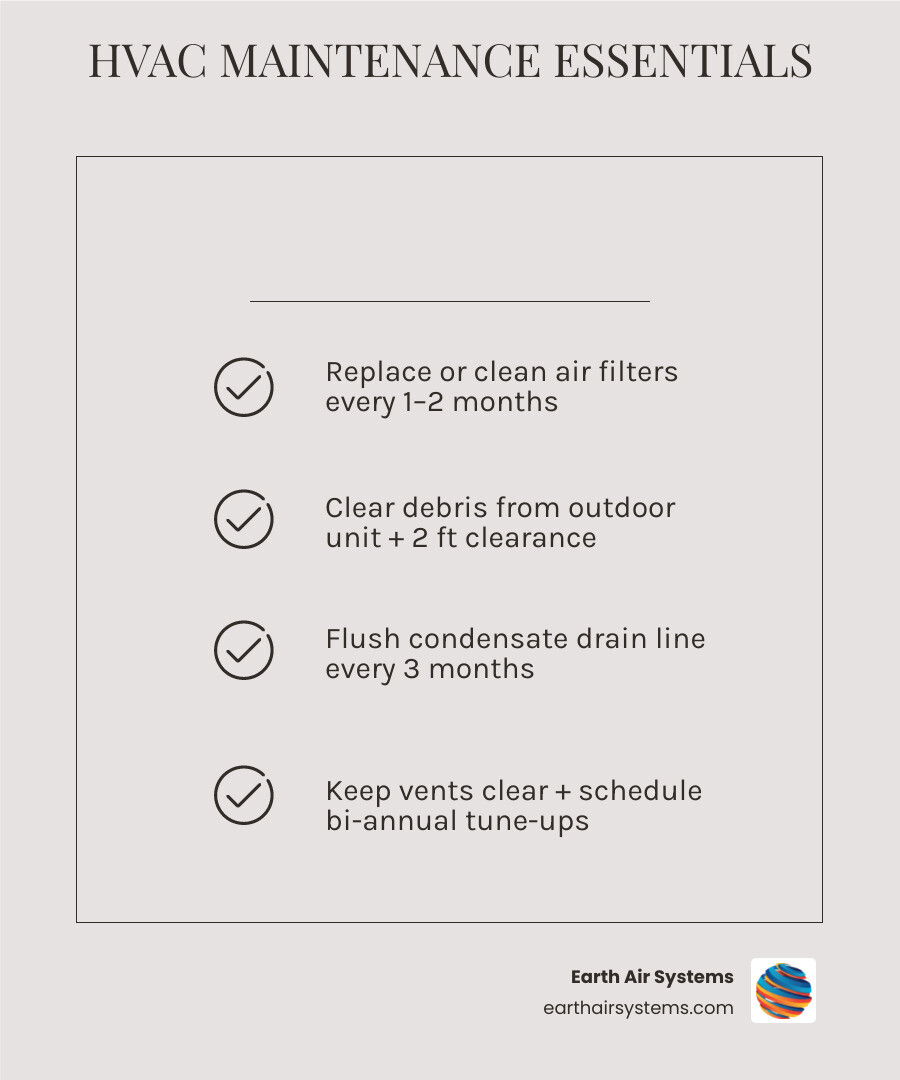
Here is a quick overview of the core steps to maintain your heating and cooling system:
- Replace or clean air filters every 1–2 months during heavy-use seasons
- Clear debris from your outdoor condenser unit and maintain at least 2 feet of clearance around it
- Flush the condensate drain line every three months to prevent clogs and water damage
- Keep all vents and registers clear of furniture, drapes, and other obstructions
- Check for unusual noises, odors, or leaks and address them promptly
- Schedule professional tune-ups twice a year — spring for your cooling system, fall for your heating system
- Upgrade to a smart thermostat to optimize temperature schedules and track energy use
The numbers make the case clearly. The average home spends close to $1,900 per year on energy, and nearly half of that goes straight to heating and cooling. On top of that, airflow problems alone can cut your system’s efficiency by up to 15%, and duct leaks can waste 20–30% of the air your system works hard to move. Yet fewer than half of homeowners have had their HVAC serviced in the past year.
The good news? Most of the maintenance that keeps your system running well is simple, and a lot of it you can do yourself.
Why Regular HVAC Maintenance is Essential in 2026
As we move through April 2026, the technology in our homes has advanced, but the fundamental physics of heating and cooling remain the same: dirt and neglect are still the primary enemies of your comfort. We often see homeowners waiting until a heatwave hits to think about their AC, but by then, it might be too late. In fact, statistics show that 42% of homeowners experience system issues during extreme weather events.
Regular maintenance isn’t just about avoiding a breakdown; it’s about protecting your wallet. When you understand how to maintain your heating and cooling system, you are directly combatting the 15% efficiency loss caused by poor airflow. Furthermore, in a typical house, about 20 to 30 percent of the air moving through the duct system is lost due to leaks or poorly connected ducts. Keeping your system clean ensures it doesn’t have to work overtime to compensate for these losses.
Beyond the machinery, there is the human element: indoor air quality. A neglected system can circulate dust, pollen, and allergens—”the greatest hits of irritating allergens,” as some might say—throughout your living space. By following The Ultimate Guide to AC Maintenance Services in San Diego, you ensure that the air your family breathes is filtered and fresh. Considering that HVAC systems typically last 15 to 25 years, a little preventative care today can add nearly a decade to the lifespan of your unit.
How to Maintain Your Heating and Cooling System: A Homeowner’s Checklist
Maintaining your HVAC system doesn’t require a degree in engineering, but it does require a bit of consistency. Before you start any DIY tasks, remember: safety first. Always turn off the power to your unit at the breaker or the outdoor shutoff switch before performing any cleaning or inspections.
A good maintenance routine starts with a simple visual and sensory inspection. Walk around your indoor and outdoor units. Do you hear any strange rattling, buzzing, or grinding noises? Do you smell anything unusual, like an electrical burning scent or a musty odor? If you spot water leaking around the base of your indoor unit, it’s a sign that your condensate system needs attention.
One of the easiest ways to help your system is to ensure all vents and registers are clear. We often find that furniture or heavy drapes have been pushed in front of return air grilles, forcing the system to “suffocate.” Keeping these areas clear allows for the steady airflow your system needs to stay healthy. For more detailed advice on what to look for, check out Don’t Get Steamed: Your Guide to Local AC Maintenance Contractors.
| Task | DIY-Friendly? | Frequency |
|---|---|---|
| Change Air Filters | Yes | Every 1-3 Months |
| Clear Outdoor Debris | Yes | Monthly |
| Flush Drain Lines | Yes | Every 3 Months |
| Straighten Coil Fins | Yes (with tool) | Annually |
| Check Refrigerant | No | Annually (Pro) |
| Inspect Heat Exchanger | No | Annually (Pro) |
Another critical DIY task is maintaining the condensate drain line. Over time, algae and mold can grow in the damp environment of the drain pan, leading to clogs that cause water damage or system shutdowns. You can clear these lines periodically using a stiff wire or by flushing the line with a simple bleach and water solution (usually one cup of bleach to a gallon of water) to kill any microbial growth.
Step 1: How to Maintain Your Heating and Cooling System Air Filters
If there is one “golden rule” for how to maintain your heating and cooling system, it is this: change your filters. This is the single most effective thing you can do to prevent blower motor failure and maintain efficiency.
During the peak San Diego summer or a chilly winter, you should inspect your filter every month. If you have pets that shed or family members with allergies, you might need to replace it every 30 to 45 days. If your home is relatively quiet and dust-free, you can stretch this to 90 days.
When buying filters, look at the MERV (Minimum Efficiency Reporting Value) rating. Higher ratings, like MERV 11 or 12, capture smaller particles like bacteria and viruses, but they also require the system to work harder to pull air through. Always ensure the arrows on the filter frame point toward the furnace or blower unit—installing them backward can significantly restrict airflow. For professional assistance with your indoor air quality, visit our page on AC Maintenance in San Diego.
Step 2: How to Maintain Your Heating and Cooling System Outdoor Units
The outdoor condenser unit is the workhorse of your cooling system, and it’s often the most neglected. Because it sits outside, it’s vulnerable to leaves, grass clippings, and dirt.
To maintain this unit, ensure there is at least a 2-foot clearance on all sides. Trim back any shrubs, vines, or tall grass that might be encroaching. If the delicate aluminum fins on the side of the unit are bent, they can block airflow and trap heat. You can use a “fin comb” (available at most hardware stores) to gently straighten them.
Using a garden hose (never a power washer, which can flatten the fins and damage the motor), spray the unit from the inside out to wash away trapped dirt. Keeping this unit clean and shaded can significantly boost its performance. If you’re in the South Bay area, you can find more localized tips here: Don’t Sweat It: Finding the Top AC Maintenance Company in Chula Vista.
Optimizing Performance with Smart Thermostats
Your thermostat is the “brain” of your HVAC system. In 2026, upgrading to a smart, ENERGY STAR certified thermostat is one of the best investments you can make. These devices do more than just set the temperature; they provide monthly energy reports, remind you when it’s time to change your filter, and can even be controlled remotely via Wi-Fi.
Proper calibration is key. If your thermostat is located near a drafty window or a heat-producing appliance, it will give false readings, causing your system to short-cycle. By using smart scheduling, you can set “setback temperatures”—adjusting the temp by 10–15 degrees for 8 hours while you’re at work can save you about 1% on your energy bill for every degree. For residents in the island community, check out Don’t Sweat the Heat with Professional AC Maintenance in Coronado for more efficiency hacks.
Seasonal Schedules for Year-Round Comfort
Timing is everything. We recommend scheduling professional maintenance twice a year: once in the spring for your cooling system and once in the fall for your heating system. A great way to remember this is to align your check-ups with the daylight savings time changes.
In the spring, the focus is on the AC: cleaning coils, checking refrigerant levels, and ensuring the fan motor is lubricated. In the fall, the focus shifts to safety and heating: inspecting the heat exchanger for cracks (which can leak carbon monoxide), checking gas pressure, and testing the pilot light or igniter.
If you use a heat pump, these units work year-round. Unlike a standard central AC, you should not cover a heat pump in the winter, as it needs airflow to provide heat to your home. Following these Heating Maintenance in San Diego standards can save you nearly $140 annually by keeping your system running at peak ENERGY STAR efficiency.
When to Call a Professional HVAC Technician
While DIY tasks are great for day-to-day efficiency, there are several critical components that require a trained eye. HVAC systems involve high-voltage electricity, pressurized refrigerants, and combustible gases—none of which are safe for the average homeowner to “tinker” with.
You should call a professional if you notice:
- Electrical Issues: Frayed wires or frequent tripped breakers.
- Refrigerant Leaks: If your AC is running but blowing warm air, you may have a leak. Refrigerant is in a closed loop; if it’s low, there’s a hole that needs fixing.
- Gas Connection Problems: Any smell of gas or a yellow/orange furnace flame (it should be crisp blue) is an emergency.
- Inconsistent Comfort: If some rooms are freezing while others are sweltering, you likely have ductwork or balancing issues.
A professional tune-up includes tightening electrical connections, lubricating all moving parts to reduce friction, and checking system controls. If your system is approaching that 15–25 year lifespan, a technician can help you decide if a repair is worth it or if it’s time for a more efficient replacement. For those in North County, see Don’t Sweat It: Finding the Best AC Maintenance in La Jolla, CA for expert guidance.
Frequently Asked Questions about HVAC Maintenance
We know you have questions, and we have answers! You can always visit our full HVAC FAQs page for more in-depth information.
How often should I schedule professional HVAC maintenance?
We recommend bi-annual service. Schedule your cooling check-up in the late winter or early spring (March/April) and your heating check-up in the late summer or early fall (September/October). This ensures your system is ready before the extreme temperatures hit and helps you avoid the “peak season” rush when technicians are busiest.
What are the signs that my HVAC system needs immediate repair?
Watch out for “short-cycling,” where the system turns on and off rapidly without reaching the desired temperature. Ice buildup on the copper refrigerant lines, a persistent burning smell, or a sudden, unexplained spike in your utility bills are all red flags that require immediate professional attention.
Should I cover my outdoor unit during the winter?
If you have a central air conditioner that only provides cooling, you can cover the top of the unit to keep out leaves and snow. However, never wrap the entire unit in plastic, as this traps moisture and creates a “sauna” that leads to rust and attracts rodents. If you have a heat pump, do not cover it; it needs to breathe to heat your home!
Conclusion
At Earth Air Systems, we’ve spent over 40 years helping San Diego homeowners stay comfortable. We know that your heating and cooling system is a major investment, and we are committed to helping you protect it. Whether you are in Oceanside, Escondido, or Downtown San Diego, our team offers flat-rate pricing and a 100% satisfaction guarantee.
Don’t wait for your system to fail during a heatwave. Take control of your home’s comfort today by following these DIY steps and partnering with experts for the heavy lifting. Schedule your professional heating maintenance in San Diego today and breathe easy knowing your home is in good hands.
