
Why Salt Air and Mild Weather Are Hard on Your HVAC System
How salt air and mild weather affect your system is something every San Diego homeowner near the coast needs to understand — because the same ocean breeze that makes your neighborhood feel amazing can quietly destroy your HVAC equipment from the outside in.
Here’s a quick summary of what’s happening to your system:
- Salt deposits on coils and fins — sodium chloride particles cling to metal surfaces and trigger corrosion over time
- Reduced heat transfer efficiency — salt buildup restricts airflow and heat exchange, cutting efficiency by up to 15-20%
- Faster component wear — coastal systems can degrade 25-40% faster than inland systems without proper care
- Shorter system lifespan — unprotected coastal AC units may last only 6-8 years, compared to 12-15 years inland
- Indoor air quality issues — high coastal humidity promotes mold, musty odors, and elevated allergen levels in ductwork
- Electrical damage — microscopic salt particles corrode connections and accelerate oxidation in control boards and wiring
Living a few miles from the Pacific puts your HVAC in a tough spot year-round. San Diego’s mild temperatures mean your system may not run hard enough to “blow off” salt and moisture the way systems in harsher climates do — so deposits build up slowly and steadily without obvious warning signs. By the time you notice something is wrong, the damage is already done.
How Salt Air and Mild Weather Affect Your System: A Coastal Guide
In San Diego County, location matters more than many homeowners realize. A system in La Jolla, Coronado, Encinitas, Solana Beach, Carlsbad, or Oceanside lives in a very different environment than one farther inland in Escondido or San Marcos. Even then, salt exposure does not stop at the beach. Depending on wind patterns, marine air can affect homes roughly 10 to 15 miles inland.
What is “salt air,” exactly? It is not just air that smells like the ocean. It contains tiny airborne droplets and particles from sea spray, most notably sodium chloride. These particles settle on outdoor HVAC equipment, especially condenser coils, fan blades, cabinet panels, fasteners, and exposed electrical parts. Add moisture from the marine layer, and those deposits become a conductive, corrosive film.
That is why coastal equipment often looks older than it is. The damage starts at a microscopic level, then slowly becomes visible rust, pitting, weakened fins, failing connections, and reduced performance. If you want a deeper look at that process, our guide on why your beach house AC is feeling salty breaks down the issue in homeowner-friendly terms.
How salt air and mild weather affect your system and its efficiency
Salt hurts efficiency in two big ways: it blocks heat transfer and it makes moving parts work harder.
Your outdoor coil is supposed to release heat quickly. When salt sticks to coil surfaces and traps grime, that heat exchange becomes less efficient. The system has to run longer to cool the same house. Research on coastal HVAC performance shows maintenance and protection can preserve roughly 15% to 20% better efficiency compared to neglected systems. In real life, that often means fewer long run times, more stable comfort, and less stress on the equipment.
Mild weather adds its own twist. San Diego’s climate is comfortable, but comfort can be sneaky. Systems in mild coastal areas often cycle on and off more frequently instead of running in long, drying, high-load stretches. Shorter cycles can leave moisture behind and allow salt residue to remain on components. Think of it as your HVAC getting a light misting over and over, without a proper rinse.
Humidity also raises the load. Even when outdoor temperatures are not extreme, the system may still need to remove moisture from indoor air. Dehumidification takes work. So your system may be dealing with corrosion outside and moisture control inside at the same time. Not exactly a beach vacation for your condenser.
The impact of coastal humidity on indoor air quality
Salt air does not only affect the outdoor unit. Coastal humidity can also affect the air inside your home.
When humidity stays elevated, dust, salt particles, and organic debris can cling to filters, duct surfaces, and evaporator coils faster than expected. This can lead to:
- Musty odors when the AC starts
- Faster filter loading
- Higher allergen levels indoors
- Greater risk of mold or mildew growth in damp areas
- Reduced airflow from dirty coils and filters
There is an interesting nuance here: sea air itself may feel refreshing outdoors, and some research on coastal exposure suggests salt particles and negative ions may support easier breathing for some people. Some studies even report reduced asthma symptoms in certain coastal settings. But inside a home, unmanaged humidity and dirty HVAC components are a different story. Once salt mixes with household dust and moisture, it can become part of an indoor air quality problem rather than a health benefit.
That is why filtration, clean coils, and controlled humidity matter so much in coastal San Diego homes.
The Chemical Toll of Coastal Living on HVAC Components
Chemically, the main villain is sodium chloride. Salt itself is not an acid, but it acts like an accelerant for corrosion. When salty moisture settles on metal, it helps create an electrolyte layer that speeds oxidation. In plain English: metal starts giving up electrons, rust and corrosion form faster, and the damage spreads.
Different materials respond differently, but no standard outdoor unit is completely immune. Common trouble spots include:
- Aluminum fins that pit and weaken
- Copper tubing that can corrode at vulnerable points
- Steel cabinet panels and screws that rust
- Fan blades and motor housings exposed to salt deposits
- Electrical terminals and contact points that oxidize
Electrical issues are especially frustrating because the damage can be hard to see. Tiny salt particles can create microscopic corrosion on terminals, relays, and boards. That may cause intermittent failures, nuisance shutdowns, or hard-to-diagnose performance issues long before there is obvious exterior rust.
Our article on Dont let the sea breeze clog your HVAC covers how buildup and restricted airflow turn a salty breeze into a mechanical problem.
Why salt air and mild weather affect your system and its lifespan
The long-term result is simple: coastal systems tend to age faster.
Industry data referenced in the research shows:
- Coastal HVAC systems can wear out 25% to 40% faster than inland systems
- Unprotected coastal AC units may last around 6 to 8 years
- Similar equipment inland may last 12 to 15 years
- Coastal-specific units and protective strategies may extend life by 30% to 50%
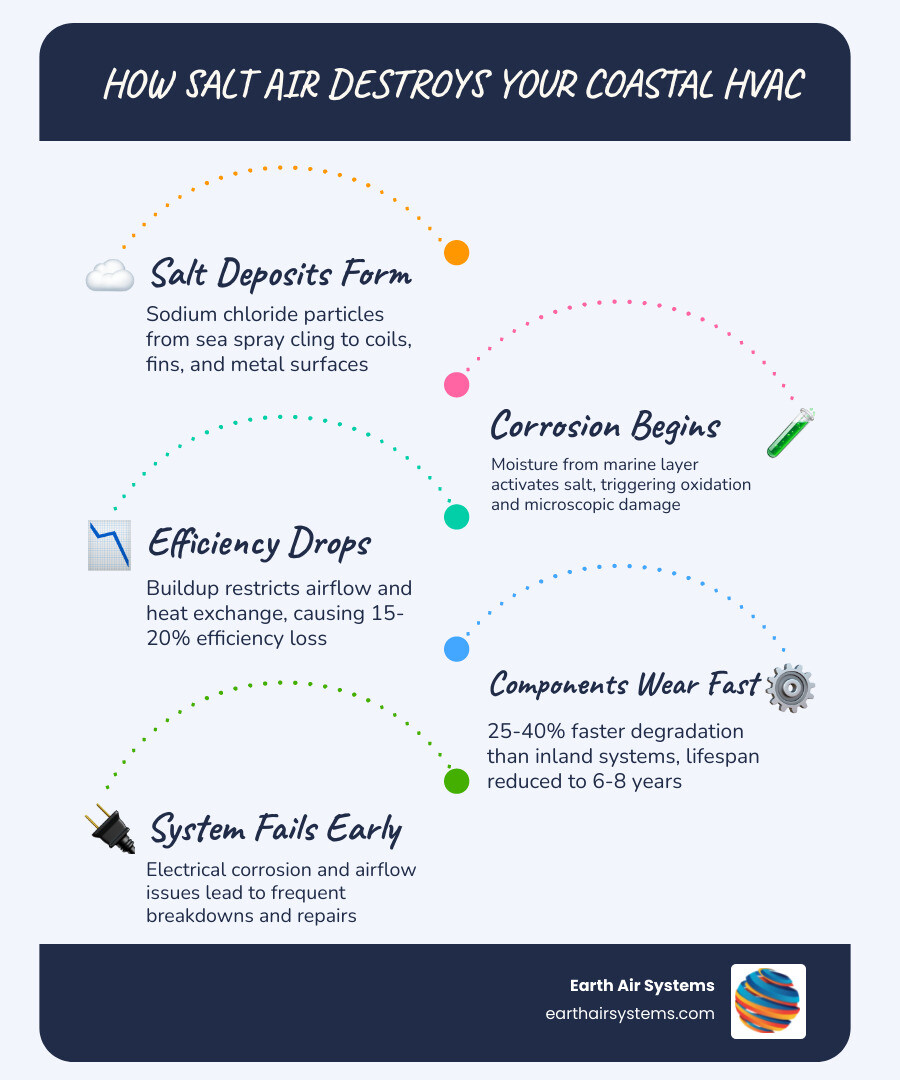
That shorter lifespan does not happen all at once. Usually, it looks like this:
- Salt settles on the unit.
- Moisture keeps the salt active.
- Corrosion begins on coils, fins, hardware, and wiring.
- Heat transfer drops and airflow suffers.
- The system runs longer and works harder.
- Parts fail earlier than expected.
- The homeowner ends up replacing major components or the whole system sooner.
Here is a simple comparison:
| Condition | Typical inland system | Coastal system without protection |
|---|---|---|
| Expected lifespan | 12-15 years | 6-8 years |
| Wear rate | Baseline | 25-40% faster |
| Repair frequency | Lower | Higher |
| Efficiency retention | More stable | Often declines faster |
In other words, how salt air and mild weather affect your system is not just a maintenance issue. It is a lifespan issue.
Identifying Signs of Salt Air Damage in San Diego Homes
The earlier we catch salt damage, the better. Homeowners in beach and near-coast neighborhoods should watch for these warning signs:
- Rust on cabinet screws, panels, or brackets
- White or chalky residue on coils or fins
- Bent, brittle, or deteriorating aluminum fins
- Metallic, musty, or damp smells when the system runs
- Louder-than-normal condenser operation
- Reduced cooling even when the thermostat is set correctly
- Higher electric bills without a clear reason
- Frequent capacitor, contactor, or fan motor issues
- Filters getting dirty unusually fast
A visual inspection often tells part of the story, but not all of it. We frequently see units that look only mildly weathered outside yet already have coil damage or electrical oxidation inside. That is one reason routine professional inspection matters in coastal neighborhoods.
If you are trying to match your equipment to local conditions, our guide on Best HVAC setup for San Diego County weather-a complete guide can help you think through climate fit, efficiency, and durability.
Essential Maintenance for Protecting Your Coastal HVAC Investment
The best defense against salt is consistency. Coastal HVAC maintenance is less about one dramatic fix and more about not letting buildup win.
For most coastal and near-coastal San Diego homes, we recommend a plan that includes both homeowner care and professional service.
At home, focus on the basics:
- Gently rinse the outdoor unit with fresh water to help remove surface salt deposits
- Keep shrubs, sand, and debris away from the condenser
- Change filters more often if they load up quickly
- Pay attention to new smells, noise, or longer cooling cycles
- Keep supply and return vents unobstructed indoors
A quick note on rinsing: gentle is the key word. Do not blast coils with a pressure washer. High pressure can flatten fins and create a whole new problem. Light fresh-water rinsing helps, but it does not replace professional coil cleaning and inspection.
Professional coastal service should usually happen at least twice a year. That is more frequent than many inland systems need, and for good reason. Research in the brief suggests proactive coastal maintenance can reduce repair frequency by up to 60% while helping preserve better efficiency.
A thorough coastal maintenance visit should include:
- Cleaning condenser and evaporator coils
- Inspecting fins for corrosion and damage
- Checking fan motors, blades, and bearings
- Testing capacitors, contactors, and electrical connections
- Looking for oxidation on terminals and boards
- Verifying refrigerant performance and airflow
- Inspecting drainage and moisture-related issues
- Confirming thermostat and system operation
Our article on Mild climates and maintenance-how often should you service your system explains why “mild weather” does not mean “low maintenance.” And while salt is one issue, San Diego weather can also swing toward hot, dry, dusty conditions inland, which creates a different kind of strain. We cover that in Blowin in the wind-why hot dry gusts are your ACs worst enemy.
Upgrading Your System for Maximum Salt Resistance
If you are replacing older equipment or planning ahead, some HVAC features hold up better in coastal environments than standard configurations.
Look for upgrades such as:
- Factory-applied anti-corrosion coil coatings
- Corrosion-resistant condenser coils
- Stainless steel fasteners and hardware
- Protective coatings on exposed metal components
- Cabinets designed for harsh outdoor environments
- Better-sealed electrical compartments
- Materials selected for coastal durability
Here is a practical coastal-grade feature list:
- Coated outdoor coils
- Corrosion-resistant coil guards
- Stainless or protected fasteners
- Sealed control compartments
- Durable cabinet finish
- High-quality filtration for indoor air
- Properly sized system for humidity control
- Easy access for regular cleaning and service
Not every home needs a full marine-grade setup, but if you live in La Jolla, Coronado, Encinitas, Solana Beach, Carlsbad, Oceanside, or another high-exposure area, those upgrades are often worth serious consideration. Specialized coastal equipment has been shown in industry reporting to last 30% to 50% longer than standard units in harsh salt environments.
And if your existing system is still serviceable, targeted upgrades like protective coatings or replacing corroded hardware early can help slow the damage.
Frequently Asked Questions about Coastal HVAC
How far inland does salt air reach?
Farther than many people think. Depending on wind, topography, and marine layer conditions, salt air can affect HVAC systems about 10 to 15 miles inland. That means some homes outside the immediate beachfront still see corrosion-related wear, especially in parts of North County and neighborhoods with steady ocean influence.
If you are close enough to notice marine haze, damp morning air, or a persistent coastal film on outdoor surfaces, your HVAC may be feeling it too.
Does salt air improve indoor air quality?
Outdoors, coastal air can feel cleaner and easier to breathe for some people. Sea air may carry negative ions and tiny salt particles that some associate with respiratory comfort, and there is research suggesting certain coastal environments may help reduce asthma symptoms for some individuals.
But indoors, the answer is more complicated. Once salt, moisture, dust, and household particles collect inside a home or HVAC system, they can contribute to odors, clogged filters, and biological growth. So while ocean air may be refreshing outside, your indoor air quality still depends on filtration, humidity control, clean coils, and clean ducts where needed.
How often should I service my beach house AC?
For coastal San Diego homes, we generally recommend professional HVAC service twice a year, even in mild climates. Homes with very strong ocean exposure may benefit from closer monitoring, more frequent rinsing of the outdoor unit, and faster filter changes.
That schedule helps remove salt buildup before it becomes destructive, catches electrical corrosion early, and supports better efficiency. Research summarized above shows proactive maintenance can reduce repair frequency by up to 60% and help systems maintain stronger performance over time.
Conclusion
Living near the coast is one of the best parts of life in San Diego County. Your HVAC system, however, may have some notes. Mostly about salt.
The good news is that once we understand how salt air and mild weather affect your system, we can do something about it. With routine rinsing, better filtration, twice-yearly professional service, and the right corrosion-resistant features, coastal homeowners can reduce wear, protect indoor air quality, and help their equipment last longer.
At Earth Air Heating & Cooling, we bring 40+ years of experience helping San Diego homeowners keep their systems clean, efficient, and ready for local conditions. If your AC is exposed to ocean air, marine humidity, or that famous coastal layer, we are here to help with dependable service and practical solutions.
Ready to protect your comfort? Schedule professional air conditioning services in San Diego.
