
My HVAC system is acting up. Should I repair it or get a new one in San Diego?
When weighing the cost of repairing old HVAC vs. buying a new system, the answer depends on a few key factors: your system’s age, repair history, and how much efficiency you’re losing every month. Here’s a quick breakdown to help you decide:
Quick Answer: Repair or Replace?
| Situation | Recommended Action |
|---|---|
| System under 10 years old, minor repair | Repair |
| Repair is a minor investment compared to replacement | Repair |
| System 10-15+ years old, major repair needed | Consider replacing |
| Repair is a major investment compared to replacement | Replace |
| System uses R-22 refrigerant | Replace |
| Three or more repairs in the past three years | Replace |
Most San Diego homeowners don’t think much about their HVAC system until something goes wrong — usually on the hottest day of the year. Then comes the question that stops everyone cold: do you pay for the repair and hope for the best, or cut your losses and invest in something new?
It’s not always an easy call. A quick fix might seem like the smart short-term move, but older systems often have hidden financial impacts — rising energy bills, refrigerant issues, and the creeping risk of another breakdown just around the corner. On the other hand, a full system replacement is a real investment, and it deserves careful thought before you commit.
This guide is built to help you think through both sides clearly — so you can make a decision that actually makes sense for your home, your budget, and the San Diego climate.
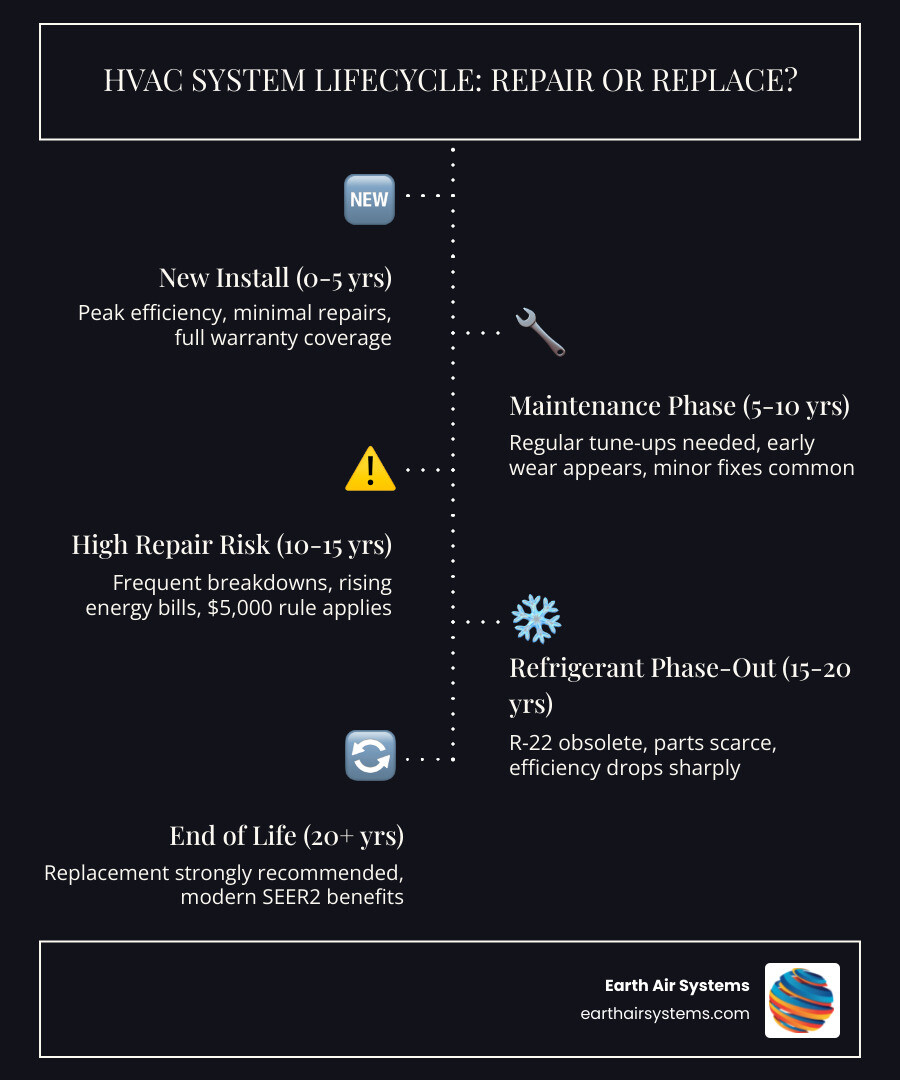
Evaluating the cost of repairing old hvac vs buying new system
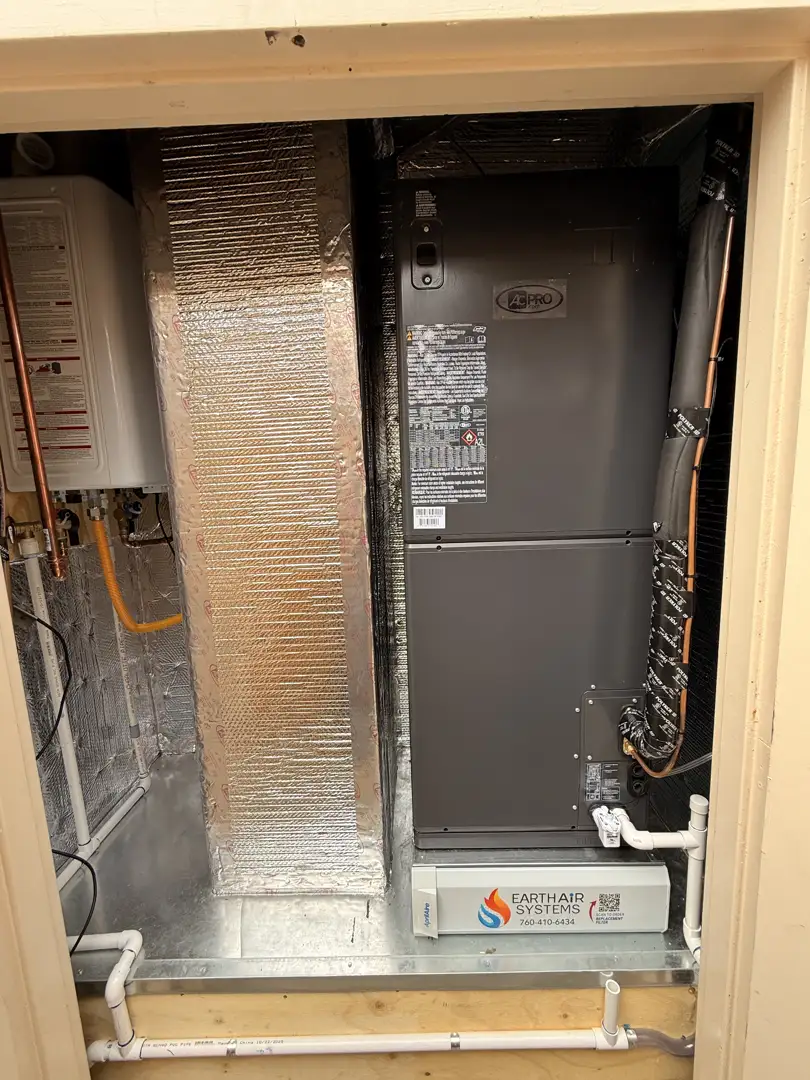
The best repair-or-replace decision is rarely about one broken part by itself. It is about the whole picture.
When we help San Diego homeowners think through the cost of repairing old HVAC vs buying new system, we usually look at five things first:
- System age
- Repair frequency
- Efficiency decline
- Refrigerant type
- Overall comfort and reliability
A newer system with one isolated issue is often worth repairing. An aging system with a growing list of problems usually tells a different story.
As a general rule, repairs make more sense when:
- The system is under about 10 years old
- The issue is minor, like a capacitor, thermostat, or contactor
- The unit has been well maintained
- Warranty coverage still applies
- Energy bills have stayed fairly consistent
Replacement starts to make more sense when:
- The system is 10 to 15 years old or older
- Breakdowns are becoming regular
- A major component has failed
- The equipment uses outdated refrigerant
- Utility bills keep rising even after service
- Your home has hot spots, poor airflow, or humidity issues
For a deeper look at when patching an old unit stops making financial sense, see To Fix or to Flip: When Replacing Your HVAC Makes More Sense.
Repair vs. replacement at a glance
| Repair may be the better choice | Replacement may be the better choice |
|---|---|
| Newer system | Older system near end of lifespan |
| First major repair | Multiple repairs in recent years |
| Minor part failure | Compressor, coil, or heat exchanger trouble |
| Warranty still active | Warranty expired |
| Stable utility bills | Rising energy use |
| Good comfort overall | Uneven temperatures or weak airflow |
| Modern refrigerant | Outdated refrigerant |
One important point: the most affordable decision today is not always the least expensive decision over the next five years. That is where many homeowners get trapped. They approve one repair, then another, then another, and suddenly the old system has become an expensive hobby.
How efficiency impacts the cost of repairing old hvac vs buying new system
Efficiency is where older HVAC systems quietly drain resources without making much noise about it.
Many older air conditioners in San Diego were installed with SEER ratings in the 10 to 13 range. Research consistently shows those systems can use significantly more energy than newer systems in the SEER 16 to 20+ range. In real life, that means your old unit may still be running, but it is doing the job less efficiently every summer.
And age makes that worse. A system does not usually become more efficient with time. Coils get dirty, motors wear down, airflow issues develop, and overall performance drops. So an older unit may be performing below its original rating.
That matters because rising utility bills are one of the biggest hidden factors in the repair-vs-replace decision. If your usage has not changed but your bill keeps climbing, your HVAC system may be working too hard to produce less comfort.
Upgrading efficiency can bring several benefits:
- Lower monthly cooling and heating costs
- Better humidity control
- More even temperatures
- Quieter operation
- Lower environmental impact
Research in this space commonly shows:
- Upgrading from SEER 10 to SEER 16 can lead to significant annual savings in cooling expenses
- High-efficiency HVAC systems can noticeably reduce heating and cooling expenses
- Even a standard new AC may provide annual savings versus an older model
Those numbers vary by home, usage, insulation, ductwork, and thermostat settings, but the direction is clear: older inefficient equipment often costs more month after month than homeowners realize.
If you want to connect efficiency upgrades to resale value and long-term return, read The Ultimate Guide to HVAC ROI and Home Value.
Hidden Factors Influencing the Repair vs. Replace Decision
The visible repair is only part of the story. Some of the most important factors are the ones that do not show up clearly on the first service invoice.
Outdated refrigerants can change the math fast
If your system uses R-22 refrigerant, that is a major red flag. R-22 production ended years ago, and supplies now come from reclaimed or limited sources. Recharging these systems can be quite expensive due to the limited and shrinking supply chain, which can make even a modest refrigerant leak a major financial consideration.
In plain English: an old unit with an R-22 leak is not just “low on refrigerant.” It may be attached to a costly supply chain.
Newer systems use more current refrigerants, and industry transitions have continued into newer standards such as R-454B. For many older pre-2010 systems, refrigerant alone can tip the decision toward replacement.
Frequent repairs create a domino effect
Aging systems often do not fail in neat, isolated ways. One part wears out, then another weak point shows up a few months later. We sometimes call this systemic decline. It is like replacing one tire on a car with three bald ones and hoping for the best.
If your system has needed three or more repairs in the last three years, replacement is usually worth serious consideration. Even if each repair seems manageable on its own, the pattern matters.
Emergency calls vs. planned upgrades
In San Diego, HVAC failures have a talent for happening at the least charming moment possible. Usually during a hot stretch, before guests arrive, or right before a weekend.
Emergency service can mean:
- Rush scheduling
- Greater disruption to your home routine
- Temporary discomfort
- More pressure to make a quick decision
A planned replacement is usually far less stressful than an emergency breakdown during peak cooling season.
For warning signs that your system may be heading that direction, visit San Diego Homeowner Alert: Is Your AC Giving Up the Ghost?.
Comfort and air quality matter too
Repairing an old unit may restore basic operation, but it does not always restore good comfort.
A new high-efficiency system can improve:
- Temperature consistency from room to room
- Humidity control
- Filtration and indoor air quality
- Noise levels
- Airflow balance
If your current system runs constantly, leaves certain rooms too warm, struggles with dust, or makes the house feel sticky, replacement may solve problems that another repair will not.
Safety and environmental concerns should not be ignored
Sometimes this decision is no longer just financial.
Replacement should move to the front of the line if you are dealing with:
- A cracked heat exchanger
- Electrical safety concerns
- Repeated overheating issues
- Refrigerant leaks on an obsolete system
Older furnaces with damaged heat exchangers can create carbon monoxide risks. Older cooling systems with phased-out refrigerants also raise environmental concerns. In cases like these, “let’s see if we can squeeze one more season out of it” is not a great strategy.
When Repairing Your Current System Makes Sense
Not every older HVAC problem means it is time for a full replacement. Sometimes a repair is clearly the smarter move.
Repair usually makes sense when the issue is limited, the system still has useful life left, and the unit has otherwise been dependable.
Repair is often reasonable for newer or well-kept systems
We usually lean toward repair when:
- The system is under about 10 years old
- This is the first significant repair
- The problem is minor
- The unit has had regular tune-ups
- Your comfort and energy bills have been stable
- The repair falls well below common replacement thresholds
- Warranty coverage may offset part of the cost
Minor fixes can include issues such as:
- Capacitors
- Contactors
- Thermostats
- Drain line clogs
- Certain blower or electrical controls
These repairs can often restore normal operation without making homeowners feel like they are rebuilding the whole system one screw at a time.
Repair can be a short-term bridge strategy
Sometimes homeowners know replacement is coming but need a little time to plan for it. In that case, a targeted repair can still make sense if:
- The system can be safely operated after repair
- The repair is modest
- You understand it is a temporary solution
- You want to avoid a rushed replacement decision during peak season
That is a practical choice, not a bad one. We just recommend making it with eyes open.
Maintenance history matters more than many people think
A well-maintained 12-year-old unit may be a better repair candidate than a neglected 8-year-old one. Annual service, coil cleaning, airflow checks, and tune-ups all affect how long a system remains worth repairing.
If your equipment has been cared for and still performs well in the SoCal heat, a repair may buy useful time. If not, the sun may already be winning.
For a local perspective on how Southern California conditions affect system wear, read Will Your AC Survive the SoCal Sun?.
Good repair candidates usually check most of these boxes
- No R-22 refrigerant
- No major compressor or coil failure
- No recurring breakdown pattern
- No serious safety issues
- No dramatic jump in utility bills
- No chronic comfort complaints
- No obvious signs the unit is near the end of life
If that sounds like your system, repair may be the right call for now.
Frequently Asked Questions about HVAC Replacement
How long do HVAC systems typically last in San Diego’s coastal climate?
Most HVAC systems last around 15 to 20 years, though some fail sooner and some last longer depending on maintenance, usage, installation quality, and environmental conditions.
In coastal parts of San Diego County, salt air can accelerate wear on outdoor components. In hotter inland areas, long cooling seasons can also increase strain. That is why we encourage homeowners to look at condition and performance, not just age on paper.
As a simple guide:
- Under 10 years: repair is often worth considering
- Around 10 to 15 years: decision depends heavily on repair history and efficiency
- Over 15 years: replacement becomes much more likely, especially with major repairs
Should I replace my furnace and air conditioner at the same time?
Sometimes yes, sometimes no.
Replacing both together can make sense when:
- Both systems are older
- Efficiency matching is important
- You want better whole-home performance
- One component depends heavily on the other
- You want to reduce future labor overlap
A matched system often performs better than mixing older and newer equipment. It may also help protect efficiency expectations and simplify warranty coverage.
But if one unit is still fairly new, in good condition, and properly matched, replacing only the failed component may be reasonable. This is one of those situations where a professional evaluation matters.
What are the signs that my system is no longer efficient?
Common signs include:
- Higher utility bills without major usage changes
- Longer run times
- Uneven temperatures between rooms
- Weak airflow
- Frequent cycling
- Poor humidity control
- More dust indoors
- Excessive noise
- Trouble keeping up on hot San Diego afternoons
Efficiency loss can also be tied to low SEER equipment. Older units in the SEER 10 to 13 range may use substantially more energy than modern higher-efficiency systems. If your system is technically still working but no longer keeping you comfortable without running all day, efficiency may be the real issue.
Conclusion
The cost of repairing old HVAC vs buying new system is not just about one repair visit. It is about age, efficiency, refrigerant type, repair history, safety, and how confident you feel that your system will keep performing in the San Diego climate.
If your unit is newer, well maintained, and dealing with a minor issue, repair can absolutely be the right move. If it is older, inefficient, uses R-22, or has become a repeat offender, replacement often provides better long-term value, comfort, and peace of mind.
At Earth Air Heating and Cooling, we help homeowners across San Diego County make this decision with clear recommendations and a practical approach based on what is best for the home. With more than 40 years of combined experience and a 100% satisfaction guarantee, we are here to help you sort through the options without the guesswork.
If you are weighing repair against replacement, Schedule your San Diego HVAC consultation today.
