
Your Home Doesn’t Need Ductwork to Stay Comfortable
Ductless heating and cooling for homes without ductwork is one of the most practical HVAC solutions available in 2026 — and it works by connecting a compact outdoor unit to one or more indoor air handlers through a small refrigerant line, with no ducts required at all.
Here’s what you need to know right away:
- Ductless mini-split systems heat and cool your home using refrigerant lines, not air ducts
- A single outdoor unit can support multiple indoor units — up to 8 in some configurations
- Systems can reduce energy use by up to 40% compared to traditional ducted HVAC
- Installation typically requires only a 3-inch hole through an exterior wall
- Both heating and cooling are handled by one system, year-round
- They work in virtually any home type — older, historic, modern, or newly renovated
Many San Diego homes — especially older craftsman bungalows, ranch-style houses, and historic properties — were simply never built with ductwork in mind. Retrofitting traditional central air into these homes can mean tearing into walls, ceilings, and floors just to run ducts. That’s a major disruption, and in some cases, it’s just not feasible at all. Ductless systems solve that problem cleanly and efficiently, giving homeowners full heating and cooling control without compromising the structure or character of their home.
Understanding Ductless Heating and Cooling for Homes Without Ductwork
At Earth Air Systems, we’ve seen how much technology has evolved by April 2026. While central air used to be the “gold standard,” it often came with a heavy price: the need for massive, dusty metal tubes running through your attic and crawlspaces. If your home was built without them, you were often stuck with noisy window units or expensive baseboard heaters.
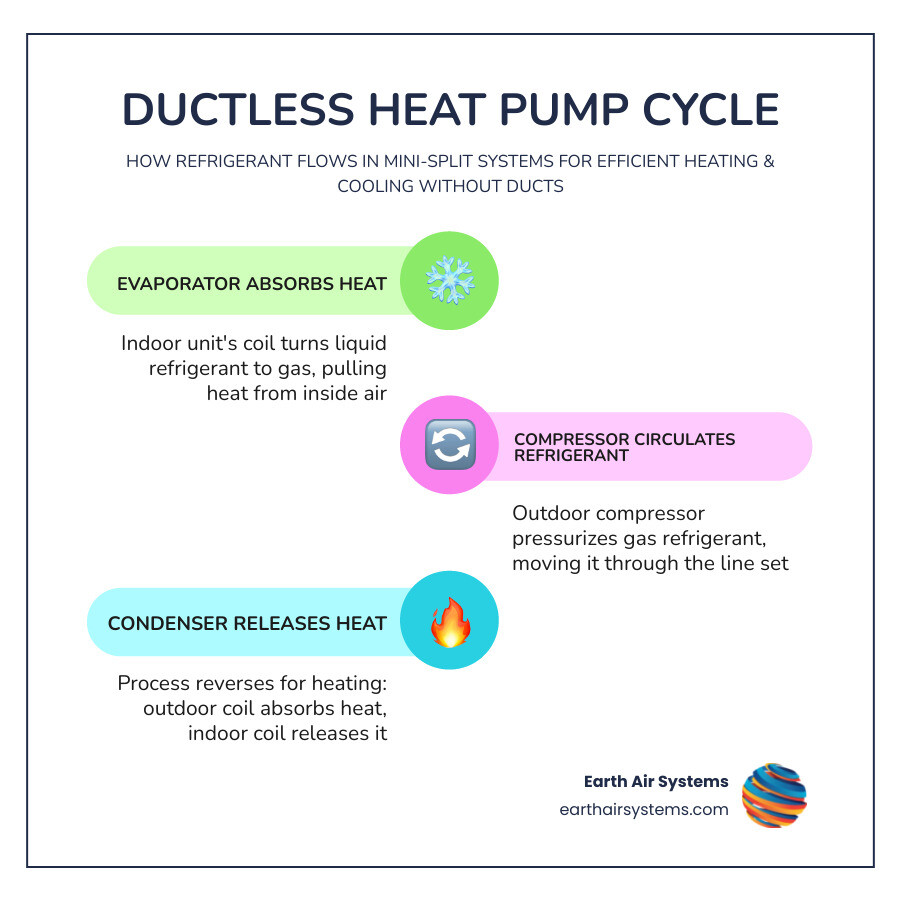
A ductless system, often called a mini-split or multi-split, changes the game. It consists of two main parts: an outdoor condenser unit and one or more indoor air handlers. These are connected by a “line set”—a bundle of small tubes containing refrigerant, electrical wiring, and a drain line.
Because there are no ducts, there is no place for energy to escape. In a traditional system, duct losses can rob your home of up to 40% of its efficiency if those ducts aren’t perfectly sealed and cleaned. With our Air Conditioning Services In San Diego, we help homeowners transition to this “direct-to-room” cooling method, which transfers heat much more effectively.
In the summer, the indoor unit absorbs heat from your room and sends it outside. In the winter, the process reverses; the outdoor unit captures heat from the San Diego air (yes, even when it’s chilly in Escondido or Oceanside!) and moves it indoors. It’s a clean, elegant heat transfer process that keeps your living space exactly where you want it.
How Ductless Heating and Cooling for Homes Without Ductwork Operates
The secret sauce behind the efficiency of these systems is Inverter Technology. Traditional HVAC systems are like a light switch—they are either 100% on or 100% off. This leads to uncomfortable temperature swings and high energy spikes. Modern ductless systems use variable-speed compressors that act more like a dimmer switch. They adjust their speed in real-time to match the cooling or heating demand of the room.
When we perform an Ac Installation In San Diego, the physical impact on your home is minimal. We only need to make a small, 3-inch penetration in the exterior wall to connect the indoor and outdoor components. This means no major construction and no losing closet space to bulky duct runs.
Furthermore, these units are whisper-quiet. While an old window unit might sound like a jet engine taking off in your bedroom, an indoor mini-split handler operates as low as 21 to 30 decibels—roughly the sound of a soft whisper or a rustling leaf.
Primary Benefits of Going Ductless
Why are so many of our neighbors in La Jolla and Chula Vista making the switch? The benefits go far beyond just “no ducts.”
- Energy Efficiency: Modern mini-splits boast SEER2 ratings that can reach as high as 38. To put that in perspective, a standard window unit often hovers between 6 and 12.
- Indoor Air Quality: Traditional ducts are notorious for collecting dust, pollen, and even mold. Ductless units feature multi-stage filtration systems that trap allergens before they reach your lungs.
- Cost Savings: By eliminating duct loss (which can account for 30% of energy waste) and using inverter technology, your monthly utility bills can drop significantly.
- Ease of Ownership: With regular Ac Maintenance In San Diego, these systems are incredibly reliable. Most indoor units feature washable, reusable filters that you can simply rinse in the sink.
Efficiency Comparison Table (April 2026 Standards)
| System Type | Cooling Efficiency (SEER2) | Heating Efficiency (HSPF2) | Energy Loss Potential |
|---|---|---|---|
| Ductless Mini-Split | 18 – 38 | 8 – 14 | Less than 5% |
| Central HVAC (Ducted) | 13 – 25 | 7 – 9 | Up to 40% (via ducts) |
| Window AC Units | 6 – 12 | N/A | High (air leaks) |
| Electric Furnace | N/A | 3 (HSPF) | Moderate |
Zoning Advantages of Ductless Heating and Cooling for Homes Without Ductwork
One of our favorite features to explain to customers is Zoning. In a house with central air, you usually have one thermostat. If you want the master bedroom at 68 degrees, the empty guest room and the kitchen are also getting blasted with cold air. That’s a waste of energy and money.
With a multi-split system, each indoor unit has its own thermostat. This allows for personalized comfort in every room. You can keep your home office cool during the day while leaving the rest of the house at a higher temperature. When evening comes, you can focus the cooling on the bedrooms. Our Heating Services In San Diego often focus on these “Zoned Comfort Solutions” because they provide the ultimate level of control. A single outdoor unit can often support up to 8 separate zones, ensuring everyone in the family is happy.
Ideal Scenarios for Ductless Installation
While ductless heating and cooling for homes without ductwork is great for any property, there are specific scenarios where it truly shines:
- Historic and Older Homes: If you live in a Victorian in Old Town or a Craftsman in North Park, the last thing you want to do is drop the ceilings to hide ductwork. Ductless units preserve the architectural integrity of your home.
- Room Additions and Garage Conversions: Adding a “granny flat” or converting your garage into a gym in San Marcos? Instead of trying to tap into your existing (and likely undersized) central system, a mini-split provides dedicated climate control.
- Sunrooms and Attics: These areas are notoriously hard to cool. A ductless unit can handle the high heat load of a glass-walled sunroom without affecting the rest of your home’s balance.
- Addressing Hot and Cold Spots: Even in homes with ducts, some rooms just never get comfortable. We often install a single-zone mini-split to supplement a struggling central system, especially in homes that have undergone a Furnace Replacement In San Diego but still have poor airflow in distant rooms.
Versatile Indoor Unit Configurations
You aren’t limited to just a white box on the wall. At Earth Air Systems, we offer several configurations to match your interior design:
- Wall-Mounted: The most common and cost-effective option, placed high on a wall to stay out of the way.
- Floor-Mounted Consoles: Perfect for rooms with low ceilings or where you’d prefer the unit to look more like a traditional radiator.
- Ceiling Cassettes: These units are recessed into the ceiling, with only a decorative grille visible. They are excellent for 360-degree airflow.
- Concealed Ducted: For those who want the look of central air without the massive trunk lines, these small units can be hidden in a soffit or attic, using very short duct runs to serve one or two rooms.
If you are considering a Heat Pump Replacement In San Diego, asking about these different form factors can help you find the perfect aesthetic fit for your home.
Installation and Maintenance Requirements
While some systems are marketed as “DIY,” we strongly recommend professional installation for several reasons. First, handling refrigerant requires specialized tools and licensing. Second, proper sizing is critical. A unit that is too large will “short cycle,” meaning it turns on and off too quickly, which fails to remove humidity and wears out the compressor.
During a typical installation, we handle:
- Sizing: Calculating the exact BTU needs for your specific square footage and San Diego sun exposure.
- Placement: Finding the optimal spot for the indoor unit to ensure even airflow and the outdoor unit for proper drainage and ventilation.
- Electrical: Ensuring your panel can handle the load (most single zones only need a 15-20 amp breaker).
Maintenance is straightforward but vital. We suggest:
- Cleaning Filters: Every 2–4 weeks, depending on use. This keeps the air clean and the system efficient.
- Annual Inspections: Just like a car, your system needs a professional eye once a year. We check refrigerant levels, clean the outdoor coils, and ensure the condensate drain is clear.
- Professional Care: If you ever notice a weird noise or a drop in performance, our Ac Repair In San Diego team is ready to help.
With proper care, a high-quality ductless system can last between 12 and 20 years, providing a fantastic return on your investment in home comfort.
Frequently Asked Questions about Ductless HVAC
Can a ductless system heat an entire home?
Absolutely. By using a multi-zone configuration, you can place an air handler in every major living space. Because these are heat pumps, they move heat rather than creating it, making them far more efficient than electric baseboard heaters or even many gas furnaces. For total peace of mind, we recommend regular Heating Maintenance In San Diego to ensure your system is ready for those chilly winter nights in North County.
How long do ductless mini-splits last?
When installed by a pro and maintained well, you can expect 12 to 20 years of service. This longevity is due to the high-quality components and the fact that the system doesn’t have to work as hard as a traditional unit thanks to inverter technology. If your current system is nearing the end of its life, it might be time to look into an Ac Replacement In San Diego.
Are ductless units better for allergies?
Yes! Traditional ductwork can act as a reservoir for dust, pet dander, and allergens. Every time the air turns on, those particles are blasted into your room. Ductless systems eliminate the “dust highway.” Plus, their advanced, multi-stage filtration systems are designed to trap even microscopic particles, significantly improving the air you breathe every day.
Conclusion
Living in San Diego means enjoying the best weather in the world, but our homes still need a little help to stay perfectly comfortable year-round. If you live in a home without existing ductwork, you don’t have to settle for “good enough” cooling or heating.
Ductless heating and cooling for homes without ductwork offers a path to premium comfort, lower energy bills, and a quieter home environment. Whether you’re in Downtown San Diego, Coronado, or Solana Beach, Earth Air Systems is here to help you navigate these modern HVAC options. With over 40 years of experience and a commitment to 100% customer satisfaction, we take the stress out of home climate control.
Ready to see how a ductless system can transform your home? Schedule your consultation with Earth Air Systems today, and let’s get your home feeling exactly the way it should.
