
Is Upgrading to High-Efficiency HVAC Worth It? A Clear Standard Efficiency vs High Efficiency HVAC Comparison
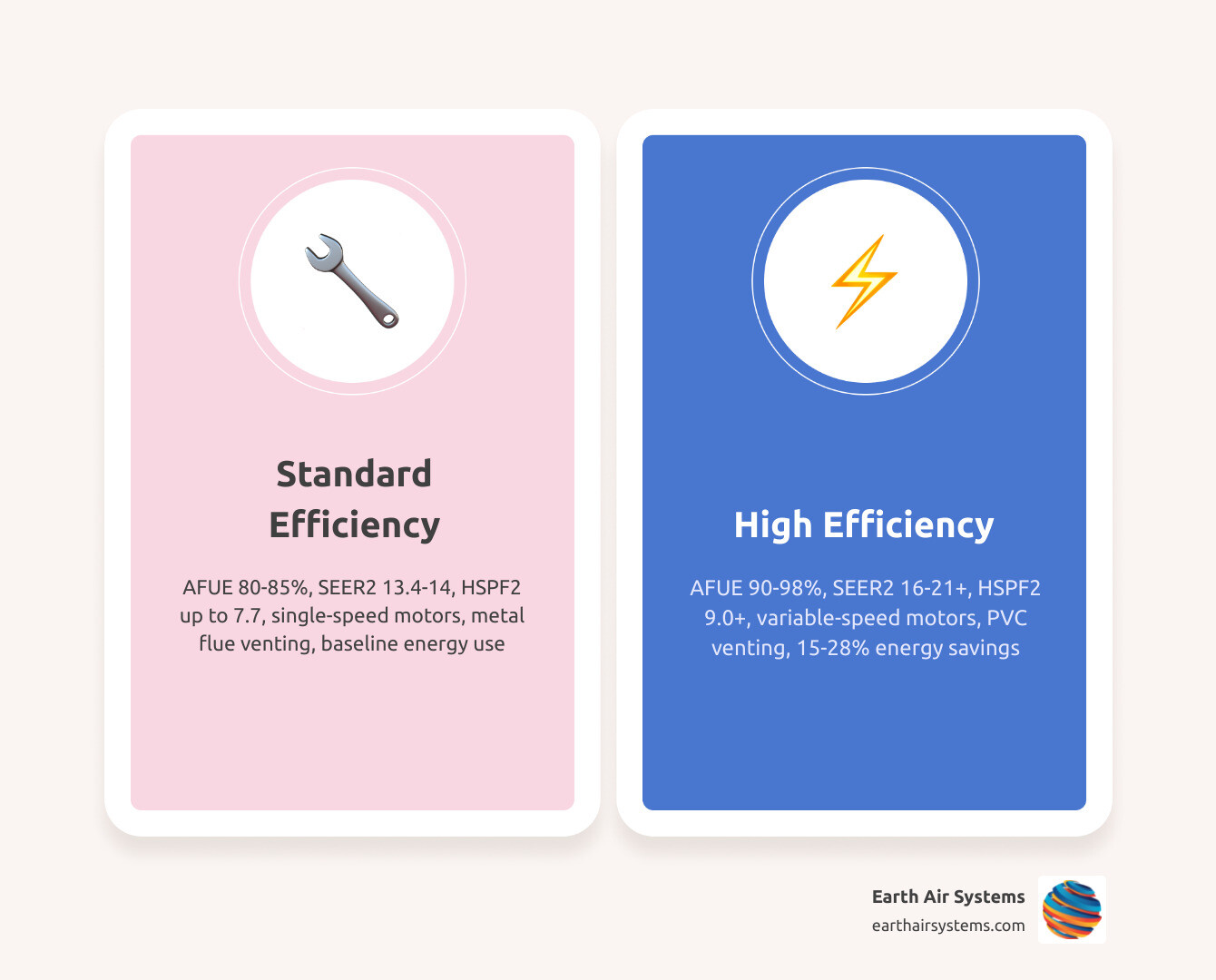
The standard efficiency vs high efficiency hvac comparison comes down to a few key differences in technology, energy use, and long-term value. Here’s a quick breakdown before we dive deeper:
| Feature | Standard Efficiency | High Efficiency |
|---|---|---|
| Furnace AFUE | 80-85% | 90-98% |
| Central AC SEER2 | 13.4-14 | 16-21+ |
| Heat Pump HSPF2 | Up to 7.7 | 9.0+ |
| Venting | Metal flue | PVC pipe |
| Heat exchangers | Single | Dual (condensing) |
| Blower motor | Single-speed | Variable-speed |
| Annual energy savings | Baseline | 15-28% less than standard |
| Payback period | N/A | Typically 5-12 years |
Over 85% of American homes rely on HVAC systems year-round. With energy costs rising and efficiency standards tightening — the Department of Energy updated minimum ratings in 2023 — choosing the right system matters more than ever. A standard furnace converts roughly 80% of fuel into usable heat. A high-efficiency model converts 90-98%, meaning significantly less energy is wasted up the exhaust flue every time your system runs.
For San Diego homeowners, the choice isn’t always obvious. The mild climate means shorter heating seasons compared to colder regions, which changes the math on payback periods. At the same time, year-round cooling demands and local energy rates still make efficiency an important factor. Understanding where each system type wins — and where it doesn’t — helps you make a smarter decision for your home and budget.
This guide walks through the real pros and cons of each option so you can choose with confidence.
Understanding the Standard Efficiency vs High Efficiency HVAC Comparison
When we talk about a standard efficiency vs high efficiency hvac comparison, we are looking at how effectively a system converts energy into comfort. In the HVAC world, this is measured by specific acronyms that act like the “miles per gallon” rating for your home.
The Key Metrics: SEER2, AFUE, and HSPF2
As of April 2026, the industry has fully transitioned to “Version 2” testing standards. These updated metrics reflect real-world operating conditions more accurately than older ratings.
- SEER2 (Seasonal Energy Efficiency Ratio 2): This measures cooling efficiency over an entire season. In the Southwest region, including San Diego, the federal minimum is currently 14.3 SEER2 for split systems. High-efficiency units often reach 18 to 21+ SEER2.
- AFUE (Annual Fuel Utilization Efficiency): This applies to furnaces. A standard 80% AFUE furnace wastes 20% of every energy dollar through the exhaust. High-efficiency condensing furnaces reach 90% to 98% AFUE, meaning almost no fuel is wasted.
- HSPF2 (Heating Seasonal Performance Factor 2): This measures the heating efficiency of heat pumps. Standard units hover around 7.5 to 7.7, while high-efficiency models exceed 9.0.
Energy Conversion and Heat Transfer
Standard systems typically use a single-stage process. They are either 100% “on” or completely “off.” High-efficiency systems use advanced heat transfer methods, such as variable-speed technology, to adjust their output based on the actual needs of the home. Instead of a “blast” of air, these systems provide a steady, gentle flow. You can see how these differences impact your specific home by using our SEER Calculator.
Technical Differences in Heating and Cooling Systems
The jump from standard to high efficiency isn’t just a marketing label; it involves a significant change in the hardware inside the cabinets.
Condensing Technology and Dual Heat Exchangers
The biggest difference in heating is the “condensing” process. Standard furnaces have one heat exchanger. High-efficiency models have a primary and a secondary heat exchanger. The second exchanger captures heat from the exhaust gases that would otherwise be lost. As it extracts this extra heat, the exhaust cools down enough to turn into water (condensate), which is why these units require a dedicated drain line.
Variable-Speed Motors and Inverter Compressors
In our Air Conditioning Services in San Diego, we often explain that high-efficiency AC units use “inverter-driven” compressors. Unlike a standard compressor that runs at one speed, an inverter compressor can ramp up or down in tiny increments. This prevents the frequent “start-stop” cycles that wear out equipment and spike energy bills.
Venting and Combustion
High-efficiency furnaces use sealed combustion. They pull fresh air from outside through a PVC pipe rather than using the air already inside your home. This is safer and more efficient. Because the exhaust is so cool (thanks to that second heat exchanger), it can be vented through inexpensive PVC pipe rather than the heavy metal flues required for standard 80% furnaces.
High-Efficiency Features Include:
- Variable-speed ECM blower motors that use less electricity.
- Two-stage or modulating gas valves for precise heating.
- Advanced sound blankets and insulated cabinets for whisper-quiet operation.
- Seamless integration with smart thermostats to optimize runtime.
Comfort and Air Quality Benefits of High-Efficiency Upgrades
While energy savings are great, the biggest “pro” for many families is the massive improvement in home comfort.
Consistent Temperatures and Zoned Comfort
Standard systems often lead to “hot and cold spots.” Because they run at full blast and then shut off, the temperature in your home swings up and down. High-efficiency systems run for longer periods at lower speeds, which keeps the temperature within one degree of your setting at all times. This also makes them perfect for zoning, allowing you to cool the upstairs and downstairs independently.
Humidity Control and Air Quality
In San Diego, humidity can sometimes make a room feel warmer than it actually is. High-efficiency units are masters of moisture removal. Because they run longer cycles, they have more time to pull humidity out of the air. When paired with our Air Quality Services in San Diego, these systems provide superior filtration, catching more dust, pollen, and pet dander because the air is moving through the filters more consistently.
Noise Reduction
If your current AC sounds like a jet engine taking off in your backyard, you’ll love high-efficiency technology. Variable-speed blowers and insulated compressors make these units significantly quieter. In many cases, you won’t even know the system is running unless you look at the thermostat.
Installation and Maintenance Considerations for Modern Systems
Upgrading to a high-efficiency system isn’t always a “plug-and-play” situation. There are technical requirements that we must address during the installation.
Specialized Venting and Drainage
As mentioned, high-efficiency furnaces produce “condensate”—basically slightly acidic water. We must install a drain line or a small pump to move this water outside or to a floor drain. Additionally, if you are switching from a standard 80% furnace to a 95%+ model, we will likely need to run new PVC venting through a side wall or the roof, as the old metal chimney flue is no longer compatible.
Sizing and Ductwork Integrity
A high-efficiency unit is only as good as the ducts it’s connected to. During our Heating Services in San Diego, we often perform HERS (Home Energy Rating System) testing. This ensures your ductwork isn’t leaking all that expensive conditioned air into your attic. If your ducts are leaky or undersized, even the most efficient unit in the world won’t save you money.
Preventive Maintenance
While high-efficiency systems are built for durability, they do have more complex electronic components. Regular maintenance is vital. For more details on what these systems require, check our HVAC FAQs. Keeping the condensate drain clear and the sensors clean ensures the system lives out its full 15-to-20-year lifespan.
Frequently Asked Questions about HVAC Efficiency
What is a good SEER2 rating for a standard efficiency vs high efficiency hvac comparison?
For most San Diego homes, a “good” rating is a balance between performance and value. While the minimum is 14.3 SEER2, we consider 16 to 18 SEER2 to be the “sweet spot” for high efficiency. Systems in this range provide excellent electricity savings and humidity control without the ultra-premium price tag of 21+ SEER2 units. If you have high electricity rates or a very large home, moving toward the higher end of that scale yields faster returns. You can explore options through our Air Conditioning Services in San Diego.
How does a high-efficiency furnace differ from a standard model?
The primary difference is the AFUE rating and the heat exchanger design. A standard model (80% AFUE) uses a single heat exchanger and vents hot exhaust through a metal pipe. A high-efficiency model (90-98% AFUE) uses two heat exchangers to squeeze every bit of heat out of the fuel, resulting in cool exhaust that vents through PVC. This allows the high-efficiency model to use 15-20% less gas to produce the same amount of heat. Learn more about our furnace options via our Heating Services in San Diego.
Is a high efficiency hvac comparison relevant for San Diego’s mild climate?
Absolutely. While we don’t have the freezing winters of the Midwest, San Diego residents often run their AC for many months of the year. High-efficiency systems excel at humidity management and consistent cooling, which is vital for coastal and inland comfort alike. Furthermore, high-efficiency systems are generally more reliable and quieter, which enhances your quality of life regardless of the temperature outside. Pairing these units with Air Quality Services in San Diego ensures your home remains a healthy sanctuary year-round.
Conclusion
Choosing between standard and high efficiency is about more than just the numbers on a yellow sticker; it’s about how you want your home to feel for the next two decades. At Earth Air Systems, we’ve spent over 40 years helping San Diego families navigate these choices. Whether you prioritize the lowest possible utility bills, whisper-quiet operation, or a smaller environmental footprint, there is a high-efficiency solution that fits your goals.
Upgrading to high-efficiency equipment is a long-term investment in your home’s value and your family’s comfort. With our flat-rate pricing and commitment to 100% satisfaction, we make the transition easy and transparent.
Ready to see which system is right for your home? Schedule your Air Conditioning Services in San Diego today, and let our expert team provide a professional assessment tailored to your specific needs.
