
Is Your HVAC System Growing Mold Right Now?
How proper HVAC maintenance prevents mold growth is one of the most important things San Diego homeowners can understand about their home comfort system. Your HVAC system moves air through every room in your house — and if mold gets in, it goes everywhere too.
Here’s the short answer:
- Change air filters every 1–3 months to stop spores from recirculating
- Clean condensate drain lines regularly to eliminate standing water
- Keep indoor humidity between 30–50% using your AC and a hygrometer
- Seal and insulate ductwork to prevent moisture from entering the system
- Schedule professional inspections twice a year — spring and fall
Mold only needs three things to grow: moisture, a food source (like dust), and the right temperature. Your HVAC system provides all three if it’s not properly maintained. A 2004 study found that roughly 20% of buildings across the US, Canada, and Europe showed signs of dampness — and much of that moisture traces back to HVAC-related issues that routine maintenance could have prevented.
In San Diego, the coastal climate adds an extra layer of risk. Marine air keeps humidity elevated year-round, even when it doesn’t feel hot or muggy. That means your AC is constantly fighting moisture — and a neglected system can quietly become a mold breeding ground long before you notice a smell or see a spot.
The good news? This is almost entirely preventable with the right maintenance habits.
Why Your Air Conditioner is a Magnet for Mold Growth
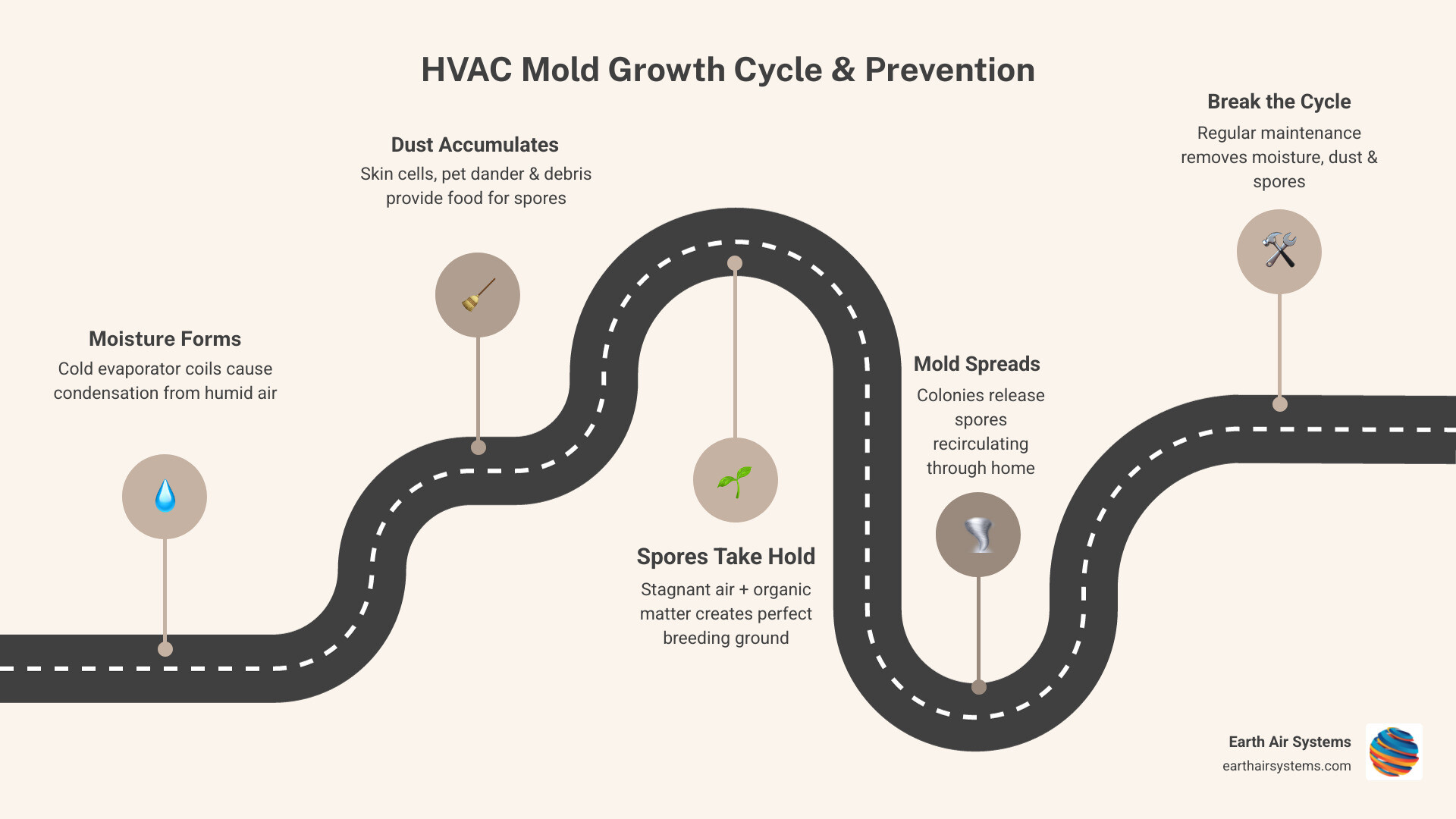
It might seem strange that a machine designed to keep you comfortable could also be a “petri dish,” but the physics of cooling makes mold growth a natural risk. The heart of the issue lies in the evaporator coils. As your AC runs, these coils become extremely cold. When warm, humid air from your San Diego home passes over them, moisture condenses into liquid water—much like a glass of iced tea “sweats” on a July afternoon.
This moisture is supposed to drain away, but if the system is dirty, problems start. Mold requires organic food sources to survive, and in an HVAC system, that food is dust. Skin cells, pet dander, and microscopic debris accumulate on damp coils and inside dark ductwork. When you combine standing water with a layer of “dust food” and stagnant air, you have a perfect nursery for fungal colonies. Improving your Air Quality Services in San Diego starts with understanding that cleanliness is your first line of defense.
How high humidity contributes to mold in HVAC systems
In mold prevention, there is a “60% Rule.” Mold typically flourishes in environments where the relative humidity (RH) stays above 60 percent. At this level, porous materials like drywall, carpet, and even the dust inside your vents can absorb enough moisture from the air to support mold germination.
Living in coastal areas like La Jolla, Carlsbad, or Downtown San Diego means we deal with higher dew points and marine layers. If your AC isn’t performing efficient moisture removal, the indoor humidity can quickly spike. Proper Air Conditioning Services in San Diego ensure that your system isn’t just cooling the air, but effectively acting as a giant dehumidifier to keep your home below that dangerous 60% threshold.
Common signs of mold growth in an HVAC system
You don’t always need to see mold to know it’s there. In fact, mold is a “sneaky little bugger” that often hides in invisible areas like the back of the evaporator coil or deep within the “air highways” of your ductwork. Keep an eye (and a nose) out for these red flags:
- Musty odors: If you notice a “dirty sock” or “old basement” smell specifically when the AC kicks on, mold is likely present.
- Visible speckles: Look for black, green, or fuzzy white spots on air registers and vents.
- Allergy flare-ups: If your family experiences unexplained sneezing, itchy eyes, or respiratory issues that seem to improve when you leave the house, your HVAC system might be circulating spores.
How proper hvac maintenance prevents mold growth
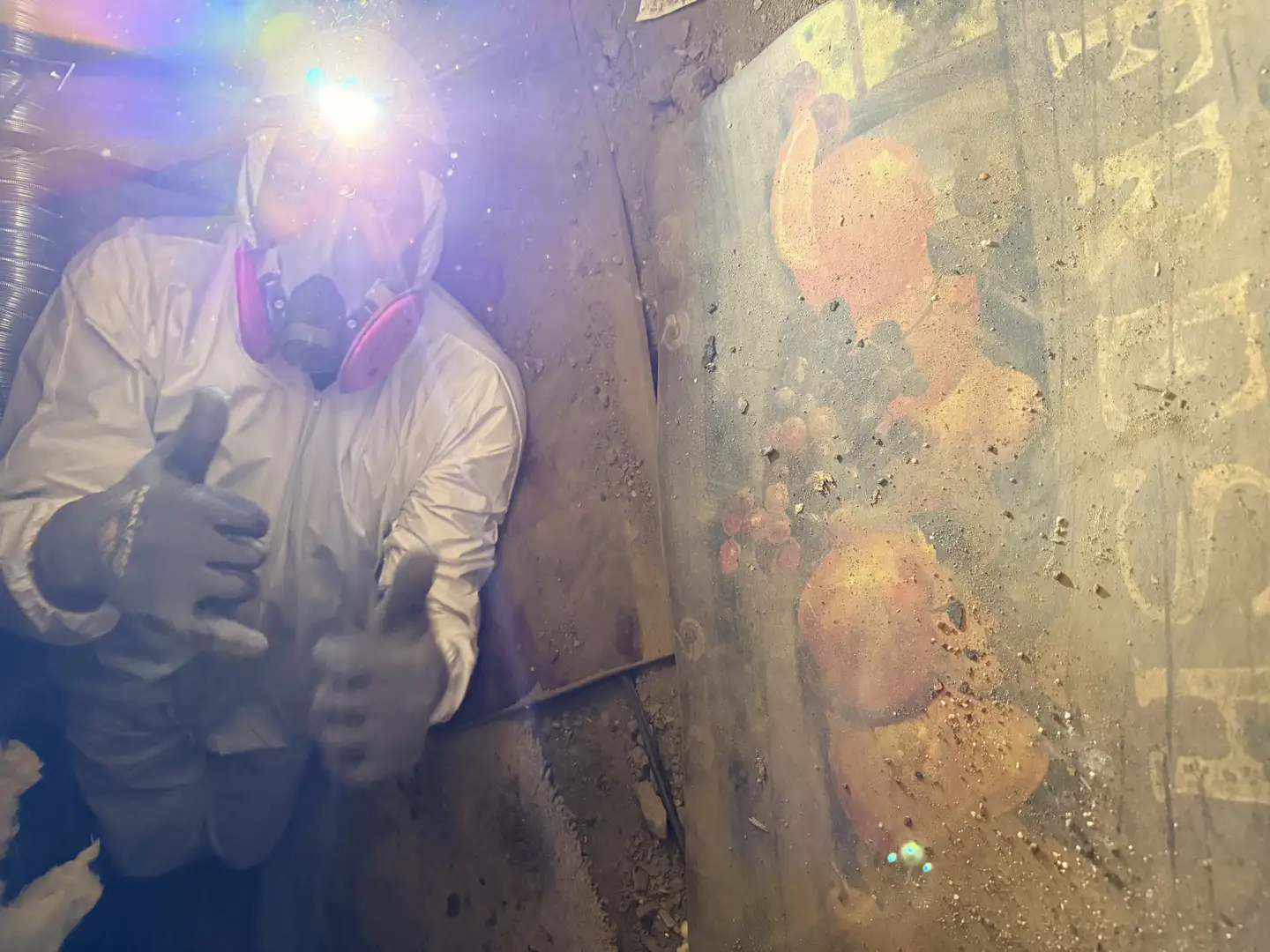
The most effective way to keep your home healthy is through proactive care. How proper HVAC maintenance prevents mold growth is by disrupting the biological needs of the fungus. By removing the food (dust) and managing the moisture (condensation), we make it impossible for mold to settle down and raise a family in your vents. Regular maintenance also ensures airflow optimization, which prevents the stagnant, damp conditions mold loves. For comprehensive care, explore our Air Conditioning Services in San Diego / AC Maintenance in San Diego.
Why proper HVAC maintenance prevents mold growth in San Diego homes
San Diego homes face unique challenges, from the salt air of Oceanside to the inland heat of Escondido. Salt air can be corrosive to HVAC components, leading to tiny leaks or surface pitting where moisture can trap dust more easily. Seasonal transitions are also critical; as we move into May 2026, the shift from heating to cooling can cause dormant dust to meet new condensation. Bi-annual tune-ups are essential to catch these issues early. For a deeper dive, check out The Ultimate Guide to AC Maintenance Services in San Diego.
Cleaning condensate drain lines and pans
Your AC produces gallons of water every day. This water collects in a condensate pan and flows out through a drain line. If this line becomes clogged with algae or “slime,” water backs up. Standing water in a dark HVAC cabinet is an open invitation for mold.
We recommend a simple “vinegar flush” every few months—pouring a cup of plain white vinegar down the drain line to kill algae buildup. During professional maintenance, we check that pans are sloped correctly toward the drain and that “deep seal traps” are functioning to expel water effectively. This is a core part of our Heating Services in San Diego / Heating Maintenance in San Diego as well, ensuring no moisture lingers where it shouldn’t.
Essential DIY Tasks for Homeowners in May 2026
While professional service is vital, you are the daily guardian of your home’s air quality. Simple tasks performed regularly can stop a small moisture issue from becoming a full-blown infestation.
How frequently should air filters be changed or cleaned to prevent mold?
The air filter is the “humblest” but most important part of your system. When a filter is dirty, it restricts airflow. This causes the cooling coils to over-cool and potentially freeze. When those frozen coils eventually melt, they create a massive surge of moisture that the drain pan might not be able to handle.
- Standard homes: Change filters every 60–90 days.
- Homes with pets or allergies: Change filters every 30 days.
- Filter Type: Use a MERV rating between 8 and 13. This range is high enough to trap mold spores but low enough that it won’t strain your blower motor.
Changing filters ensures that lingering spores are captured rather than recirculated. If you need help choosing the right filter for your system, our Heating Services in San Diego team can guide you.
Controlling indoor humidity in the 30-50% range
To keep your home a “safe and healthy sanctuary,” you need to monitor your moisture levels. We recommend using a digital hygrometer to track relative humidity.
- Target: Keep it between 30% and 50%.
- Ventilation: Always use bathroom fans during showers and kitchen fans while cooking to exhaust moisture spikes to the exterior.
- Avoid “Off” Mode: When leaving your home in places like Chula Vista or San Marcos for the day, set your thermostat to “Auto” rather than “Off.” This keeps air moving and prevents the stagnant, humid conditions that trigger mold growth.
Advanced Solutions for Long-Term Prevention
If you live in a particularly humid part of San Diego County or have severe allergies, standard maintenance might need a technological boost.
| Solution | Primary Function | Best For |
|---|---|---|
| UV Germicidal Lights | Uses UVC rays to destroy mold DNA | Preventing growth on coils and in ducts |
| Whole-Home Dehumidifier | Removes excess moisture independently of the AC | High-humidity coastal climates |
| High-MERV Filtration | Traps microscopic spores and dander | Families with asthma or respiratory issues |
Learn more about these Air Quality Services in San Diego and how they can be integrated into your existing setup.
Sealing and insulating ductwork to prevent mold
Leaky ductwork is a primary cause of moisture entry. If your ducts have holes and run through an unconditioned attic in Vista or North County, they can pull in hot, moist air. When that moist air hits the cold air inside the duct, it creates “sweat” or condensation inside the pipes. Sealing these leaks and ensuring proper insulation prevents this temperature differential from creating water.
Proper AC sizing and ventilation
The “bigger is better” mentality is a dangerous misconception when it comes to air conditioning. An oversized unit will cool your home too quickly and shut off (a process called short cycling). Because it doesn’t run long enough, it never has the chance to remove the humidity from the air. You’re left with a home that is cold but “clammy.” A professional load calculation ensures your system runs long enough to properly dehumidify your space.
Frequently Asked Questions about HVAC Mold
What should you do if mold is already present in your HVAC system?
If you find an active infestation, do not attempt to clean it with standard household chemicals, as incorrect cleaners can damage sturdy HVAC equipment. Turn the system off to prevent spreading spores and call for professional remediation. In many cases, if a system has suffered long-term contamination, replacing the unit may be more feasible and safer than intensive remediation.
How often should professional HVAC maintenance be scheduled?
We recommend a professional inspection twice a year: once in the spring before the cooling season and once in the fall before the heating season. These “tune-ups” include deep cleaning of coils, checking drain lines, and ensuring the refrigeration cycle is removing moisture at peak efficiency. You can find more details in The Ultimate Guide to AC Maintenance Services in San Diego.
What are the health risks of mold from HVAC systems?
Mold is a fungus that can release mycotoxins into your breathing air. Exposure is linked to respiratory issues, sinus congestion, chronic fatigue, and asthma triggers. Because your HVAC system acts as the “lungs” of your home, keeping it mold-free is essential for your long-term physical well-being.
Conclusion: Breathe Easier with Earth Air Systems
At Earth Air Systems, we believe your home should be a healthy sanctuary. With over 40 years of experience serving communities from Coronado to Escondido, our family-operated team understands exactly how the San Diego climate affects your indoor air.
How proper HVAC maintenance prevents mold growth isn’t just a technical fact—it’s our commitment to your family’s comfort. We offer background-checked technicians and a 100% satisfaction guarantee. Don’t let your AC become a mold factory. Whether you need a seasonal tune-up or advanced Air Quality Services in San Diego, we are here to help.
Ready to protect your home? Contact Earth Air Systems today to schedule your professional maintenance visit!
