
Is It Time for Heat Pump Replacement in Coronado, CA?
Heat pump replacement in Coronado CA is one of the smartest home comfort decisions you can make — especially if your current system is over 10 years old, running up your energy bills, or struggling to keep your home at a consistent temperature.
Here’s a quick summary of what Coronado homeowners need to know:
- When to replace: Heat pumps typically last 10–15 years. Frequent repairs, rising utility bills, and uneven heating or cooling are clear warning signs.
- Best system types: Air-source heat pumps and ductless mini-splits are both well-suited to Coronado’s mild coastal climate.
- Coastal consideration: Salty ocean air accelerates corrosion on outdoor units, making coastal-grade equipment and regular maintenance especially important.
- Efficiency ratings matter: Look for high SEER and HSPF ratings to maximize year-round energy savings.
- Rebates are available: Federal tax credits and local utility incentives can help offset the cost of an energy-efficient upgrade.
Living in Coronado means enjoying warm summers, mild winters, and ocean breezes year-round. But that same salty coastal air that makes the island so livable can quietly wear down your HVAC equipment faster than you’d expect. When your heat pump starts showing its age, it stops working as efficiently — and that gap between what it costs to run and what you’re actually getting in comfort keeps widening.
Whether your system is making strange noises, running constantly without hitting your target temperature, or simply aging out of its useful life, understanding your replacement options is the first step to getting your home comfortable again.
Recognizing the Need for Heat Pump Replacement in Coronado CA
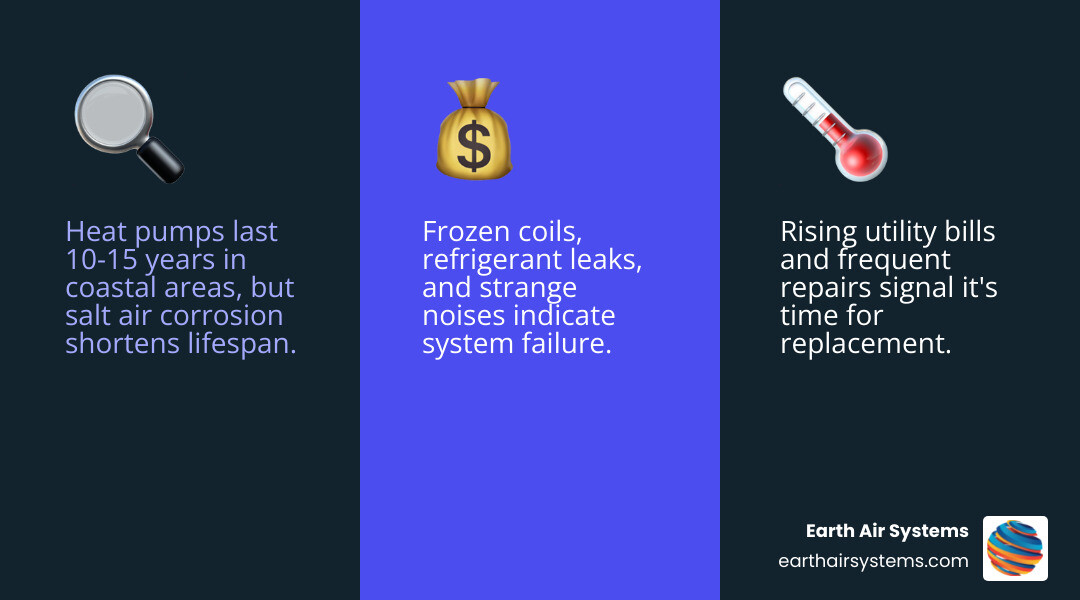
Recognizing when your system has moved past the point of a simple fix is essential for maintaining a stress-free home. While we all want our appliances to last forever, the reality of coastal living is that most HVAC systems have a functional lifespan of about 10 to 15 years. If yours is pushing the upper end of that bracket, you are likely already seeing the signs of decline.
One of the most common indicators is a steady climb in your monthly utility bills. As internal components wear out, the system has to work twice as hard to move heat in or out of your home, consuming more electricity in the process. You might also notice that some rooms feel like a sauna while others remain chilly. This inconsistency usually points to a compressor or blower motor that can no longer keep up with the demands of your household.
If you find yourself calling for AC Repair in Coronado more than once a season, those small repair bills are actually a down payment on a system that is destined to fail. In many cases, opting for a full Heat Pump Replacement in San Diego is the more cost-effective path forward, saving you from the “sunk cost” trap of repairing an obsolete unit.
Common Signs Your System is Failing
Beyond just age, there are specific mechanical “red flags” that signal the end of the road. If you notice any of the following, it is time to have a professional take a look:
- Frozen Coils: Even in our warm climate, a lack of airflow or low refrigerant can cause the evaporator coils to ice over, suffocating the system.
- Refrigerant Leaks: If your system is constantly low on “freon,” you likely have a leak. Older units using R-22 refrigerant are particularly expensive to maintain because that refrigerant is being phased out.
- Unresponsive Thermostat: If you adjust the dial and nothing happens, or the system “short cycles” (turns on and off rapidly), the communication between your home and the unit is breaking down.
- Strange Noises: Grinding, squealing, or loud banging sounds often indicate a failing motor or a loose internal component that could cause a catastrophic breakdown at any moment.
For a deeper dive into these issues, you can check out our AC Repair Coronado CA Guide to see if your symptoms match common repairable problems or if they point toward replacement.
When to Choose Heat Pump Replacement in Coronado CA Over Repair
Deciding between a repair and a replacement usually comes down to the “50% rule.” If the cost of the repair is more than half the value of the system—or if the system is over 12 years old—replacement is almost always the better investment. Modern units are significantly more efficient than those built just a decade ago, meaning a new installation often pays for itself through lower monthly overhead.
Furthermore, older technology simply can’t compete with the comfort levels of new Heating Services in San Diego. Newer models offer variable-speed motors and advanced filtration that provide a level of indoor air quality and temperature precision that older units just can’t match.
Why Heat Pumps are Ideal for the Coronado Coastal Climate
Coronado is famous for its “perfect” weather, but “perfect” for us can be tricky for mechanical equipment. We don’t experience the sub-zero temperatures of the Midwest, which makes the heat pump the undisputed king of local HVAC. Unlike a furnace that creates heat by burning fuel, a heat pump simply moves heat from one place to another. In the winter, it pulls warmth from the outdoor air to heat your home. In the summer, it reverses the process to act as a high-powered air conditioner.
This dual-functionality is incredibly efficient in our mild winters and warm summers. Because the temperature rarely drops below freezing, a heat pump can operate at peak efficiency year-round, providing energy-efficient heat transfer that keeps your carbon footprint low and your comfort high.
Combating Salt Air Corrosion in Island Environments
The biggest challenge for any heat pump replacement in Coronado CA is the “Salt Air Factor.” The very air that smells so good near the Hotel del Coronado is actually filled with microscopic salt particles that eat away at aluminum and copper. Without the right protection, a standard HVAC unit can look like it’s 20 years old after just five years on the island.
To ensure your investment lasts, we recommend looking for systems with:
- Coastal-grade coatings: Specialized epoxy or acrylic coatings on the outdoor coils to prevent “pitting” and corrosion.
- Corrosion-resistant materials: Units designed with stainless steel fasteners and treated cabinets.
- Protective housing: Placing the unit in a way that minimizes direct spray from the ocean while still allowing for proper airflow.
By choosing equipment specifically designed for coastal environments, as detailed in Coronado’s Finest: A Guide to the Best Local AC Repair, you can significantly extend the life of your new system.
Key Factors in Selecting Your New Heat Pump
Choosing a new system isn’t just about picking a brand; it’s about finding the right “fit” for your specific home layout. Coronado features a mix of historic bungalows, modern condos, and sprawling beachfront estates, each with unique needs.
| Feature | Air-Source Heat Pump | Ductless Mini-Split |
|---|---|---|
| Best For | Homes with existing ductwork | Additions, historic homes, or “zoning” |
| Installation | Connects to current vents | Wall-mounted indoor units |
| Efficiency | High (SEER 14-20+) | Very High (SEER 20-30+) |
| Appearance | Hidden in ducts | Visible indoor air handlers |
| Zoning | Limited (unless modified) | Excellent (room-by-room control) |
When you work with Top Rated AC Installation Contractors Near Coronado to Keep You Cool, the first step is always a proper load calculation. If a system is too small, it will run constantly and never get you cool. If it’s too large, it will “short cycle,” leading to high humidity and premature wear.
Understanding Efficiency Ratings for Heat Pump Replacement in Coronado CA
When browsing models, you’ll see two main numbers: SEER and HSPF.
- SEER (Seasonal Energy Efficiency Ratio): This measures cooling efficiency. In Coronado, where we use the AC for a good portion of the year, a higher SEER (16 or above) is generally recommended.
- HSPF (Heating Seasonal Performance Factor): This measures heating efficiency. Since our winters are mild, you don’t necessarily need the highest HSPF available, but a solid rating ensures you aren’t overpaying during those chilly January nights.
Investing in a unit with Energy Star certification often qualifies you for long-term savings and ensures you are receiving a top-tier Heating System Installation that meets rigorous federal standards.
The Professional Installation and Replacement Process
A heat pump is only as good as its installation. You could buy the most expensive unit on the market, but if it’s installed poorly, it will underperform and fail early. Our process is designed to be thorough and non-disruptive to your daily life.
- Home Energy Audit & Assessment: We don’t just swap boxes. We look at your windows, insulation, and home orientation to ensure we recommend the perfect size.
- Removal of Old Equipment: We safely reclaim any old refrigerant (per EPA guidelines) and haul away your old unit for recycling.
- Ductwork Inspection: Before the new unit goes in, we check for leaks or blockages. If your ducts are leaking 20% of your air into the attic, a new heat pump won’t fix your comfort issues. We offer specialized Ductwork Repair to make sure every ounce of conditioned air reaches your living space.
- Precision Calibration: Once the unit is set, we charge the refrigerant to the exact levels required by the manufacturer and calibrate the thermostat.
- Final Performance Testing: We measure the “Delta T” (the temperature difference between the air going in and coming out) to guarantee the system is performing at its rated efficiency.
Frequently Asked Questions about Heat Pump Replacement
How long do heat pumps typically last in Coronado?
In a standard environment, you might get 15 years. In Coronado, the salt air can reduce that to 10–12 years if the system isn’t maintained. However, with modern coastal-grade coatings and a regular maintenance plan, you can easily push back toward that 15-year mark.
Are there rebates available for energy-efficient upgrades?
Yes! Under the Inflation Reduction Act, many homeowners qualify for federal tax credits of up to $2,000 for high-efficiency heat pump installations. Local utility companies also frequently offer “instant rebates” or incentives for switching to electric heat pumps. Checking for top AC maintenance companies who stay up-to-date on these programs is a great way to save.
Can I switch from a gas furnace to an electric heat pump?
Absolutely. This is becoming a very popular choice in Southern California. Converting from gas to electric is eco-friendly, eliminates the risk of carbon monoxide leaks, and often frees up space in your utility closet. We can help you determine if your electrical panel is ready for the switch or if a “dual-fuel” system (keeping a gas furnace for backup) is a better bridge for your home.
Conclusion
At Earth Air Systems, we understand that your home is your sanctuary. With over 40 years of experience serving the Coronado and San Diego communities, we’ve seen every type of HVAC challenge the coast can throw at us. We pride ourselves on providing flat-rate pricing and a commitment to 100% customer satisfaction.
Don’t wait for your system to fail on the hottest day of the year. Whether you are curious about the latest ductless technology or you know it’s time for a full heat pump replacement in Coronado CA, our team is here to provide honest advice and expert craftsmanship.
Schedule your Coronado heat pump assessment today and experience the difference that 40 years of local expertise can make. We’ll keep you comfortable, island-style.
