
Why Adding Cooling Without Ductwork Options Compared Matters for California Homes
Adding cooling without ductwork options compared is one of the most common questions San Diego homeowners face — especially those living in older California bungalows, craftsman homes, or historic properties where installing full duct systems is either impractical or prohibitively disruptive.
Here is a quick-reference breakdown of the main options:
| Option | Best For | Efficiency | Installation |
|---|---|---|---|
| Ductless mini-split | Whole-home or zoned cooling | Very high (SEER2 20-35+) | Professional, low-invasive |
| Window AC unit | Single room, renters | Moderate (EER 10-15) | DIY |
| Portable AC | Temporary or no-window rooms | Low (EER 8-12) | DIY |
| Through-the-wall / PTAC | Permanent single-room installs | Moderate (SEER2 12-16) | Moderate |
| Evaporative cooler | Dry inland climates only | High in dry climates | DIY or pro |
The short answer: ductless mini-split systems offer the best long-term value for most California homeowners. They avoid the up to 30% energy loss that traditional ducted systems suffer through duct leaks, operate quietly, and give you room-by-room temperature control. Window and portable units are lower cost upfront but cost more to run and deliver less comfort over time.
That said, every home is different. The right choice depends on your floor plan, how many rooms you need to cool, your climate zone (coastal San Diego versus inland valleys behave very differently), and your long-term plans for the property.
Traditional central air conditioning is a strong option when ductwork already exists and is in good condition. But in April 2026, with tightened efficiency standards under SEER2 requirements and updated federal incentives from the Inflation Reduction Act, ductless systems have become an even more compelling choice for homes starting from scratch.
The sections below walk you through each option in detail — so you can make a confident, informed decision for your home.
Understanding Ductless Mini-Split Systems and How They Work
If you are looking for a way to stay cool without tearing up your lath-and-plaster walls, a ductless mini-split system is likely your best friend. These systems are elegantly simple in their design. They consist of two main parts: an outdoor condenser unit and one or more indoor air handlers.
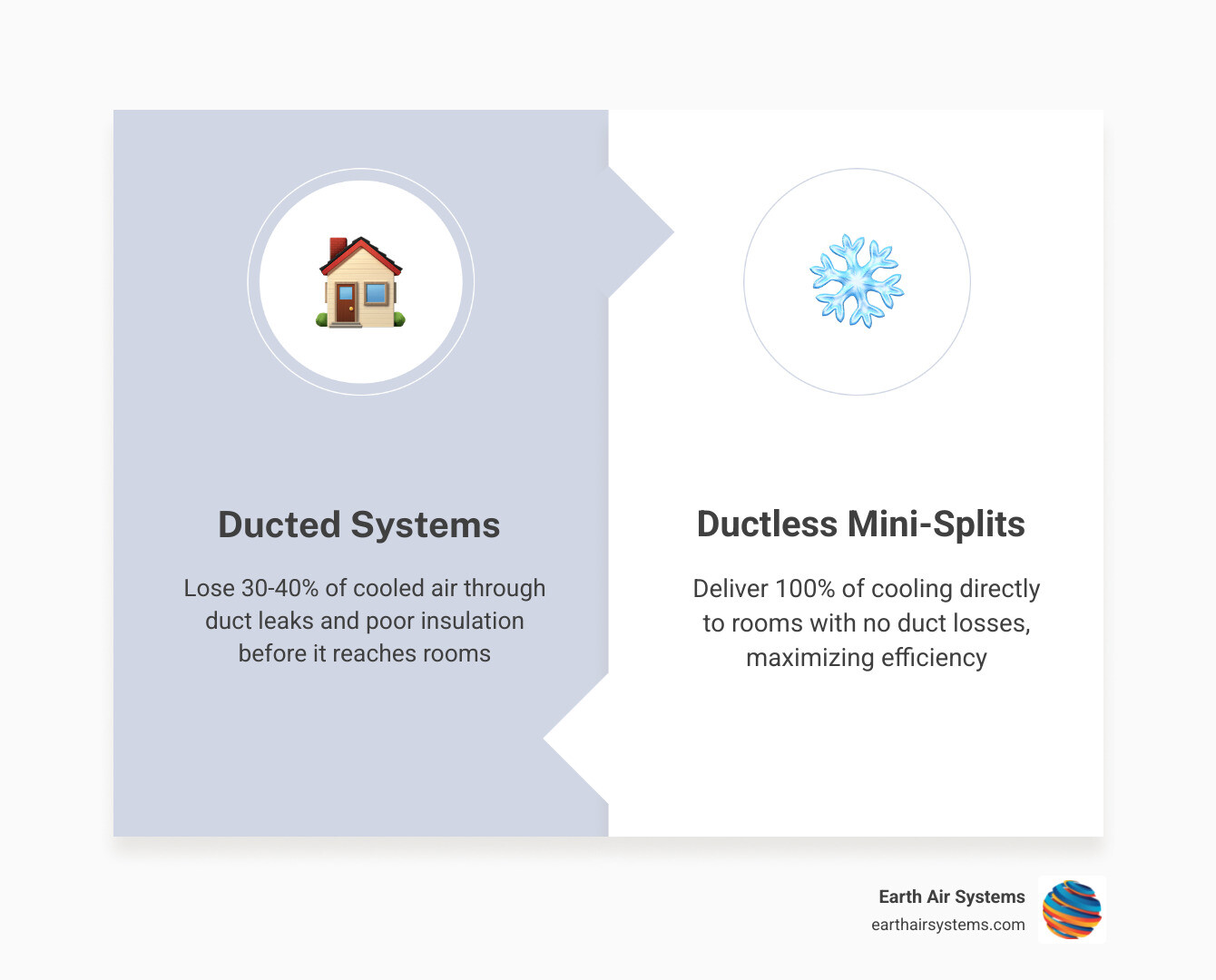
Unlike a central AC that forces air through a maze of dusty metal tubes in your attic, a mini-split connects the indoor and outdoor units via a slender “line set.” This bundle includes refrigerant lines, a power cable, and a suction tubing for condensation. Because they don’t use ducts, they eliminate the massive energy waste—often up to 30% or 40%—that occurs when cool air leaks out of poorly sealed ductwork before it ever reaches your living room.
At the heart of modern mini-splits is inverter technology. While older AC units are either “all on” or “all off” (like a loud car engine that only knows how to floor it or park), inverter compressors can slow down or speed up to match the exact cooling needs of the room. This results in incredibly steady temperatures and a much lower electric bill. Most of these systems also serve as heat pumps, meaning they can reverse the cooling process to provide energy-efficient warmth during our chilly San Diego winter nights. If you have an aging furnace, you might even consider a full Heat Pump Replacement in San Diego to handle your comfort year-round.
Adding Cooling Without Ductwork Options Compared: Single-Zone vs. Multi-Zone
One of the coolest things (pun intended) about ductless technology is its flexibility. We can design a system that fits your home like a tailored suit.
- Single-Zone Systems: These are perfect for that one room that always feels like a sauna—perhaps a new home office, a master bedroom, or a finished garage. One indoor unit connects to one outdoor unit.
- Multi-Zone Systems: If you want to cool your entire home, we can connect up to eight indoor air handlers to a single, powerful outdoor condenser. This allows for “zoning,” where your teenager can keep their room at a frosty 68 degrees while you keep the kitchen at 74. You aren’t paying to cool the guest room if no one is in it!
You also have choices in how the units look. While the wall-mounted “head” is the most common, we also install ceiling cassettes that sit flush with the ceiling, or floor consoles that look similar to a traditional radiator but provide modern, high-efficiency cooling.
Comparing Ductless Systems to Other No-Ductwork Alternatives
When adding cooling without ductwork options compared, many homeowners initially look at the cheapest shelf-stable options: window units and portables. While these have their place, they often fall short in the long run compared to a permanent installation.
| Feature | Ductless Mini-Split | Window AC | Portable AC |
|---|---|---|---|
| Efficiency (SEER2) | 20–35+ | 10–15 | 8–12 |
| Noise Level | Whisper-quiet (22-40 dB) | Loud (50-60 dB) | Very Loud (55-70 dB) |
| Security | High (Small wall hole) | Low (Open window) | Low (Open window) |
| Aesthetics | Sleek, permanent | Blocks view/light | Takes up floor space |
| Lifespan | 15–20 years | 5–10 years | 3–8 years |
Window units are the classic “quick fix.” They are relatively inexpensive to buy, but they are heavy, noisy, and they block your beautiful San Diego sunlight. More importantly, they aren’t very secure; a window AC is basically a “welcome” sign for intruders.
Portable ACs are even less efficient. Because the unit itself is inside the room, it generates heat while trying to cool, and the exhaust hose often radiates heat back into the space. They also create “negative pressure,” which can actually pull hot air from the rest of the house into the room you’re trying to cool! For a permanent, high-quality solution, we always recommend a professional AC Installation in San Diego.
Through-the-wall units (or PTACs, like you see in hotels) are a step up from window units but still lack the whisper-quiet operation and extreme efficiency of a mini-split. Evaporative coolers—also known as swamp coolers—can work well in dry inland areas like Escondido or San Marcos, but they struggle in coastal humidity where the air is already saturated with moisture.
Why Mini-Splits Outperform Portable and Window Units
The “Total Cost of Ownership” is where mini-splits really shine. While a window unit is cheaper on day one, a ductless system can use 40% to 60% less electricity to provide the same amount of cooling. In our current 2026 energy landscape, those savings add up fast.
Mini-splits are also superior at moisture removal. In coastal communities like La Jolla or Oceanside, humidity can make 75 degrees feel like 85. Ductless systems are designed to wring the moisture out of the air more effectively than a basic window shaker. Plus, because they are permanently installed, you don’t have to worry about the annual ritual of hauling a heavy unit out of the closet every June.
Key Advantages of Adding Cooling Without Ductwork Options Compared
Why are so many of your neighbors in North Park and Hillcrest switching to ductless? It usually comes down to three things: comfort, quiet, and cash.
- Efficiency and Savings: Traditional central AC systems lose up to 30% of their cooling power through leaks in the ductwork. Since mini-splits don’t have ducts, 100% of the air you pay to cool actually makes it into your living space. This is a huge win for your utility bill.
- Whisper-Quiet Operation: The “loud” part of the AC—the compressor—is outside. The indoor units are so quiet (sometimes as low as 22 decibels) that you might forget they are even on. You won’t have to crank up the TV volume just because the AC kicked in.
- Better Air Quality: Each indoor unit has its own multi-stage filtration system. Because there are no ducts to collect dust, pet dander, or mold, the air you breathe is significantly cleaner. This is a game-changer for those with allergies. For more tips on keeping your home cool, check out The Ultimate San Diego AC Installation Guide for a Chill Summer.
Strategic Benefits of Adding Cooling Without Ductwork Options Compared in 2026
As of April 2026, the federal government and state of California have made it more attractive than ever to go ductless. Under the Inflation Reduction Act, homeowners may be eligible for significant tax credits—up to 30% of the total installation cost (capped at $2,000 annually for heat pumps).
Furthermore, the industry has moved toward R-32 refrigerant. This new standard has a much lower Global Warming Potential (GWP) than the old R-410A, making your new system better for the environment and future-proof against upcoming regulations. By choosing a high-efficiency mini-split now, you are investing in a system that meets the strict SEER2 standards that took full effect recently.
Installation and Maintenance for Long-Term Performance
One of the biggest hurdles with central air is the “construction zone” it creates in your home. Adding ducts to a 1920s bungalow often means dropping ceilings or losing closet space.
Ductless installation is remarkably non-invasive. We only need to drill a small, three-inch hole in the exterior wall to pass the line set through. Most single-zone installations can be completed in just one day. We take great care to ensure the outdoor unit is placed discreetly and the indoor unit is positioned for optimal airflow. If you are replacing an old, inefficient system, we can handle the entire AC Replacement in San Diego process with minimal disruption to your daily life.
Maintaining Your Ductless System
To keep your system running at peak efficiency for its 15-to-20-year lifespan, a little TLC goes a long way. The good news is that mini-split maintenance is much simpler than ducted systems:
- Clean the Filters: Most indoor units have reusable filters that you can simply pop out, rinse in the sink, dry, and put back. We recommend doing this every month during the heavy cooling season.
- Keep the Outdoor Unit Clear: Make sure leaves, dirt, or San Diego’s famous bougainvillea aren’t crowding the outdoor condenser. It needs room to breathe!
- Professional Tune-Ups: Just like a car, your AC needs a professional check-up once a year. We’ll check refrigerant levels, clean the coils, and ensure all electrical connections are tight to prevent mid-summer breakdowns.
Frequently Asked Questions about Ductless Cooling
Can ductless systems provide both heating and cooling?
Absolutely! Most mini-split systems are “heat pumps.” They don’t create heat; they move it. In the summer, they move heat from inside your home to the outside. In the winter, they pull heat from the outdoor air (yes, even when it’s 50 degrees out!) and move it inside. It is incredibly efficient and can often replace an old wall heater or floor furnace. If you’re looking to upgrade your entire home’s heating, we specialize in Heating Installation in San Diego.
How does ductless cooling perform in hot, humid climates?
While San Diego is known for its “Mediterranean” climate, our coastal humidity can get sticky. Mini-splits are excellent dehumidifiers. Because they use variable-speed compressors, they can run for longer, lower-power cycles, which is exactly what is needed to pull moisture out of the air without over-cooling the room.
Are there tax credits available for ductless installations in 2026?
Yes! As we move through 2026, the federal tax credits for Energy Star-certified heat pumps remain a major incentive. You can typically claim 30% of the project cost, up to $2,000. There are also various state-level rebates and utility incentives that can help offset the initial investment. We always recommend checking with your tax professional to see exactly how these credits apply to your specific situation.
Conclusion
Choosing the right cooling system is about more than just beating the heat; it’s about creating a sanctuary where you can relax, sleep, and breathe easy. Whether you are in a historic home in Old Town, a modern condo in Downtown San Diego, or a sprawling property in North County, adding cooling without ductwork options compared shows that ductless mini-splits are the gold standard for efficiency and comfort.
At Earth Air Systems, we’ve spent over 40 years helping our neighbors in Chula Vista, Coronado, Solana Beach, and throughout San Diego County stay comfortable. We pride ourselves on flat-rate pricing, 100% customer satisfaction, and the kind of high-quality service that only comes with decades of experience.
Ready to find the perfect fit for your home? Contact Earth Air Systems for Expert Air Conditioning Services in San Diego and let us help you stay chill all summer long!
